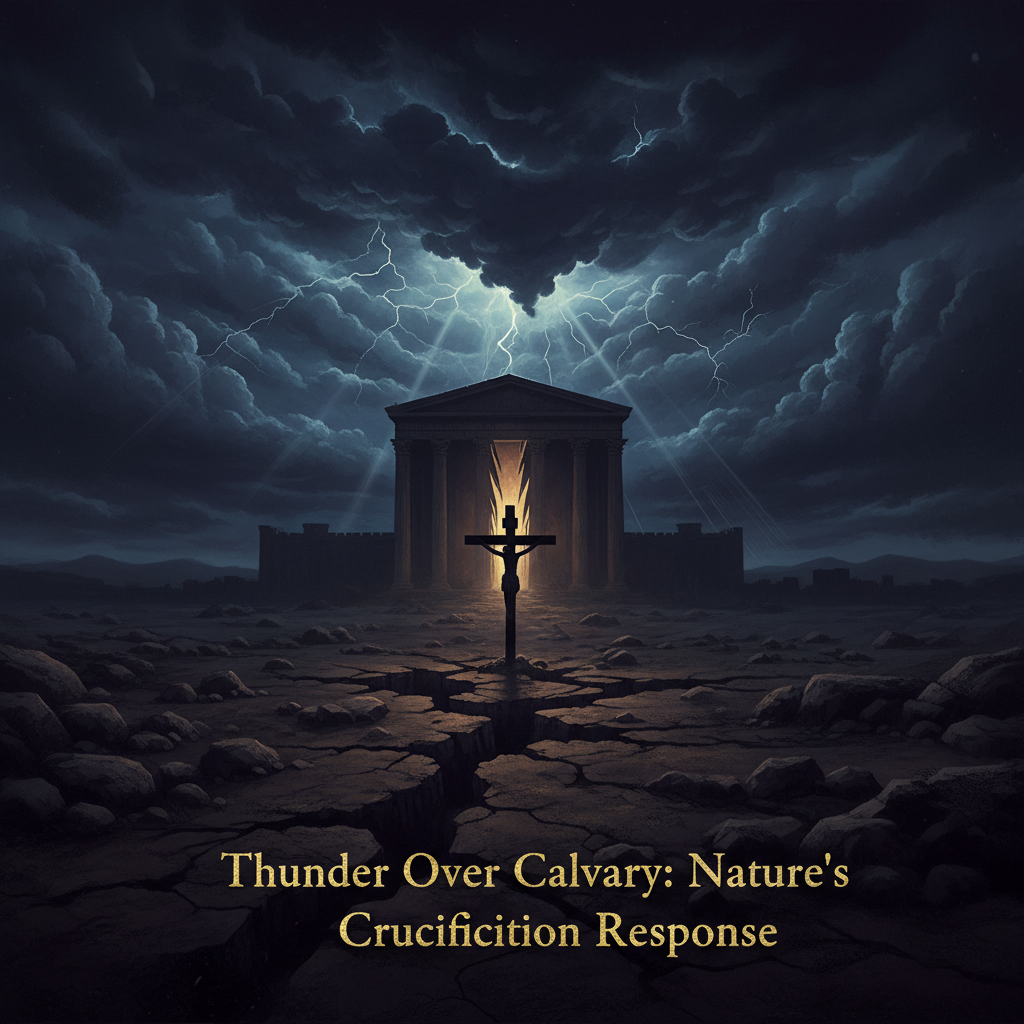
From the sixth hour to the ninth hour, roughly noon to three in the afternoon, darkness covered the whole land. The Crucifixion of Jesus Christ stands out as a pivotal moment in history, and the Bible describes how nature reacted. Passover was during a full moon, so a natural solar eclipse was impossible. The sky went black, like the sun refused to shine on what was happening at Calvary. Matthew, Mark, and Luke all describe this eerie blackout as creation mourning or recoiling from its Creator’s suffering.
More signs followed right after Jesus cried out and gave up His spirit. The earth quaked, rocks split apart, tombs opened, some saints rose. The massive curtain in the Temple tore from top to bottom. With this thick veil, it took multiple people to handle it, symbolizing that access to God was now open through Christ’s sacrifice, no more barriers to sin thanks to His sacrifice.
Darkness often indicates divine judgment or sorrow in Scripture, like the plagues in Egypt or prophecies of the day of the Lord. Here, it highlights the weight of sin Jesus bore, bearing the wrath meant for all. There was an earthquake near the cross, perhaps echoing God’s thunder and quaking at Sinai. Splitting rocks and opening graves hint at victory over death, previewing the resurrection power unleashed by the cross.
The centurion and guards, hardened Roman soldiers used to executions, saw the earthquake and everything else, and declared “Truly, this is the Son of God.” Even nature confirmed Jesus was the Son of God.
There’s no mention of thunder in the Gospels of the crucifixion, but it’s still a stormy, tumultuous scene. Thunderous elements are associated with God’s presence in ancient traditions and reflections, like in the Old Testament, where divine acts are accompanied by thunder. A cosmic storm breaks over Calvary, with nature crying out in response to the death of the innocent Lamb.
It wasn’t just the weather or the geology acting up, it was creation acknowledging the gravity of the moment, atoning for sins, breaking old covenants, and bringing new life. It wasn’t just a human execution, it was a turning point in history. The universe saw, trembled, and witnessed the greatest act of love ever. Nature’s upheaval reminds us of that.
As a result, these signs point to hope in the face of all this horror. As the world shook because redemption arrived, darkness gave way to light, the quake led to resurrection, and the torn veil invited everyone into God’s presence. Nature’s response to Calvary emphasizes that nothing stays the same after the cross.
The torn veil symbolizes the removal of the barrier between humanity and God. This signifies that through Christ’s sacrifice, direct access to the divine is now available to all. This act represents the end of the old covenant and the establishment of a new, more intimate relationship with God. The tearing of the veil is a powerful metaphor for the breaking down of spiritual barriers, inviting everyone into personal communion with the Creator.