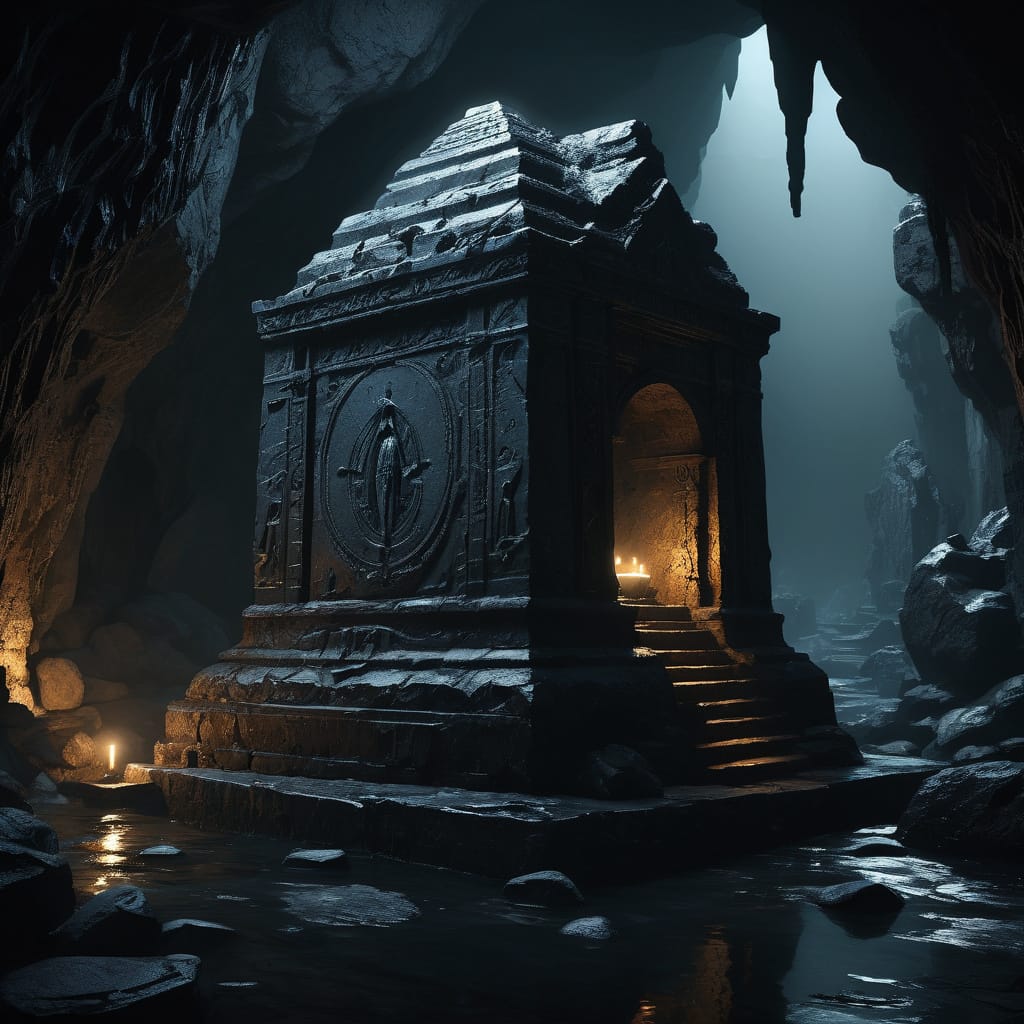
Waiting in Hopelessness for Resurrection paints a vivid picture of despair, like being confined in a dark, cold tomb made of obsidian, that shiny black volcanic glass that only reflects your own emptiness. It’s a metaphor for those long, heavy moments when hope feels completely gone, when everything points to finality, but there’s still a whisper of resurrection. It’s not about quick fixes, it’s about sitting in the silence of hopelessness and what that does to you.
Think about the classic image of a tomb, sealed tightly, stone rolled across the entrance, guards posted, no way out. Imagine that stone is obsidian, glossy, sharp, cutting off light and somehow mirroring the void inside. Whether you’re trapped inside or standing outside grieving, it’s hard. Dreams are gone, plans are broken, love is gone, purpose is gone. Every prayer bounces back unanswered, every tear dries without comfort. The feeling of hopelessness isn’t just sadness, it’s the conviction that nothing will change.
The stone won’t roll away on command, you won’t be able to summon resurrection. All you can do is exist in the dark, breathe in stale air, listen to how slow your own heartbeat is. It’s brutal because hope deferred makes the heart sick, and when hope seems to be broken, the sickness runs deep. The mind replays failures, regrets, what-ifs, turning them over like sharp obsidian shards. The body aches with grief’s heaviness. There’s a feeling of abandonment, of being forgotten, of being irrelevant.
Yet the title implies resurrection. Not a flashy, immediate comeback, but one that takes time. Resurrection doesn’t erase the tomb, it overcomes it after the full measure of despair is endured first. Obsidian doesn’t crack on its own timeline, it waits for something bigger, something else to move. Waiting tests everything, strips away illusions, forces honesty about what really matters.
It’s hard to get over hopelessness, but sometimes it’s a good thing. In the tomb, illusions of control dissolve. Self-reliance crumbles because nothing moves the stone. Pride, denial, distractions all get burned away in the darkness. What’s left is raw need, a quiet admission that rescue must come from beyond. A true resurrection comes out of that vulnerability, not just patching up the old life.
It’s true that resurrection usually follows the lowest low. The longer the wait, the more hopeless it seems, the more dramatic the breakthrough when it comes. But you don’t know what’s going to happen during the wait. It’s not about feeling optimistic, it’s about refusing to give up on the possibility, even if all your senses tell you otherwise. Even in a tomb that feels permanent, it’s about holding on to the promise that death doesn’t get the last word.
It’s no secret that so many people live in obsidian tombs right now, sealed by loss, betrayal, illness, failure, or just life in general. It’s the invitation to acknowledge the darkness, the cold, the silence. Let the waiting do its work. Because resurrection isn’t earned by positive thinking or forced optimism, it’s given in the moment when all other options are exhausted.
An obsidian tomb teaches patience born of necessity. It teaches that hopelessness isn’t the opposite of faith, it’s sometimes the soil where faith grows deepest. The resurrection feels earned not by effort, but by endurance when the stone finally rolls, when light floods in. In the new life that emerges, the scars of the wait make it more real, more powerful.
After all, the obsidian tomb isn’t a place of permanent defeat. It’s a waiting room, dark and unyielding, but temporary. Resurrection doesn’t happen because hopelessness ends, but because something bigger breaks through it. Until then, the call is simple: stay, endure, hope against hope. The tomb that seems unbreakable doesn’t always mean the end.