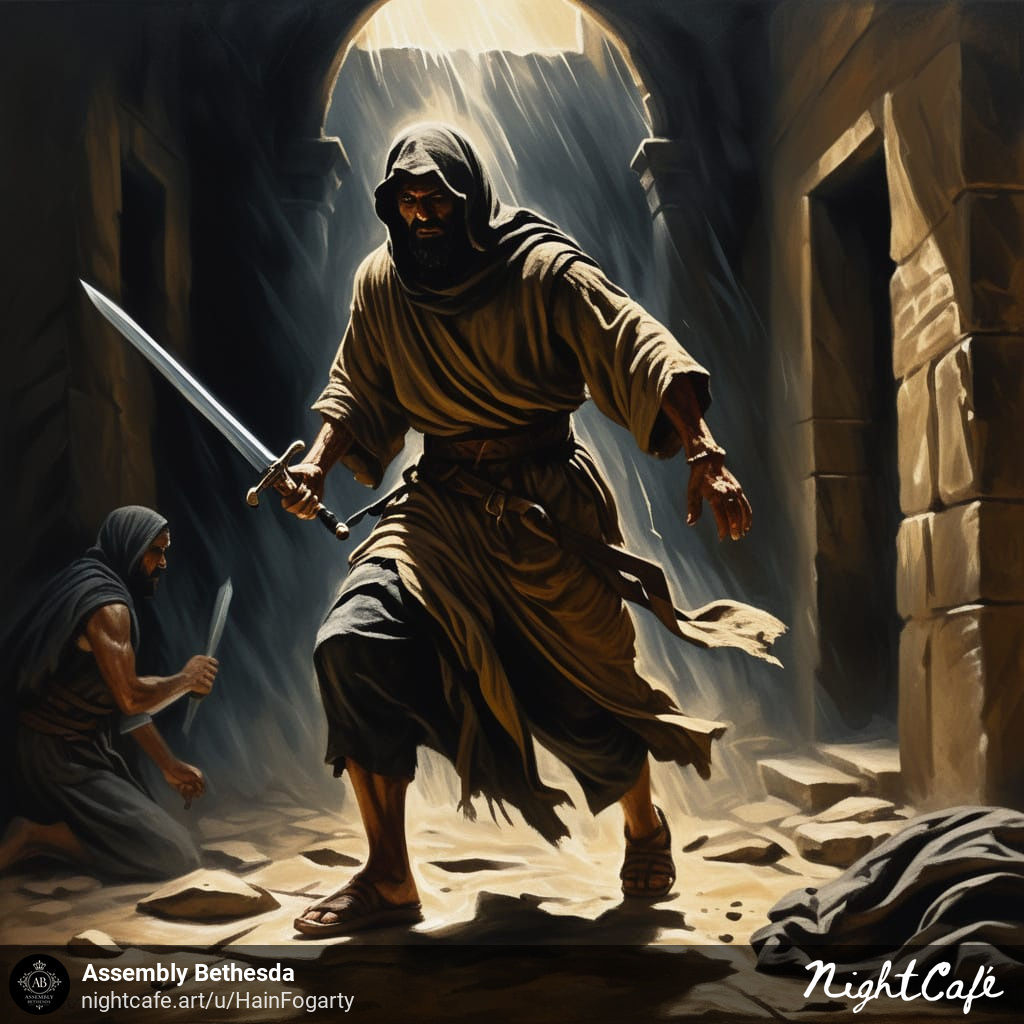
The book of Judges paints a raw, cyclical portrait of ancient Israel, illustrating apostasy, oppression, desperate cries for help, divine deliverance, and temporary peace before the cycle repeats itself. The story of Ehud, the Benjamite judge who assassinates the Moabite king Eglon in one of the most graphically memorable scenes in all of Scripture captures that chaos better than any other story in this book.
After Israel had once again violated the Lord’s commandments, God strengthened Eglon king of Moab against them. The Eglon dynasty dominated Israel for the next 18 long years, exacting heavy tributes and occupying Jericho, the City of Palms. When the people finally cried out, God raised up an unlikely hero, Ehud son of Gera, a left-handed man from the tribe of Benjamin.
The ancient Near East stigmatized left-handedness, but it became a major factor in Ehud’s success. Israelite men used to carry swords on their left thighs so they could draw them quickly right-handed. Guards searching visitors would examine the left side first. Ehud, however, constructed a double-edged sword about eighteen inches long and concealed it beneath his robes on his right thigh. As he and his delegation delivered Israel’s tribute to the obese Moabite king, the weapon was undetected.
After presenting the payment, Ehud dismissed the tribute bearers and began the journey home. On his way home, he turned back alone near the stone idols at Gilgal, approached the palace, and requested a private meeting with the king, claiming he had a secret message. The curious and confident Eglon dismissed all attendants and met Ehud in a cool upper chamber, possibly a summer room on the rooftop.
Ehud stepped close and declared, “I have a message from God for you.” As the king rose from his seat in respect, Ehud drew the hidden blade from his left hand and drove it into Eglon’s belly with such force that the hilt disappeared. A brutally graphic detail illustrates the humiliating nature of the tyrant’s death by depicting how fat closed over the weapon and the king’s bowels discharged. In order to escape, Ehud left the sword embedded, slipped out, locked the doors behind him and fled.
In return, the king’s servants found the doors locked and assumed their master was relieving himself by covering his feet, a Hebrew euphemism for using the toilet. Before retrieving the key, they waited until embarrassment overtook them. This delay proved fatal for Moab’s cause, since it provided Ehud with valuable time to escape the idols and reach Ephraim.
Once safe, Ehud sounded the trumpet, rallied the Israelites, and led them down to seize the fords of the Jordan River. Moabite soldiers faced slaughter cut off from retreat or reinforcement. They killed approximately ten thousand Moabite warriors, each described as strong and vigorous, yet none escaped. Upon becoming subject to Israel that day, Moab enjoyed peace for eighty years, the longest period of peace recorded by Judges so far.
As a result of this vivid narrative, several theological truths emerge. It is important to note that God remains faithful even when His people exhibit a lack of faith. Although Israel’s cry was not genuine repentance, the Lord still provided deliverance. Grace precedes and provokes repentance rather than following it.
As a second consequence, the story illustrates God’s tendency to use the weak and unlikely to shame the strong in order to accomplish His purpose. A left-handed man from a small tribe overthrows a powerful coalition led by a king whose name, Eglon, means “calf” or “fatted one.” The irony runs deep, as the oppressor himself becomes the sacrifice, dying in his own filth while his servants wait in awkward silence.
Third, the account contains deliberate satirical humor. Ancient audiences would have appreciated the wordplay, the grotesque details, and the reversal of power in the story. As a consequence of the dark comedy, the mighty king who demanded tribute was pierced, polluted, and powerless, while the seemingly disadvantaged Israelite was triumphant. These dark comics mocked pagan rulers and celebrated Yahweh’s supremacy.
Additionally, the narrative emphasizes the fact that the Old Testament holy war was conducted under direct divine commission during a period of unique theocracy. God uses Ehud as a means of judgment against an oppressor who has been positioned against Israel to discipline the Israelites. The violence, though shocking to modern sensibilities, corresponds with the context of covenant enforcement and liberation from foreign dominance during the era.
As a final note, the Ehud story implies broader biblical themes. A surprising deliverer brings a piercing message from God and defeats an enemy through an unexpected means, themes that are faintly echoed in the coming of Christ, the ultimate left-handed deliverer, the One who works in ways that are considered foolish by the world in order to overthrow sin and death.
As one of the most colorful, uncomfortable, and instructive passages in Scripture, Judges 3:12-30 stands out. As a result of the courage of one left-handed individual and the edge of one well-placed sword, it reveals a sovereign God who orchestrates history, delights in inverting human expectations, answers the cries of His people even if their hearts remain divided, and who can turn eighteen years of oppression into eighty years of peace.