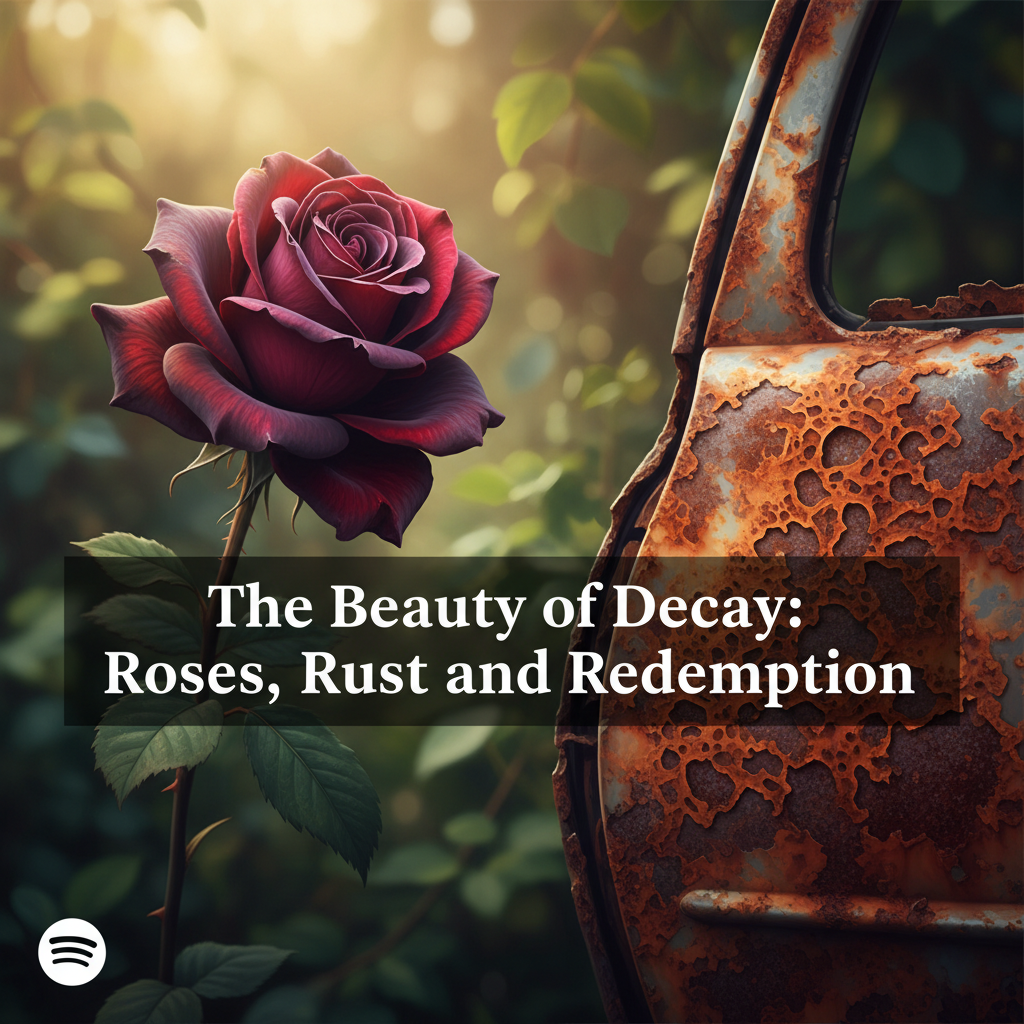
There’s something quiet captivating about things falling apart. A rose in full bloom grabs your attention right away, all vibrant red petals and perfect form. But give it a few weeks, and it gets real magical. The edges curl, the color deepens into bruised purples and burnt oranges, the smell gets richer, almost heavy.
A dying flower isn’t just dying, it’s transforming, showing layers it didn’t have when it was young. The same goes for rust. Shiny new metal feels like it’s nothing special. Rust creeps in over time and weather, creating patterns that no artist could imagine. It’s messy, unpredictable, and weirdly beautiful.
Those dried rose petals still hold elegance, even more so because they’re fragile, temporary. Decay isn’t failure, it’s a process. We’re reminded that beauty doesn’t have to be permanent to be real. Rust does the same for man-made things. When you abandon an old car in a field and it’s covered in flaky orange corrosion, it becomes sculpture.
In the process, the metal tells a story of use, exposure, survival. It might be wrapped in vines, or moss might soften the edges. What was once junk turns into something poetic, a quiet monument to time.
The idea goes further. We see decay everywhere if we look, in old buildings with cracked walls and peeling paint, in forgotten graveyards where stones lean and letters fade. There’s a melancholy there that’s not depressing, but reflective. A cracked teacup or weathered wood isn’t flawed, it’s authentic. The Japanese concept of wabi-sabi finds beauty in imperfection, impermanence.
A rose and a rust make a perfect pair to think about redemption. Things fade away, but they don’t disappear. The rose drops its petals, feeds the soil, and makes room for new growth. It might weaken the metal, but it also protects it in some ways, creating a patina that stops further damage. A compost heap full of rotting leaves and stems turns into rich soil. Old, rusted tools get repurposed, sanded down.
In our own lives, we carry versions of this. There are moments when we’re lost, making mistakes, breaking pieces. It can feel like the end, but sometimes it’s just a change. What looks like ruin might be the start of something bigger, better. The rose doesn’t fight the wilting, it leans into it, becomes something else entirely. Rust doesn’t hide, it reveals textures, history. Redemption isn’t about erasing the decay, it’s about seeing the value in what’s left and letting it reshape into something new.
There’s always this cycle in nature. Seasons change, leaves fall and rot, nourishing the soil for spring. Old trees die, become homes for birds, insects and fungi. When we let it, human creations do the same. Cities reclaim abandoned factories with street art, gardens, community spaces. What was decay becomes a canvas for creativity and connection.
The beauty lies in the honesty of it all. There’s no pretending things stay perfect. Roses fade, metal corrodes, people change. Accepting that opens up appreciation for those transitions, the in-betweens. A fresh rose is lovely, but a decaying one has weight, emotion, depth. Polished metal is clean, but rusted metal has personality, stories in every flake.
Take a second look at those wilted bouquets and old gates next time you pass. See the colors, the textures, the quiet dignity in letting go. Decay isn’t the opposite of beauty, it’s part of it. In roses, rust, and everything that wears with time, there’s a kind of redemption, a gentle reminder that endings feed beginnings, that imperfection holds its own grace.