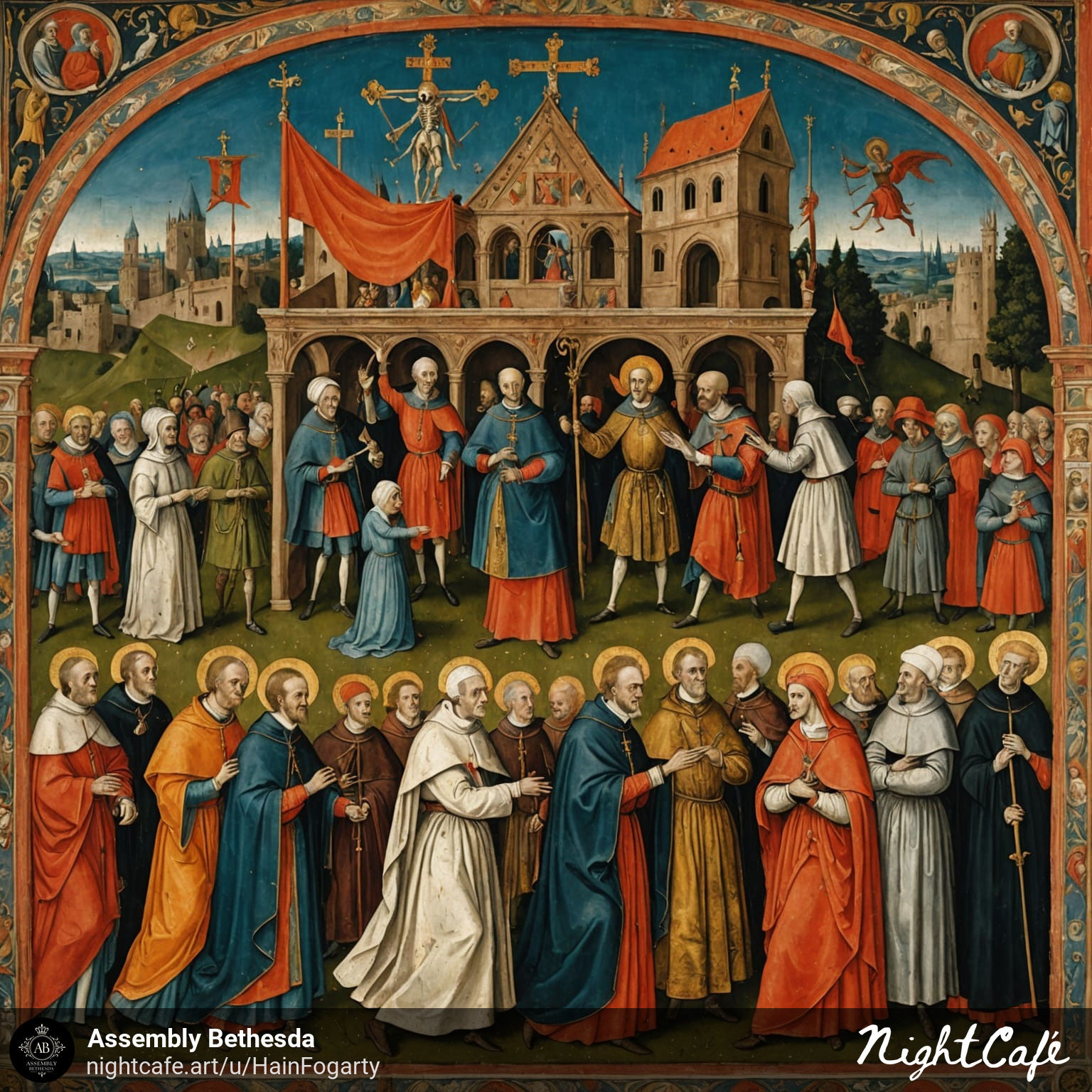
Hey everyone, let’s talk about something a dark today but totally fascinating, historical way. We’re diving into the medieval concept of the “Dance Macabre,” or the “Dance of Death.” You might think of grim reapers and skeletons, but that’s not all it’s about. In the context of medieval Christian beliefs, this wasn’t just some morbid trend. It was a profound artistic and cultural movement that actually taught a pretty radical lesson about equality.
Imagine living in a world where everything was dictated by your social status, from your clothes to what you ate to how you breathed. There were kings, queens, popes, peasants, knights, merchants, and everyone had their place, so you couldn’t move between them. There was a rigid pyramid in society, with kings at the top and dirt-poor farmers at the bottom. It was the ultimate visual reminder of how death dissolved all those distinctions, all those titles and privileges.
The Origins of a Grim Ballet
During the late Middle Ages, there was a lot of upheaval and suffering, so where did this idea come from? The seeds weren’t sown in a sudden flash of skeleton revelry. Indelible marks were left by the Black Death, a pandemic that wiped out a huge part of Europe. People were dying everywhere, indiscriminately. It didn’t matter if you were a mighty duke or a humble serf, the plague didn’t care what your lineage or wealth was. Death spares no one in this brutal reality.
Before the plague, there were already artistic traditions that hinted at the universality of death, like the “Three Living and Three Dead” motif, which shows three young, vibrant men meeting three decaying corpses who tell them what’s coming. Death became an active participant in the Dance Macabre, a grinning skeletal figure leading everyone to the final, inevitable dance, no matter their station. During the 14th and 15th centuries, it appeared in frescoes, woodcuts, and even dramas.
In the Dance Macabre, you’d see a Pope leading a skeletal Death, his pontifical robes fluttering, right next to him, a powerful Emperor, crown askew. The Queen’s jewels don’t offer anything anymore, and the knight’s armor is useless against this foe. It doesn’t matter if you’re a Monk, a Merchant, a Lawyer, a Doctor, a Peasant, a Child, or even a Beggar.
They’re usually depicted alive, dressed in their signature clothes, and often holding symbols of their earthly power. At some point, they’re confronted by a skeleton, sometimes playing a musical instrument, sometimes just reaching out a bony hand to guide them. There’s a stark contrast between the vibrant living and the stark, cold mortality. In the face of death, all worldly distinctions, all things that make us feel special in life, are meaningless.
It resonated deeply with me from a Christian perspective. We’re all equal before God and we’ll all come back to dust. The Dance Macabre served as a powerful visual sermon, reminding everyone to focus on their spiritual life, to prepare for the afterlife, rather than clinging to earthly possessions and status. It was a call to humility, a stark reminder that even the most powerful people will eventually stand naked before their Creator.
In addition, it stressed the transient nature of life, memento mori. That was not supposed to be purely depressing, although it certainly had a somber tone. It was meant to encourage people to be virtuous, to make good choices, to repent for their sins, and to live a life that would earn them a favorable judgment in the hereafter, not just depressing. If death comes to everyone, and it comes unexpectedly, then it’s crucial to be ready at all times.
In addition to being a religious statement, the Dance Macabre also expressed medieval society’s anxieties and hopes. Everyone had to deal with disease, famine, and war, so death was a constant threat. It wasn’t abstract, it was a constant threat. Through this art form, people could process these fears, confront mortality head-on, and maybe even find some comfort in the shared experience.
A sense of grim satisfaction might have come to the lower classes, seeing their powerful overlords, the people who dictated their lives, portrayed as equally vulnerable to death as they were. Under the elaborate costumes and titles, the nobility often cultivated an illusion of invincibility, revealing their common humanity. While rooted in a spiritual context, it was a subtle, yet profound critique of social hierarchy.
Even though the Dance Macabre as a prominent art form faded with the Renaissance, its influence is still felt today. In later art, literature, and even popular culture, you can see echoes of it. It’s a universal truth that transcends time and culture: death is the great equalizer. It symbolizes death, guiding people away.
We’re all ultimately the same beneath all our differences, all our accomplishments and failures, all our wealth and poverty. The Dance Macabre, with its grinning skeletons and diverse cast of characters, stands as a timeless monument to this profound and often uncomfortable truth. We all share the same fate, the same journey towards the unknown. It’s a powerful reminder to cherish the life we have, to live it meaningfully, and to remember that in the end, we’re all going to dance with death. It’s a truly remarkable piece of art history, one that speaks volumes about the human condition and our enduring fascination with mortality.
Dance Macabre, the Black Death, memento mori, Christian art, social hierarchy, mortality, medieval history, pandemic art, skeletal imagery, cultural impact, European history.
A powerful medieval lesson in humility and equality, the chilling Dance Macabre shows Death leading kings, queens, and peasants alike in a grim ballet.