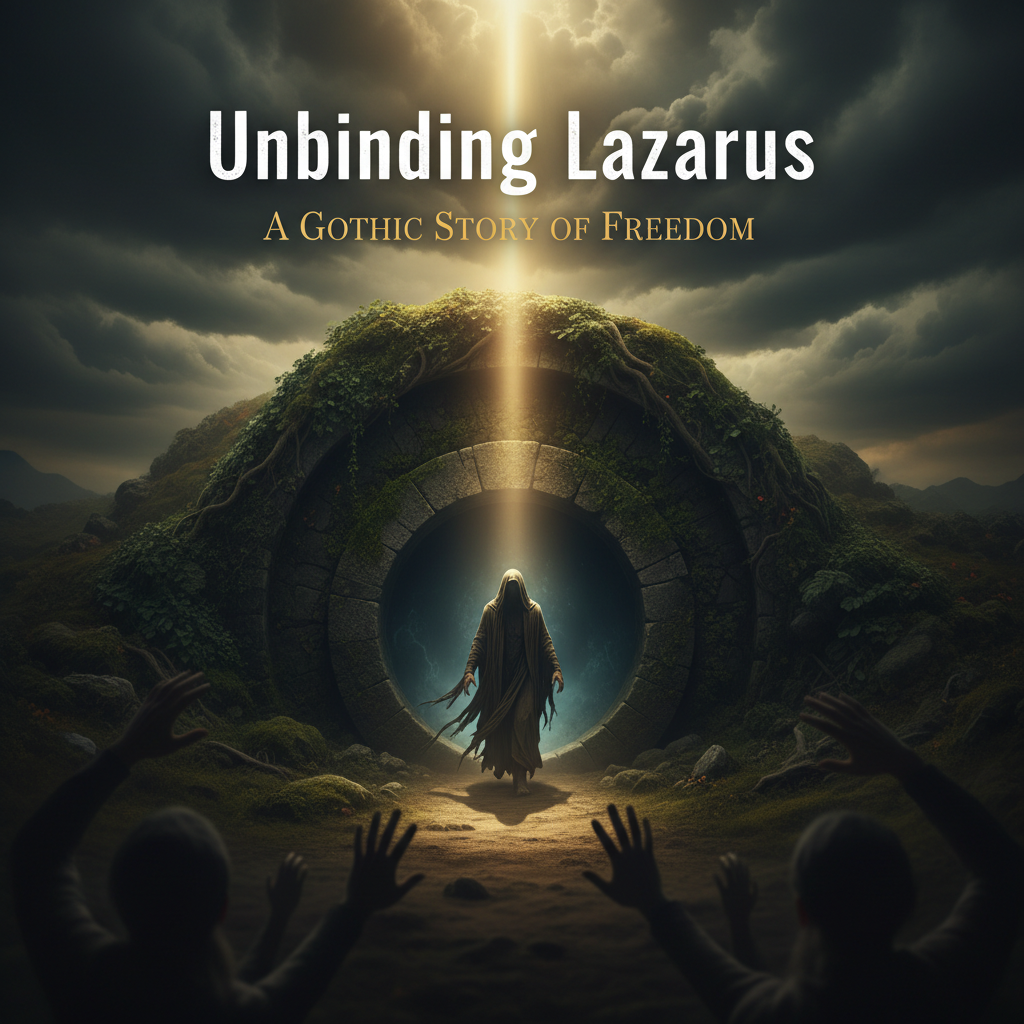
In the shadowy world of Christian gothic storytelling, this miracle from the Gospel of John stands out like a candle flickering in a stone tomb. In chapter eleven, we get that eerie beauty, where death feels heavy and thick, but hope breaks through anyway. Think about the scene in your mind, that dark atmospheric moment that makes you tingle.
With the big stone rolled away, the tomb is cut into rock, and the air is heavy with burial spices mixed with something more final. It’s been four days since Lazarus died, wrapped tight in the grave clothes, the linen strips soaked in oil and spices. Friends and family stand outside, hearts crushed. The whole place is in mourning. Then Jesus steps up, after weeping with the sisters, after reminding them he’s the resurrection and the life, and he shouts.
He hears it. “Lazarus, come forth.” The words echo off the stone walls and slice straight into the darkness. He comes out, still bound hand and foot with the grave clothes, his face wrapped in a napkin. It’s not a glowing, clean vision. A figure shuffles out from the shadows, still wearing the trappings of death, and the crowd gasps, some step back, others lean in closer. It’s raw, it’s bound, and it’s gothic in the best way.
He moved because the voice called him to move, despite the tight bindings. Jesus doesn’t stop there. The grave clothes come off layer by layer, the napkin comes off, and Lazarus stands free, alive, ready to live again. He turns to the people around him and says, Loose him, and let him go.
He gets out of the tomb after the call, but then he gets unbound. This is the heart of the story, casual but powerful at the same time. It’s not just about a miracle, it’s about stepping into freedom after that call. The grave clothes represent all the stuff that can still cling to us even when new life starts, the old wrappings of fear or habit or doubt that try to hold us back even when new life starts. We shuffle out, maybe still feeling tied up, but the next words are for the community, loose him, let him go. It takes the voice and the hands around us to finish the job.
Gothic makes it memorable. The tomb feels like a character, cold and final, the stone like a door you shouldn’t open again. It lingers, the shadows cling, and the figure emerges like something out of a dark tale, but the power of the call turns horror into hope. Death can’t ignore that loud voice. It’s a shout that reaches beyond death. Lazarus doesn’t hesitate. He comes forth exactly like he’s told. He’s bound but obedient. Bindings don’t stop the response, they just wait for the next one.
Think about the napkin on the face for a moment. When it comes off, the eyes adjust to the light, and the man is revealed. That’s the casual beauty here. The miracle happens in stages, the call first, then the coming forth second, then the unbinding third. It’s like faith in real life. We hear the voice, we step out of whatever tomb we’re in, and then we start peeling the layers off with help from our friends and family.
The story drips with that gothic contrast, darkness and light side by side. The tomb is deep and still, the call is loud and alive. The grave clothes are white and stiff, but the man inside them is now breathing and moving. Although Jesus could have thrown the bindings away in one breath, he lets people participate, showing the miracle is shared by everyone. With the loose him command, spectators become helpers. This is the Christian gothic heart, not a lone hero in the shadows, but a community unwrapping a gift together.
There’s also a hint of the empty tomb that comes later in this moment, quietly reminding us. When Jesus rises, the grave clothes are left behind, folded and finished. Lazarus gets his clothes off after the call, so the process is different, but the power is the same. The bindings don’t stay on in either story, and death doesn’t get the last word.
In my opinion, this is a Bible moment you could paint on a cathedral wall with stormy skies and dramatic light. The artist would show the tomb mouth open, the figure emerging wrapped tight, the hand of Jesus raised, the crowd half in shadow, half in awe. Gothic style captures the weight of death so the weight of life feels even more overwhelming when it arrives. It’s not polished or distant. It’s close, earthy, real.
Every time, Jesus calls out. He doesn’t shout, dead man come out. He says the name, Lazarus. It lands like it’s meant for us too. When the voice calls us out of our own tombs of loss or struggle or sin, it knows our names too. We come out maybe still wrapped in the old stuff, but the command comes back, let him go, loose him, let him go. The grave clothes aren’t permanent. They’re just temporary until the community and Spirit do their stuff.
The loud voice carries authority that shakes the foundations. In Gothic terms, it’s the thunder in the quiet, the sound that wakes the sleeping and raises the dead. Death listens and obeys because the voice is stronger. Lazarus doesn’t fight or delay. He comes forth bound but responding. His obedience in the bindings is just as miraculous as his salvation. Even wrapped up, the call moves him forward.
The coming forth itself is the visible proof. He’s outside now. The tomb is empty again, but this time it means life, not defeat. The grave clothes trail behind him as he walks, a reminder of where he’s come from. Once the clothes are released, they don’t define him anymore.
A gentle and practical unbinding happens. As the people step closer, they untie the man’s hands and feet, lift the napkin. Gradually, the man they loved emerges, breathing, seeing, smiling. It takes time and care, but that’s what Jesus said. That’s the casual hope here. Calls start it, communities finish it, freedom lasts.
With this story, we can see our own lives in the same light without feeling heavy or heady. When things are sealed and dark, the voice still calls. When we step out still tied, the next words are for freedom. Gothic imagery keeps it vivid, the tomb, the bindings, the emergence, the unbinding. The miracle doesn’t stop when the call is answered. It keeps going until the grave clothes are gone and we’re free to live again.
These two verses have so much power. A loud call, a bound man walking, and a command to loosen up and let go. That’s the Christian Gothic heartbeat, where death meets its match, shadows give way, bindings fall away, and life steps forward. When you realize that the voice still speaks today, you can sit with this truth in the quiet and turn it over like a stone in your hand.