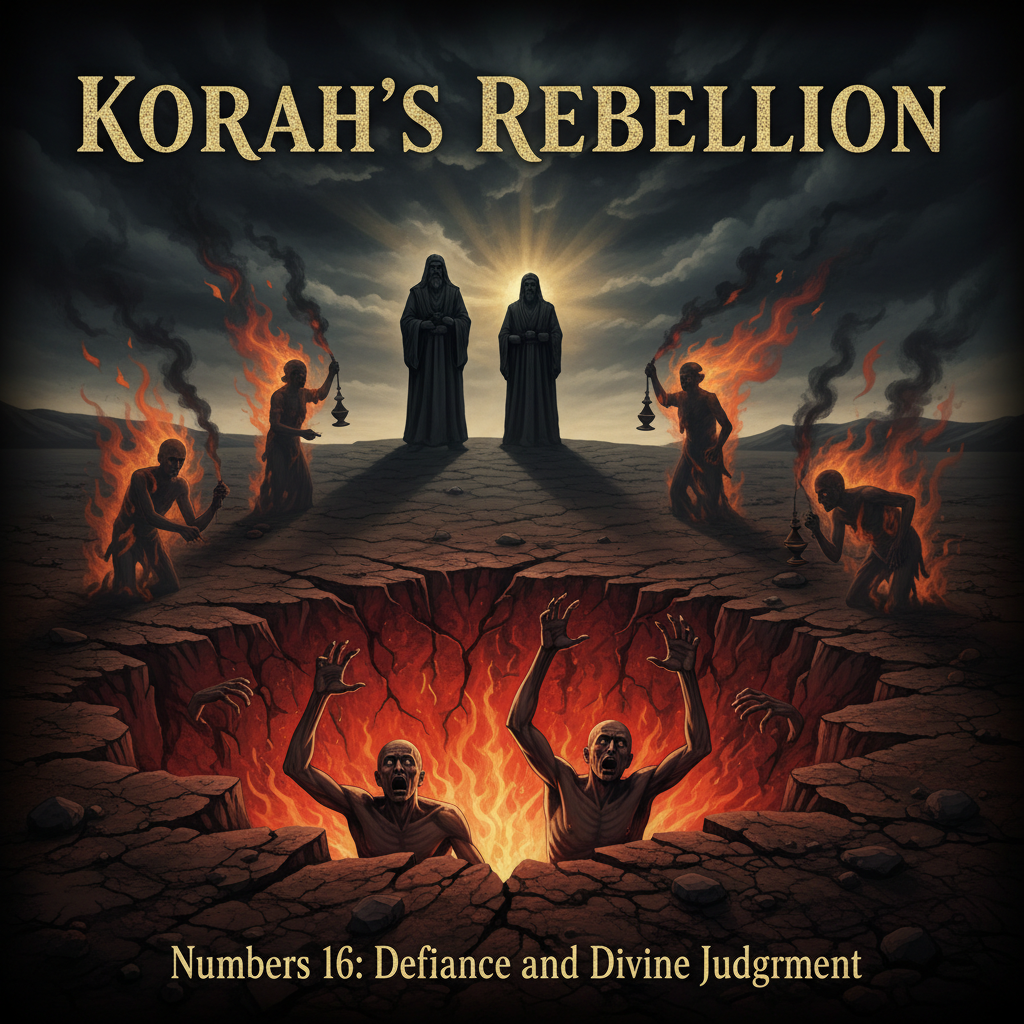
There’s no drama like Korah’s rebellion in Numbers 16. Dathan and Abiram from Reuben, along with On and 250 prominent leaders from the congregation, team up with Korah, a Levite from the Kohath clan. They accuse Moses and Aaron of going too far, of exalting themselves above everyone else.
Moses and Aaron argue that the whole community is holy, that the Lord dwells among everyone, so why would they act like they’re superior? Korah wasn’t content with his role as a Levite, helping with tabernacle duties and carrying holy things. He wanted the priesthood too, the only role God gave Aaron and his descendants.
Rather than lash out right away, Moses falls to his knees before God, then responds calmly. He tells Korah and his crew that tomorrow the Lord will show who belongs to Him and who is really holy. Everyone takes a censer, puts incense and fire in it, and stands before the Lord. Aaron will do the same. God will choose the right priest.
Moses even calls them out, reminding Korah that being set apart to serve in the tabernacle should be enough, but instead they want to be priests too. They’re really grumbling against the Lord Himself.
During the showdown the next day, the rebels show up and Moses warns everyone to get away from Korah, Dathan, and Abiram’s tents. He predicts something unprecedented: if these men die naturally, then Moses is wrong, but if the earth swallows them alive, along with their families and all their possessions, then everyone knows these guys rejected the Lord. The ground splits apart right under them as soon as Moses finishes speaking.
The earth opens wide, swallows Korah, Dathan, Abiram, their families, their little ones, and everything they own. In the same moment, fire from the Lord consumes the 250 men offering incense. It’s a swift, unmistakable judgment. They go down alive into the pit and the ground closes over them.
As the people blame Moses and Aaron for the deaths, they call it murder. A plague breaks out as God’s anger flares again. The aftermath is chilling. In order to drive home the point, God had each tribal leader put a staff overnight in the tabernacle. Aaron quickly grabbed his censer, ran into the midst of the people, stood between the living and the dead, and the plague stopped. The staff of Aaron sprouts, blossoms, and produces almonds, proving once and for all that God appoints leaders, and challenging their appointment is challenging God.
Korah’s group started out complaining about holiness being shared, but there was pride, jealousy, and a grab for power they weren’t getting. The story packs a punch about authority, contentment, and rebellion. God doesn’t mess around when His order is threatened. The earth swallows rebels alive, with their families and possessions, showing just how serious He is about protecting His leadership.
In the New Testament, Jude mentions Korah’s rebellion as an example of people who perish for rejecting authority and seeking personal gain. It’s a warning against division. It’s a reminder that God’s ways aren’t up for debate or negotiation. He sets the rules, and if you step out of line, you’ll pay for it. Even in judgment, God shows mercy, such as how he spares the entire community after he’s dealt with the rebels. Raw, intense, and leaves no doubt about who’s in charge