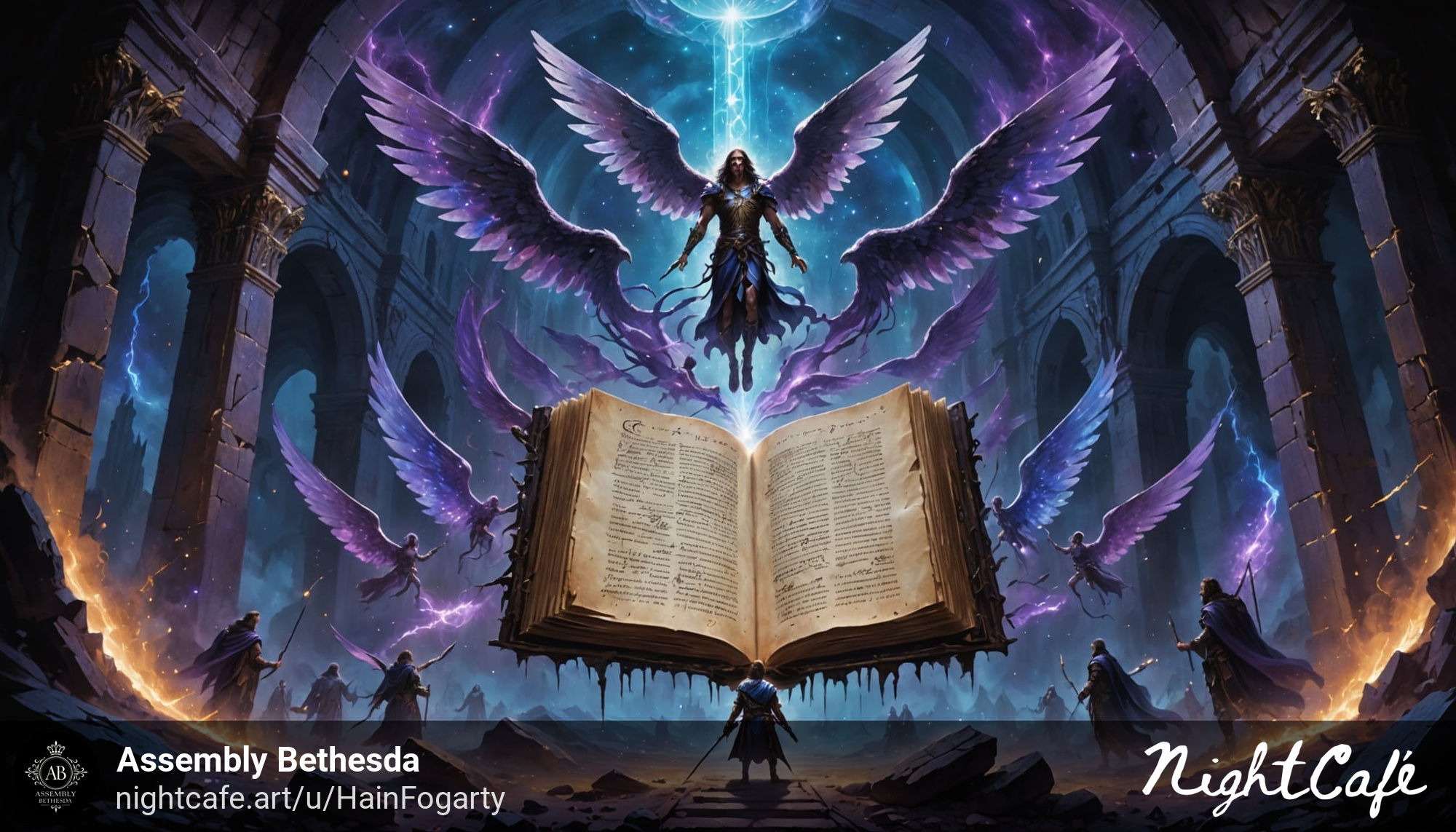
We’ll be diving into something wild and intriguing today, the Book of Enoch. Although it’s not in the Bible, this ancient text is full of mind-bending stories that have piqued curiosity for centuries. This book is attributed to Enoch, the guy who walked with God and vanished without dying, according to Genesis. It fills in the gaps with visions of heaven, hell, fallen angels, and cosmic secrets.
This is like a Bible chapter that got left out, but its echoes still echo in religious lore, pop culture, and conspiracy theories today. What’s so intriguing about it? Well, it’s full of mysteries that blend mythology, astronomy, and apocalyptic warnings, all wrapped in an eternal veil of darkness.
As a matter of fact, the Book of Enoch is actually a collection of writings, probably put together over time by different people. The main part is called the Book of Watchers, which tells the tale of angels named the Watchers who rebelled against heaven. They came down to Earth, taught humans forbidden knowledge like metalworking, cosmetics, and sorcery, and then things got messy. They hooked up with human women, and they grew giants called the Nephilim.
The massive offspring caused chaos, devouring everything in sight and creating violence. God wasn’t having it, so he sent the flood to wipe them out, but not before binding them to eternal darkness. It’s not just punishment, it’s cosmic lockdown to stop more rebellions. Imagine being chained in utter blackness for eternity.
It’s like an ancient astronomy textbook mixed with spiritual insights. He gets a tour of the heavens and learns about stars, sun, moon, and portals that lead to different realms. There’s a heavy dose of judgment, too, but it’s not all light and wonder. Enoch sees how the universe works, how the seasons are controlled by angelic beings, and how the winds move.
The text warns of a coming end when the wicked will face eternal darkness, a void without light or hope. This isn’t your sunny Sunday school story; it’s raw and intense, portraying a world where divine order clashes with human and angelic imperfections.
One of the biggest mysteries is why this book was sidelined. Enoch was revered in early Jewish and Christian circles, quoted in the New Testament like Jude, where he prophesies about judgment. But, by the time church leaders decided on canon, Enoch had been out. Some say it was too mystical, others think it challenged established doctrines. It’s still canonical in Ethiopian Christianity, though, preserved in Ge’ez.
Keeping it alive in one corner of the world and forgotten elsewhere adds to its allure. And it’s got the eternal darkness theme all over it. The fallen angels are cast into a fiery pit or abyssal gloom, souls of the dead wander in shadowy realms, and the final judgment separates the righteous into light while the sinners plunge into endless darkness. Even though it’s a stark reminder of consequences, it feels like epic fantasy with real stakes when you read it.
Enoch’s influence comes through all sorts of unexpected places. In movies like Noah, the Watchers are portrayed as rock giants helping build the ark. In video games and books based on Nephilim mythology. The Watchers are even linked to ancient aliens teaching humans tech. Later works like Dante’s Inferno and Milton’s Paradise Lost were inspired by its visions of multiple heavens, angelic hierarchies, and apocalyptic beasts.
The book has that eternal darkness vibe that fuels horror stories too, places where there is no light, symbolizing despair or the unknown. But hey, it’s not all doom, Enoch’s journeys show a path to enlightenment, encouraging readers to seek wisdom and righteousness.
In the Book of Parables, we learn about the Son of Man, who’s a messianic figure who judges the world. It sounds prophetic, with visions of thrones, rivers of fire, and the elect being saved. It’s casual to think of it as a blueprint for end-times tales we see today. A final era where evil is banished to eternal gloom follows the Dream Visions, which tell history with animal symbols, like sheep for Israel and wolves for enemies.
Epistle of Enoch ends with ethical teachings, blessings for the righteous, and curses for the wicked, emphasizing that knowledge isn’t just power, it’s responsibility.
How about eternal darkness? A state of being that isn’t just punishment, it’s a state of being. The text describes valleys of shadow where souls await judgment, prisons for stars that went off the path of God, and bottomless pits for rebellious people. It’s poetic, almost chilling, evoking a sense of isolation from God’s light. In a modern twist, some interpret this as psychological darkness, like straying from moral paths.
However, keeping it light, it’s fascinating how this apocryphal book bridges ancient wisdom with timeless questions: Why do bad things happen? And what happens when angels go bad?
Let’s wrap this up by saying the Book of Enoch isn’t just old scribbles. We’re challenged to think bigger by its mysteries, beyond canonical texts, into realms of fallen heroes, celestial mechanics, and eternal darkness. If you like ancient enigmas or just like a good story, give it a read. Who knows, it might echo in your mind for a long time.