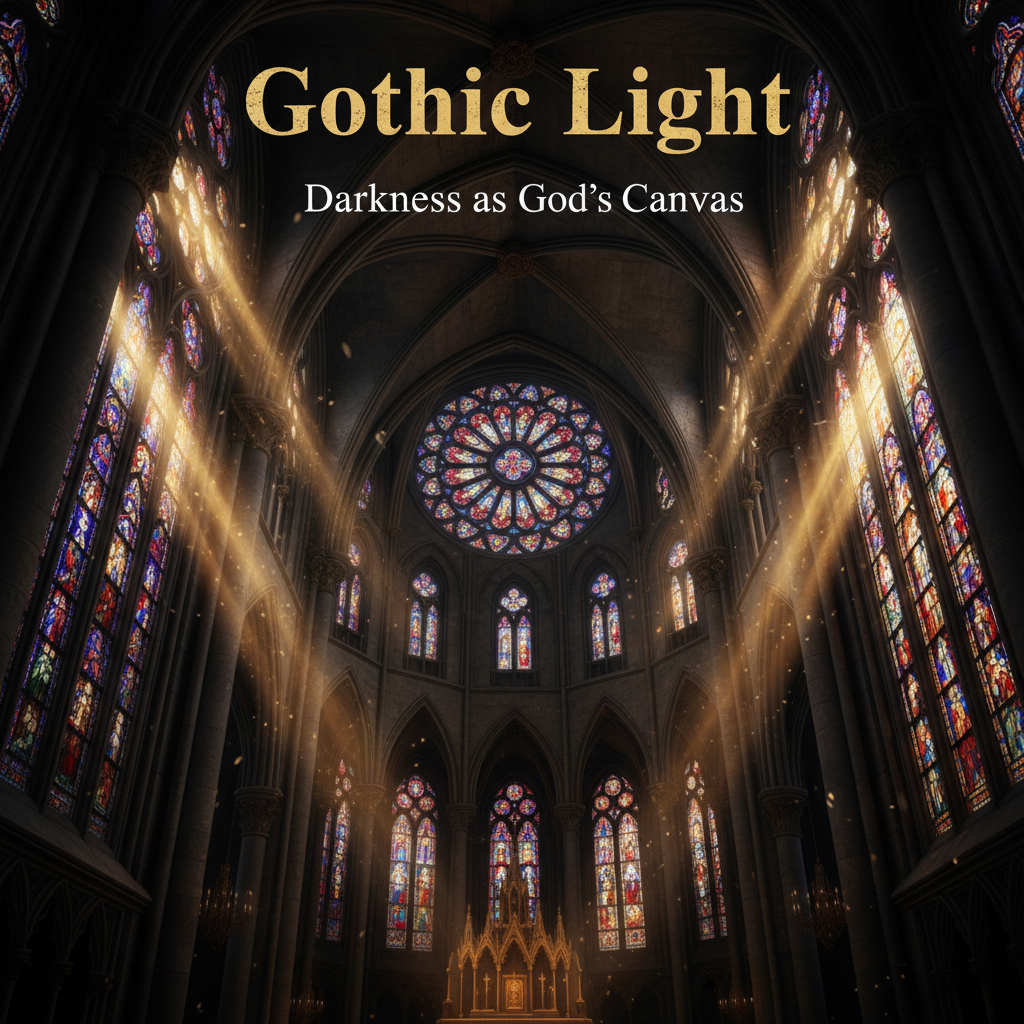
Hey there , friends , let’s talk about something that feels both mysterious and full of real hope straight from the Bible. John one five says the light shines in the darkness, and no darkness can destroy it. If you think about it in a Gothic sense, think about ancient stone walls towering under a stormy sky, the air thick with shadow, and then that one beam of pure light cuts through, bringing everything to life and color. That’s the idea here. Darkness isn’t some final boss that wins. It’s the canvas that lets God’s light shine brighter, bolder, and harder.
You gotta think about how old Gothic cathedrals were built. Those heavy stones piled up to make towering arches and deep naves filled with gloom, but they also left room for the tall, colored windows. If the surrounding darkness wasn’t there, the light coming through wouldn’t hit the same way. With the contrast, plain stone becomes a living story of grace. That’s exactly what John’s telling us about Jesus. Even though the world was wrapped in spiritual darkness, sin, and confusion, His light broke through and the dark couldn’t put it out.
It all started with God speaking light into being out of a formless void, total darkness covering everything. The dark was there first, ready to be transformed, ready to become the stage for creation itself. It wasn’t erased, but it became the perfect setting for beauty to emerge. It’s all in scripture. In the middle of the plagues, in the deep night of Egypt, a pillar of fire lit the way for God’s people. The darkness surrounded it, framed it, and made the guidance clear.
When Jesus arrived, the world was in another kind of night – hearts heavy , hope dim. However, He called Himself the light of the world and proved it. Despite the shadows of doubt, gloom of sickness, and even death itself, He wasn’t defeated. Even the darkest moment at the cross, when the sky went black and the earth shook, wasn’t the end. A few days later, the light burst forth brighter than any dawn, showing that suffering had been used to show victory.
Throughout Paul’s letters to the churches, this truth keeps coming up. In Paul’s letter, he talks about God commanding light from darkness, the same God who shines in our hearts so we know His glory. It’s not the dark, it’s the surface. Without it, the brilliance wouldn’t work. Revelation’s final picture shows a city with no night because the Lamb is the lamp, but until then we live in the now, where contrast still works.
Imagine how this plays out in the everyday feel of faith. When life feels like a long midnight walk through echoing halls of uncertainty, the light doesn’t wait for the sun to rise. The light shines right in the middle of the gloom, turning things that seem overwhelming into miracles. The darker the shadow, the more gorgeous it gets. Gothic beauty is dramatic, atmospheric, full of wonder and depth.
Early believers understood this. They met in hidden places, in the midst of persecution, but the gospel spread like wildfire. The more the world tried to snuff it out, the more clearly it burned. Opposition made redemption’s colors stand out more. Through the centuries, the pattern holds. When truth seems buried under layers of confusion, the light finds its way through the cracks, and the darkness hasn’t overcome it.
Gothic painters and writers know the power of shadow. They layered deep blacks and rich indigos to make the highlights of gold and white pop. And the same goes for the greatest artist. The canvas is prepared in darkness so the light can be fully appreciated. He uses the night seasons of history, of nations, of individual souls to display His glory in ways that daytime calm never could.
How does this change how we see the world? It means we don’t have to be afraid of the deep shades. They’re not signs of defeat. They’re invitations for the light to shine. When it’s dark, remember John one five. The light’s already shining. It’s always had been and it’s always going to be. The darkness is just where the truth gets painted in the most unforgettable way.
There’s light, present tense, ongoing, right now in any dark corner you can imagine, and it hasn’t been beaten by the darkness. It’s not a past victory for the dark and no future victory either. It’s a done deal. Despite the canvas being dark by design, the masterpiece is light by nature.
Here’s what it’s all about, friends. The Christian Gothic view takes the mysterious, the shadowy, the atmospheric elements we love in those old stories and makes them eternal. Light has taken over the darkness and made it its own stage, so the spires point upward, the windows glow, the stones stand firm.
We could go on and on about how this truth echoes in every book of the Bible , from the poetic laments that end in praise to the prophetic promises of a coming dawn. Each one adds another brushstroke to the canvas. Darkness waits patiently and deeply, but the light answers brilliantly and sure.
In the end, the message is simple yet profound. Trust the artist. The light shines, and nothing can stop it. John one five isn’t just a verse. A Gothic love letter from God’s heart to a world that needs to see the contrasts to believe in the hope. It’s a promise written in shadows and radiance.