Hey everyone, let’s dive into one of the oldest stories in the Bible that still packs a punch today, Cain’s curse. You know the tale from Genesis, right? Cain and Abel are the first brothers, sons of Adam and Eve, and things go south fast. Cain’s a farmer, Abel’s a shepherd, and when they both bring offerings to God, Abel’s gets the nod while Cain’s doesn’t. That rejection stings, and instead of dealing with it, Cain lets jealousy brew into rage. Next thing you know, he lures Abel out to the field and kills him. Boom, first murder in human history. God confronts Cain, and rather than owning up right away, Cain tries to play it cool with that famous line, “Am I my brother’s keeper?” But God knows everything, so he curses Cain, making the ground he farms barren and turning him into a wanderer. To top it off, God puts a mark on him, not as punishment but as protection, so no one kills him in revenge. It’s this wild mix of judgment and mercy that makes the story so intriguing.
Think about it, Cain’s curse isn’t just about getting kicked out of his home. It’s the first real mark of rebellion against God’s way. From the start, humanity’s been given choices, free will to follow or stray. Adam and Eve bit the fruit, opening the door to sin, but Cain takes it further by spilling blood. His offering wasn’t accepted, maybe because his heart wasn’t in it, or perhaps it lacked the blood sacrifice element that Abel’s had. The Bible doesn’t spell it out super clear, but the point is, Cain’s response shows raw rebellion. Instead of humbling himself, asking what went wrong, he lashes out at his brother. That’s the curse’s root, rebellion breeding violence, and it echoes through history. Every time someone chooses hate over love, power over peace, it’s like a little echo of Cain’s mark.
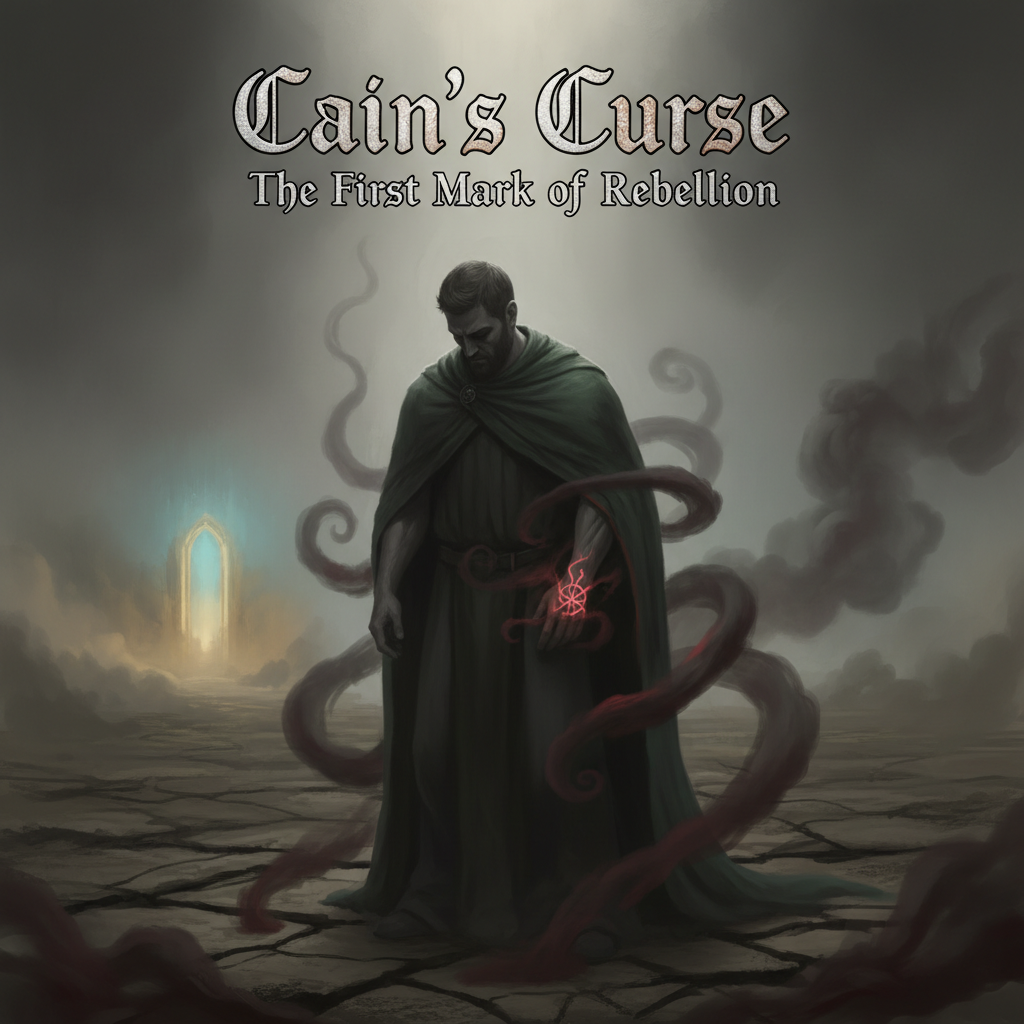
Now, let’s talk about that mark itself. What was it? The Bible calls it the “mark of Cain,” but doesn’t describe it. Some folks imagine a tattoo, a scar, or even something supernatural like a glowing symbol. In a Gothic Christian lens, picture it as this shadowy emblem, a reminder of sin etched into the skin, visible to all. It protects Cain from vigilante justice, yeah, but it also brands him as an outcast. He’s alive, but doomed to roam, never settling, always carrying the weight of his deed. It’s mercy twisted with consequence, God saying, “You messed up big time, but I’m not done with you yet.” That duality is fascinating, punishment that preserves life, a curse that shields.
Rebellion like Cain’s isn’t ancient history, it’s everywhere. Look around, people buck against authority all the time, whether it’s rules at work, laws in society, or spiritual guidelines. Cain’s story warns that unchecked rebellion leads to isolation. He builds a city later, named after his son Enoch, trying to create his own legacy apart from God. But that city, it’s like a monument to human effort without divine blessing. The ground won’t yield for him, so he turns to building, innovating, but it’s all tainted by that initial act. His descendants become nomads, musicians, metalworkers, pushing human culture forward, yet carrying that rebellious spirit. It’s a reminder that even in curse, humanity finds ways to thrive, but without God, it’s hollow.
Let’s unpack the mercy angle more. God could’ve struck Cain down on the spot, eye for an eye style. But no, he listens to Cain’s plea, “My punishment is more than I can bear,” and responds with protection. That mark ensures anyone who kills Cain gets sevenfold vengeance. It’s God’s grace in action, even for a murderer. In Christian terms, it points forward to redemption through Christ, where sin’s curse is broken. Cain’s mark is temporary mercy, but Jesus offers eternal forgiveness. Still, Cain’s path shows what happens when you don’t repent fully. He acknowledges his sin eventually, but there’s no record of true turning back. He just accepts the curse and moves on, building his own world.
The story also flips the script on victims and villains. Abel’s the innocent one, his blood crying out from the ground for justice. That imagery is intense, blood soaking into the earth, demanding reckoning. God hears it, showing he’s attentive to the oppressed. Cain, the rebel, becomes the wanderer, but his line continues, influencing the world. It sets up the ongoing tension between righteousness and rebellion. Later in the Bible, you see echoes, like in the Psalms where the wicked prosper temporarily, but ultimate justice comes. Cain’s curse is the starting point for understanding why the world feels broken, why good people suffer while rebels seem to get away with it sometimes.
In a casual chat about this, you might wonder how Cain’s story applies today. Rebellion against God shows up in subtle ways, ignoring that inner voice, choosing selfish paths. It builds up, like Cain’s jealousy, until it explodes. The curse teaches that actions have ripples, affecting not just you but generations. Cain’s descendants include Lamech, who boasts about killing and demands seventy-sevenfold vengeance, escalating the violence. It’s a cycle of rebellion amplifying. Breaking it requires humility, something Cain skipped.
Let’s not forget the land aspect. Cain’s a tiller of the soil, but after the curse, the ground rejects him. It’s poetic justice, the earth that drank Abel’s blood now refuses to feed Cain. In Gothic terms, imagine haunted fields, barren wastelands where nothing grows, symbolizing a soul cut off from life’s source. Wandering becomes his fate, a restless spirit forever seeking but never finding peace. It’s like those old tales of cursed nomads, doomed to eternal travel.
But hey, there’s hope woven in. God’s mark is protection, hinting at a bigger plan. Even in rebellion, God doesn’t abandon completely. Cain lives on, his story a cautionary tale. It invites reflection on our own marks, the scars from our rebellions. Maybe not visible, but felt in regrets, broken relationships. The good news? Unlike Cain, we have access to full restoration through faith.
Expanding on that, consider how culture has interpreted Cain. In literature, he’s the archetype of the brooding outcast, inspiring stories of vampires, wanderers, cursed immortals. Think Dracula or other Gothic figures, eternal life as punishment. But in Christian Gothic, it’s about the darkness leading back to light. Cain’s curse highlights human frailty, the pull toward sin, but also God’s relentless pursuit.
The narrative structure is simple yet profound. Setup with offerings, conflict in rejection, climax in murder, resolution in curse and mark. It’s the blueprint for tragedy, where pride leads to fall. Cain’s name means “acquired,” maybe from Eve’s hope, but it turns ironic as he loses everything.
Diving deeper, the mark prevents a blood feud cycle. Without it, vengeance could spiral endlessly. God steps in to limit evil, showing sovereignty even over chaos. It’s a theme throughout Scripture, God using flawed people for his purposes.
Cain’s story contrasts with Abel’s faith. Hebrews calls Abel’s offering better because of faith. Cain lacked that, relying on works. It’s a lesson in heart over ritual.
As we wrap this up, Cain’s curse stands as the first mark of rebellion, a symbol of what happens when we turn from God. It’s judgment, mercy, warning all rolled into one. In our world, rebellions big and small mark us, but the invitation is to turn back, find healing. That’s the enduring power of this ancient tale.