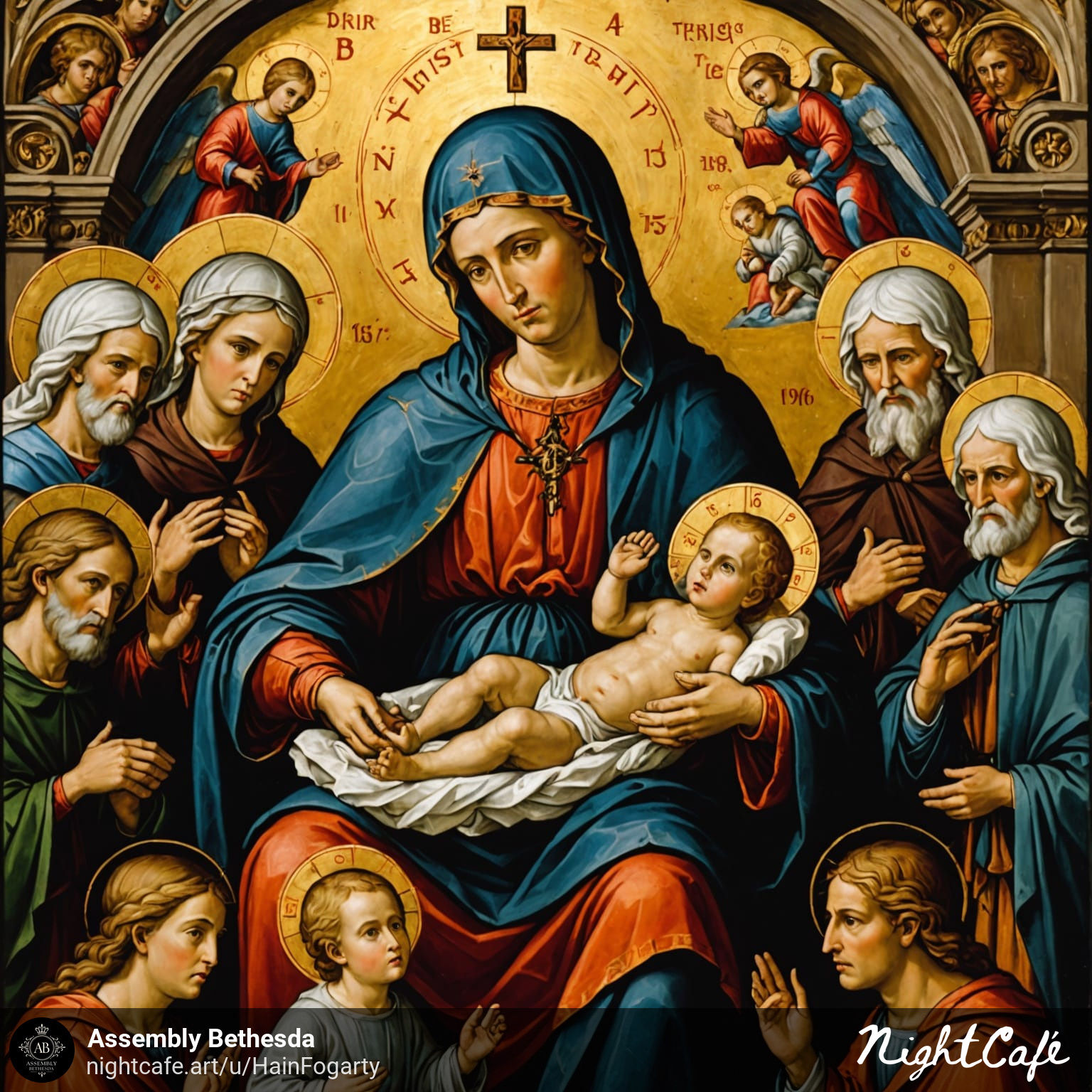
A Biblical Insight into the Birth of Jesus: Historical Contexts and Biblical Insights
Often referred to as the Nativity, the birth of Jesus Christ is a cornerstone of Christian tradition, combining ancient biblical stories and historical context to illustrate its profound significance. As the story unfolds in Luke, Mary and Joseph are forced to leave their home in Nazareth for Bethlehem because of a Roman census decreed by Caesar Augustus during Quirinius’s time as Syrian governor.
This journey placed them in the town of David, fulfilling prophesies that the Messiah would emerge from Bethlehem, a small village known for its agricultural fields and ties to King David’s lineage. Mary had no space in the guest room when she gave birth to Jesus, so she put him in a manger, a simple feeding trough for animals, which symbolized humility and divine accessibility to the poor.
A heavenly host praised God for peace on earth as angels appeared to shepherds tending their flocks nearby, announcing the arrival of a Savior, the Messiah, the Lord. After hearing this revelation, the shepherds went to Bethlehem, found the family as described, and spread the news, leaving Mary to ponder things for a while.
Meanwhile, the Gospel of Matthew offers a complementary perspective, focusing on Joseph’s role and the Magi from the East. The wise men, astrologers or scholars guided by a star, stumbled into Jerusalem looking for the new king, which upset King Herod. It was a house in Bethlehem, not a stable, where they found the baby. They gave him gold, frankincense, and myrrh, all symbolic gifts: gold symbolized royalty, frankincense signified divinity, and myrrh signified suffering.
They moved back to Nazareth after Herod killed young boys in Bethlehem. While these accounts differ in details like witnesses, shepherds in Luke versus Magi in Matthew, they all share some key elements: a virgin conception through the Holy Spirit, Joseph’s Davidic heritage, and fulfillment of Old Testament prophecies.
However, contemporary records don’t give us direct evidence of the birth, so secular sources enrich our understanding. While Roman writers like Tacitus mention early Christians without birth details, Flavius Josephus mentions Jesus in passing, confirming his existence and crucifixion.
Although the census has been debated about its exact timing, it reflects Roman taxation and control practices in Judea and is dated around 6 to 4 BCE, aligned with Herod’s end in 4 BCE. As Christmas emerged centuries later, December 25 melded Christian themes with existing celebrations of light and renewal amid the darkest season, over pagan winter festivals like Saturnalia or Sol Invictus.
They offered doves at the Temple for Jesus’ presentation complied with Jewish law provisions for the poor since Joseph was a carpenter in a rural village like Nazareth.
As Joseph was descended from David, he had to register in his lineage’s hometown, and the trip to Jerusalem fulfilled religious obligations: circumcision, purification of Mary, and consecration of the firstborn. These travels framed the birth in an imperial world and a spiritual world of devotion.
The manger holds deep significance, not just as a makeshift cradle but as a symbol foreshadowing Jesus’ life and death. Like his later burial in a borrowed tomb, Jesus entered the world in borrowed space, born among animals in a rejection setting. There’s a touch of humility and sacrifice in the wooden trough, a metaphor for self-emptying and redemption that’s also a symbol of the cross of crucifixion.
Jesus is depicted as the bread of life who sustains humanity through his ultimate offering, contrasted with earthly expectations of a triumphant king.
The shepherds’ visit adds layers of immediacy and wonder to the narrative. They tend flocks by night in Bethlehem’s fields, where they are often regarded as unclean and socially low. An angel’s appearance, surrounded by divine glory, dispelled their fear and gave tidings of joy for everyone, leading them to a swaddled baby in a manger as the sign.
As a multitude of angels proclaimed God’s glory and peace on earth, the shepherds answered quickly, verified the message, and became heralds, glorifying God when they returned. In addition to showing God’s favor extends to the humble, their role ties into broader shepherd imagery in scripture, such as David.
These sheep grazed in fertile areas near Bethlehem, and they may have been sacrificed in the Temple in Jerusalem, inspected for blemishes to make sure they were pure. This context ironically positions the shepherds as guardians of lambs, receiving news of the Lamb of God whose sacrifice would eclipse all others.
Several theories link the site to Migdal Eder, mentioned in Genesis and Micah. They say that the watchtower could have been used to birth sacrificial lambs, swaddled to prevent injury, like the manger and swaddling cloths in the Nativity. While debated as historical or interpretive, this connection enhances prophetic ties, suggesting divine orchestration in familiar settings.
Micah 4:8 stands out among prophecies, addressing the watchtower of the flock, the stronghold of Daughter Zion, promising Jerusalem dominion and kingship again. In a future utopia where nations abandon war for harmony, the verse bridges judgment with hope, symbolizing God’s watch over Israel.
Christian views fulfill it in Jesus’ birth near Bethlehem, restoring eternal kingship through the Messiah, while Jewish interpretations see it as messianic redemption. With its pastoral imagery, the prophecy emphasizes themes of exaltation from humility in the Nativity.
A tapestry of divine intervention weaves history, prophecy, and theology into the Nativity narrative, challenging worldly power with quiet miracle. It’s a story of a Savior born for everyone, whose humble origins echo through centuries as a call to faith, peace, and transformation.