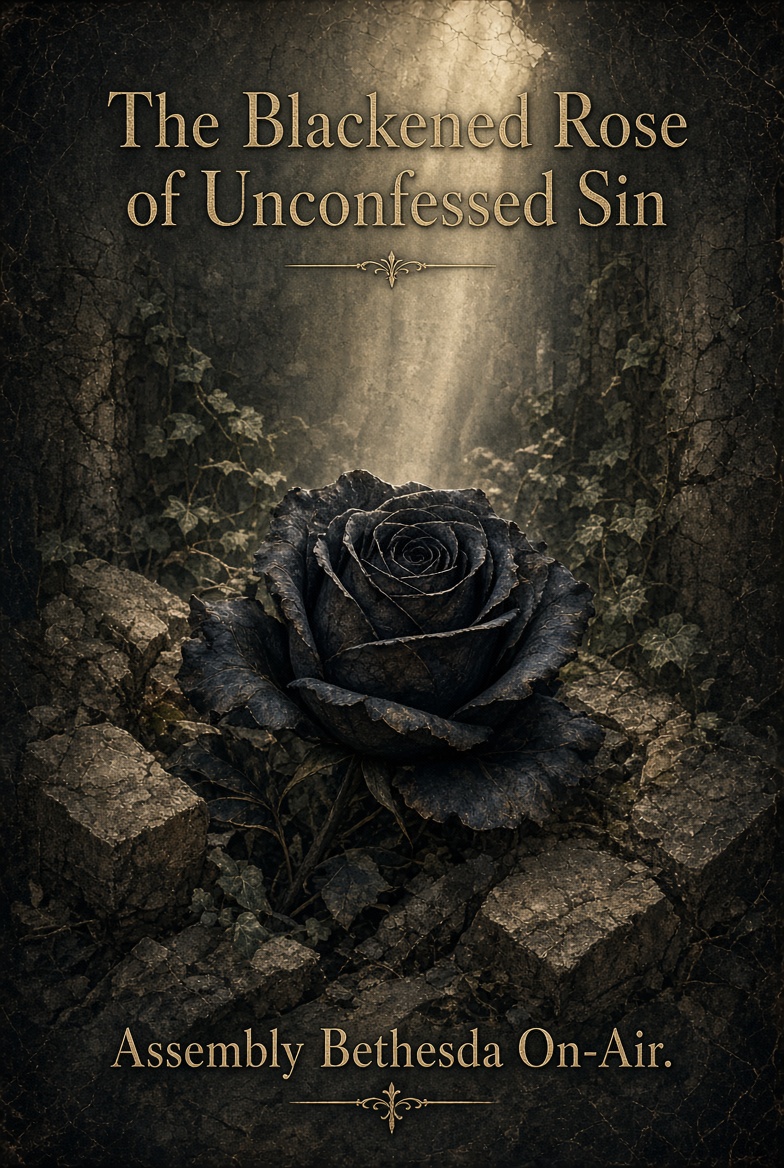
It used to be a rose with pure color and fragrance. It’s the picture of unconfessed sin. It doesn’t always arrive with noise or drama. It just stays, quiet and unaddressed, until the beauty God intended starts to fade. The color turns shadow. The scent turns heavy. What was once open and living begins to close in on itself.
As with that blackened rose, unconfessed sin doesn’t erase the fact that you’re still a rose; it just changes how you look, how open you are, how you can turn toward the light. Confession is the only way the blackening starts to lift. Not because confession earns anything, but because it lets grace in.
In scripture, sin isn’t just a minor inconvenience. It’s something that separates, clouds, and keeps the heart from the fullness of God. David wrote of the relief he got after speaking truth out loud to God. The weight didn’t go away because he did a ritual. It went away because he stopped pretending the darkness didn’t exist.
We all live with petals that are starting to turn. A sharp word left unrepented. A pattern of thinking we defend instead of exposing. A silent compromise that’s become so familiar to us. The rose doesn’t announce its blackening with a shout. It just gets heavier, less open, less able to catch the sun.
The good news is that the Gardener hasn’t abandoned the garden yet. Even when the roses’ color has turned to shadow, He still walks among them. He doesn’t want them to bleach themselves white first before He will approach. As he gets closer, the blackening starts to fade.
Self-punishment isn’t confession. It’s honesty. It’s the simple act of saying, “This is what I’ve carried, and I don’t want to carry it alone anymore.” When that happens, the rose starts opening again. Light, air, and living water reach places that were sealed shut, not all at once, or by itself.
Seeing something beautiful darken is sad. It’s even better to watch it come back to its true color. That recovery doesn’t come from effort alone. It comes from the steady, patient presence of the One who never stopped loving the rose, even as its petals turned black.
Unconfessed sin thrives in the shadows we protect. When we name it before God, it grows comfortable in the places we don’t name. Once we do, the conditions that allowed the blackening begin to change. The air moves. The light reaches farther. Slowly, the fragrance comes back.
Bringing the closed-up places into the open is not for God’s information. This is for our freedom. It’s not a call to frantic self-assessment.
Despite the blackening, the rose is still a rose. What defines it is the Gardener’s ongoing care and its willingness to open again. Openness isn’t natural when the petals have grown heavy. It’s a response to grace.
The choice remains. Carry the darkness a little longer, or speak it into the light. One path keeps the color deepening. The other begins the slow, sure return of what was.
All that’s needed is the honesty to let those hands reach the places that have been closed. The blackened rose doesn’t have to stay that way.
Honesty is confession. Reaching is grace. Recovery is the quiet miracle of a rose learning to open again under the patient care of the One who never left.