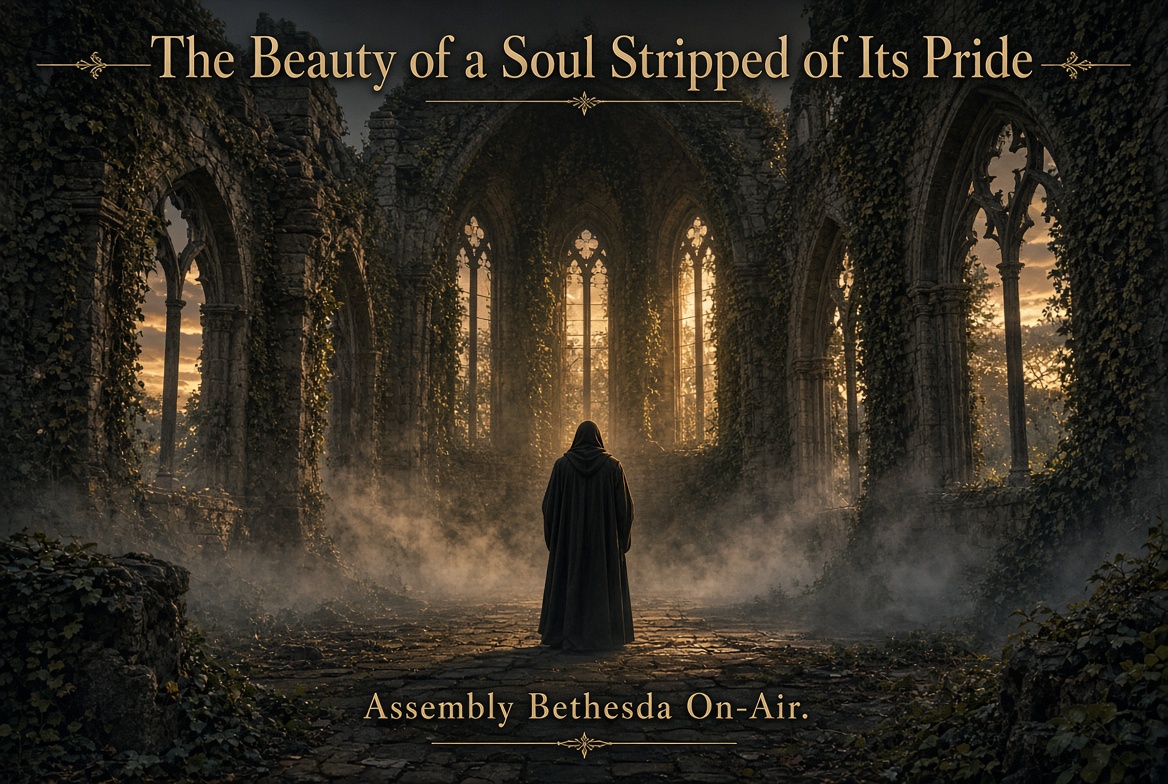
There’s a strange and quiet beauty that only shows up when pride is taken away. It’s not the kind of beauty that wants to be noticed, not the kind that’s polished and looks good in the right light. It’s quieter. It’s like old stone after the ivy’s gone back. It’s like a chapel that’s stood through storms but still holds a kind of soft light. The soul that’s been stripped of its pride still carries the same weathered grace.
We put on pride without realizing. It keeps us warm for a while. It tells us we’re fine, we have it figured out, we don’t need much help. It builds walls around our hearts and calls them strength. Yet those walls also keep out light. It keeps out the gentle voice that wants to talk to us. It keeps out the chance to be known as you really are. When pride starts to fall away, it’s like loss. It’s like being exposed. When the soul suddenly stands in the open air, the wind feels sharp at first. But something else happens too. Space opens up. Room appears for something better.
When you don’t have pride, you don’t pretend anymore. You don’t perform anymore. You don’t measure yourself against everyone else. You don’t need to be the one who always knows what to do or doesn’t worry. Honesty of that kind is rare and expensive. It costs us the image we’ve worked so hard to keep. It costs us the story we’ve made up about who we are supposed to be. But what remains is real. What remains can breathe. What remains can finally hear grace’s quiet invitations.
There’s still a presence in old monasteries and forgotten churches. Even though the walls are broken, the roofs let in rain, the floors are covered in leaves, yet something holy lingers. The stripped soul is a bit like that. It has lost its careful appearance, but it doesn’t have lost its purpose. It just might have found it more clearly. Without the burden of looking impressive, the soul can focus on what matters most. Mercy. When the noise quiets down, it can turn to the simple, steady presence of God that was there all along.
Grace tells us the places where we’re most undone are often the places where light can enter. Pride says we must protect ourselves at all costs. It whispers that vulnerability is weakness and asking for help is failure. If your soul is stripped, it doesn’t need to hide its cracks. You use them to grow something true. They become openings rather than flaws.
Only after pride has been laid down can there be a kind of rest. It’s easier to hold everything together once you’ve laid it down. The need to prove your worth starts to fade. In a quieter place, a different kind of strength shows up. It’s not the strength of control. It’s the strength of surrender. It’s the strength of a heart that doesn’t need to be the center of its own story anymore. That heart can finally look upward and outward with clarity.
You don’t have to pay attention to a soul like this. It just is. It’s in the way someone listens without having to correct. It’s in the quiet willingness to admit need. It’s in the resilience that keeps moving forward even when the old defenses are gone. The beauty of this person comes from truth rather than performance. By losing and being honest, it’s been honed.
High places get brought low so something better can rise. The proud are scattered so the humble can rise. The soul that clings to its own glory ends up empty. The soul that lets go finds itself held. It’s not a harsh exchange. It’s a gracious exchange. What’s taken away makes room for what’s given. Stripping is often the beginning of something much longer-lasting.
In the Christian life, this process isn’t a one-time event. Pride will grow back if we don’t watch. New layers form around old wounds. New reasons to protect yourself appear. So the stripping continues, gradually, over time. As each season removes another layer of self-importance, it deepens the capacity for love as well. When you leave your soul more bare, you make it available to God and to others. I’m open to the quiet work of becoming real.
Whenever you walk through an old abbey at dusk, the last light filters through broken windows, and the air is filled with sorrow and peace, that’s how it feels like a gothic hush. The stripped soul carries that same feeling. It knows loss. It knows the ache of things once crucial lying in pieces. But it also knows the strange comfort of standing in an open space with nothing left to hide. In that openness, presence can be felt more clearly. God meets us in the ruins without judgment, just a steady invitation to stay.
Stripping is never comfortable. It feels like grief. It feels like the ground shifts underfoot. But on the other side of that discomfort is a different kind of freedom. The soul doesn’t have to carry the exhausting weight of its own importance. Being known and still loved is wonderful. Being unfinished and still held is beautiful in a way polished perfection never can.
Consider the quiet saints and ordinary faithful ones who never sought the spotlight. Their lives often carry this stripped quality. They didn’t need to be impressive. They just kept walking, kept trusting, kept offering. It wasn’t their strength but their willingness to be weak before God that made them beautiful. Their impact wasn’t their perfection but their honesty. It doesn’t take dramatic gestures to do it. You just have to let pride loosen its grip a little every day.
When pride falls away, prayer changes. It becomes less of a performance and more of a conversation. The need to sound spiritual fades away. The words can be simple, even broken. Silence can be long. This kind of prayer is deeply restful. It is deeply transformative. It’s not necessary to strive to be noticed, just to show up as it is. As the soul prays this way, it takes on the shape of the One it meets.
It’s also about community. A stripped soul doesn’t need to compete or compare. It can accept its own needs without feeling threatened. It can offer help without getting credit. Relationships feel lighter and more real. The performance of belonging gives way to the simple gift of presence. Authenticity stands out like a candle in a dark hall in a world that often rewards image.
Beauty comes from letting go of pride, not achieving it. It comes when we stop holding onto what we want in life. It comes when we let grace do what we can’t do for ourselves. It comes in the ordinary moments of honesty, surrender, and quiet trust. Bit by bit, the heavy coat of pride is discarded, and what remains is lighter, freer, and somehow more radiant.
Self-hatred or false humility aren’t the point here. Truth is the point. The soul was never meant to bear the weight of its own glory. That weight was always too heavy. When it’s finally laid down, it finds it can stand up again. It discovers it can walk without having to constantly protect an image. It discovers it can love more freely because it doesn’t have to protect itself first.
After all, what you feared losing wasn’t what made you worth anything. Worth was always given, never earned. Identity was always held, never manufactured. The beauty that remains is the beauty of a life that has stopped trying so hard to be something and has begun simply being. That’s a quiet, enduring, gothic kind of beauty. It’s quiet and enduring. It just stays, like old stone under soft light, like a chapel that still holds space for praying long after the crowds leave.
It’s a good thing that the stripping comes. It’s a good thing to trust that what’s removed makes room for what’s true. And may we find, in the open space that remains, a beauty we couldn’t have imagined.