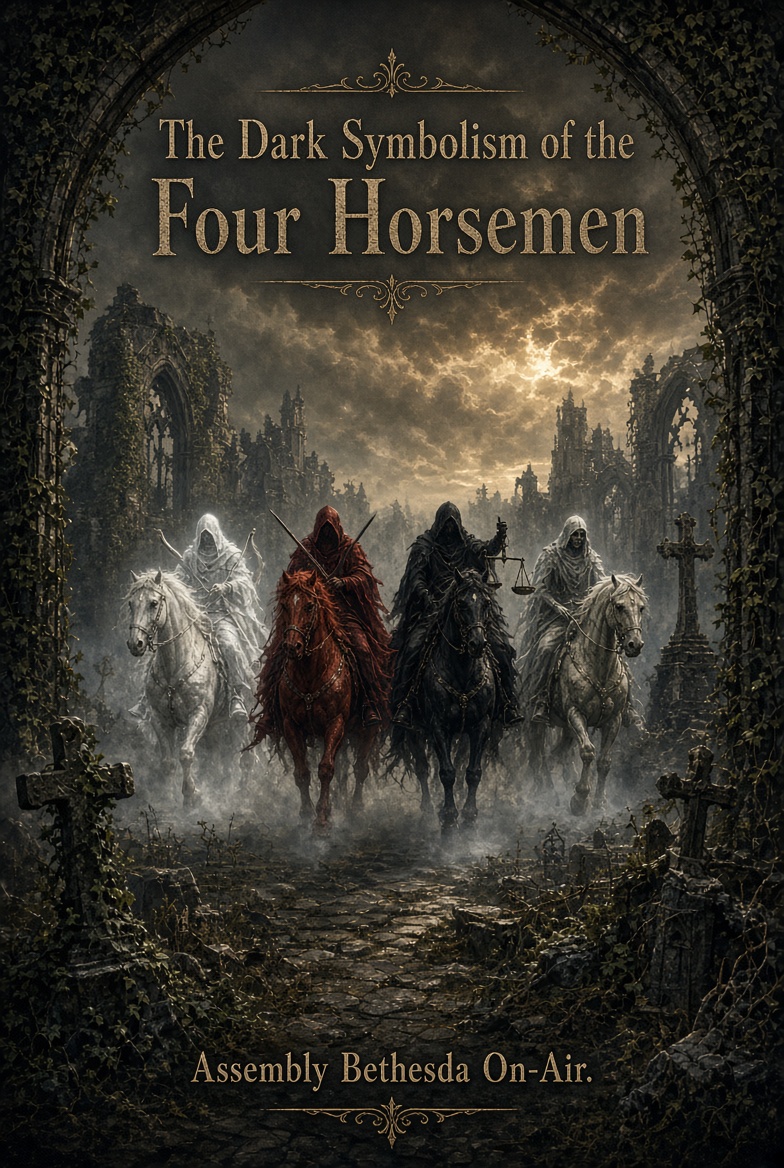
The Four Horsemen have always felt heavy. They ride through our imagination with a weight that settles deep. The images are stark, and the feeling they leave is even darker still. White horse, red horse, black horse, pale horse. War, famine, death. Yet for the believer who walks with Christ, even these dark symbols carry a strange kind of light. They’re not the final word. They’re the storm before the clearing.
We meet them in the opening of the seals. The Lamb who was slain opens the first seal, and a white horse steps forward with a bow and crown. There has been debate about whether the first rider is Jesus Christ or a false conqueror. The text leaves room for both readings, but overall, the chapter moves forward in a clear direction. There’s a coming judgment on the earth. Heaven’s paying attention. That’s enough to keep us on our toes.
The second seal breaks and a red horse appears. The rider gets a great sword and can take peace from the earth. People turn on one another, violence spreads. We’ve seen this horse ride throughout history more times than we’d care to count. The red horse doesn’t invent the darkness already present in human hearts. It just reveals it and amplifies it.
When the black horse shows up, it’s rider has scales. A voice tells us the price of grain: a day’s wage for a measure of wheat, three measures of barley for the same. Oil and wine will not be harmed. Scarcity settles in. The normal rhythms of provision are broken down. The black horse rides when the systems we rely on fail. People who once trusted the harvest suddenly find the shelves empty and fields barren.
Last but not least, the pale horse. Death rides it, and Hades is close behind. He is given authority over a fourth of the earth, killing with sword, famine, plague, and wild beasts. The pale horse closes the circle. When conquest starts, war speeds up, famine slows down, and death ends.
These images aren’t meant to be pretty. They’re meant to be true. Scripture doesn’t soften the edges of a fallen world. It shows us the full weight of what sin has done and still does. The Four Horsemen are symbols of that weight. If left to itself, the world drifts toward violence, scarcity, and death.
Even so, look at who opens the seals. It’s the Lamb, the Lamb who was sacrificed, the Lord who holds the scroll. The riders don’t ride outside His authority. They ride because the seals are opened. Judgment isn’t chaos. It’s orderly. It’s got a beginning, a purpose, and a finish.
This is where the Christian Gothic sense of things gets helpful. Gothic art and atmosphere have always loved the tension between darkness and light, ruin and restoration, shadow and presence that moves through shadow. The Four Horsemen fit right in with that tradition. They’re dark, yeah. They’re unsettling. They don’t let us pretend everything’s fine, but they’re also looking beyond themselves at the same time.
The white horse of conquest, whether it’s true or false, ultimately bows to the white horse in Revelation, the one whose rider is called Faithful and True. The red horse of war will one day face the Prince of Peace who ends every conflict. The black horse of famine will give way to the banquet table where the hungry are fed. When death and Hades meet, the pale horse of death will meet the One.
We live in the tension. The seals have been opened. The riders move through history in cycles and seasons. When wars flare, when food systems go bad, when death feels closer than it should, we feel their presence. There’s no way to avoid despair or hardening against it.
We’re invited to look at the Lamb who opens the seals, not to be distant from the suffering the riders bring. He entered the suffering. He carried it. He broke its final power. Revelation is filled with dark symbols. Without the cross, the horsemen would just be horror. With the cross, they become the dark road that leads to a city where there’s no night.
The Four Horsemen fit that mood. They’re the forgotten riders who still move through the world. They’re the ruins, the shadowy corridors, the broken altars, the sense that something holy has been forgotten or overlooked. The same tradition that loves the ruins also loves the light that falls through broken stone. It’s the horsemen that ruin things, and it’s the lamb that lightens them up.
We don’t want to become experts in end-time charts when we read these chapters. We want to become people who know how to live when the seals open. That means holding onto the truth that judgment is real and mercy is deeper than that. It means refusing to look away from the violence and the scarcity, but also refusing to believe those things have the last word.
While the pale horse rides, the empty tomb remains empty. Death has been given authority for a while, but it’s already been defeated. This is the strange hope that runs through the darkest pages of Scripture. The symbols are dark because the world is dark. But the hope is bright because the Lamb is brighter.
So we keep watch. We pray for those caught under the hooves of war and famine. When the black horse appears, we practice generosity. When the red horse stirs, we speak peace. When the pale horse gets close, we remember the resurrection. Throughout all of this, we keep our eyes on the One who opened the seals and is going to close the book someday.
Until the end, the Four Horsemen will ride. Yet they ride under the authority of the Lamb. The darkness is real. The light is even more real.