The Somber Parable of the Barren Vineyard
The vineyard was once full of promise. Stone walls surrounded it, a tower watched, and the soil was cleared carefully. The vines were planted, chosen, and tended, but the fruit never came. Over the course of the growing season, leaves appeared, shadows grew longer, and the ground became harder. Instead of being filled with grapes, what should have been empty stood tangled in thorns and quiet.
Isaiah tells us a somber parable about the barren vineyard. It’s not just a comfort story. It’s a story that looks straight at the places in us that look fruitful from a distance but are empty up close. Scripture tells us this more than once in Isaiah. Isaiah plants a vineyard on a fertile hill, digs it up, clears stones, and waits for grapes. But wild fruit turns out to be bitter and useless instead. As the Master seeks fruit, there is none on the leafy fig tree. The word that follows isn’t soft. The tree is cut down. The vineyard is left to the brambles.
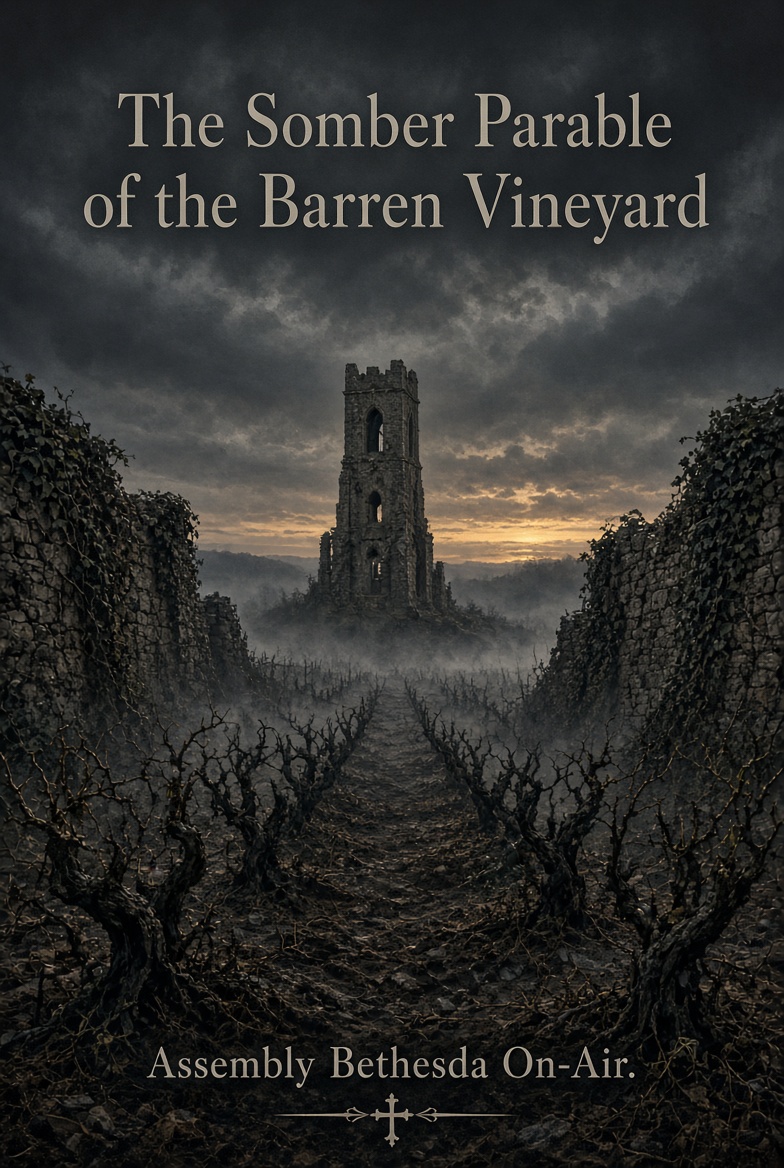
A crumbling wall. Ivy claiming the stones. A watchtower with empty windows. Rows that should’ve been orderly now twisted and dry. Mist that settles low and doesn’t lift. There’s an atmosphere of neglect that’s been going on too long, of beauty that’s decayed, and of a sacred space that no longer yields what it was supposed to. In spite of all that, the parable doesn’t end in complete ruin. The Owner still walks the rows. Why aren’t there any fruits?
Fruit doesn’t appear by accident. It takes staying, abiding, pruning, and the steady work of the Spirit. Branches that separate themselves from the vine wither. Hearts that treat grace as optional grow hard. Throughout the parable, we see how we can look busy with leaves of activity, leaves of reputation, and leaves of religious habit, but never produce fruit of love, joy, peace, patience, kindness, goodness, faithfulness, gentleness, and self-control. Despite getting all the advantages, the vineyard still doesn’t produce anything lasting.
It’s sad to recognize. The Owner didn’t plant for failure. The walls weren’t made just to look good. The tower wasn’t built to sit empty. Expecting fruit isn’t harsh. It’s just the natural outcome of being part of a true vine. When the fruit doesn’t show up, the loss is real. When the fruit doesn’t show up, the ground that could feed many remains barren. The wine that could have gladdened the heart doesn’t get pressed. The parable makes us feel the weight of that empty space.
The same Scriptures that pronounce judgment also open a door. The Master of the Vineyard is patient. He digs around. He fertilizes. He waits another year. The axe isn’t the first word; mercy is. There are always the same calls: come back. Abide. Let the pruning knife do its work so more fruit can come. Gothic shadows don’t have the last word. The walls can be repaired. The tower can be manned again. New growth can push through the thorns. With the rows cleared, the true Vine can give life to every branch.
We’re not talking about the distant past here. We’re talking about the seasons when the soil feels dry and the sky feels closed. This isn’t a parable for the distant past. The sad tone is necessary because the stakes are real. A barren vineyard is a tragedy. An unfruitful life is a tragedy. It’s for those moments when we realize we’ve been tending appearance more than substance. However, the greater tragedy would be to leave the rows as they are and never invite the Owner back.
Let Him show you the places that haven’t been tended. Let Him prune what needs pruning. Let Him speak life into what looks done. The vine was never meant to stay barren. The vine is supposed to bear fruit that lasts, and the one who planted it hasn’t abandoned it.
While the shadows may be deep, the stones may be cold, and the silence may seem heavy, the Owner still walks. The call goes out. The possibility of fruit hangs in the air like the first light after a long night. That’s the hope hidden in the somber parable. Vine is still alive, so the barren vineyard does not have to stay barren. Every branch that abides in Him will bear fruit when the season comes.