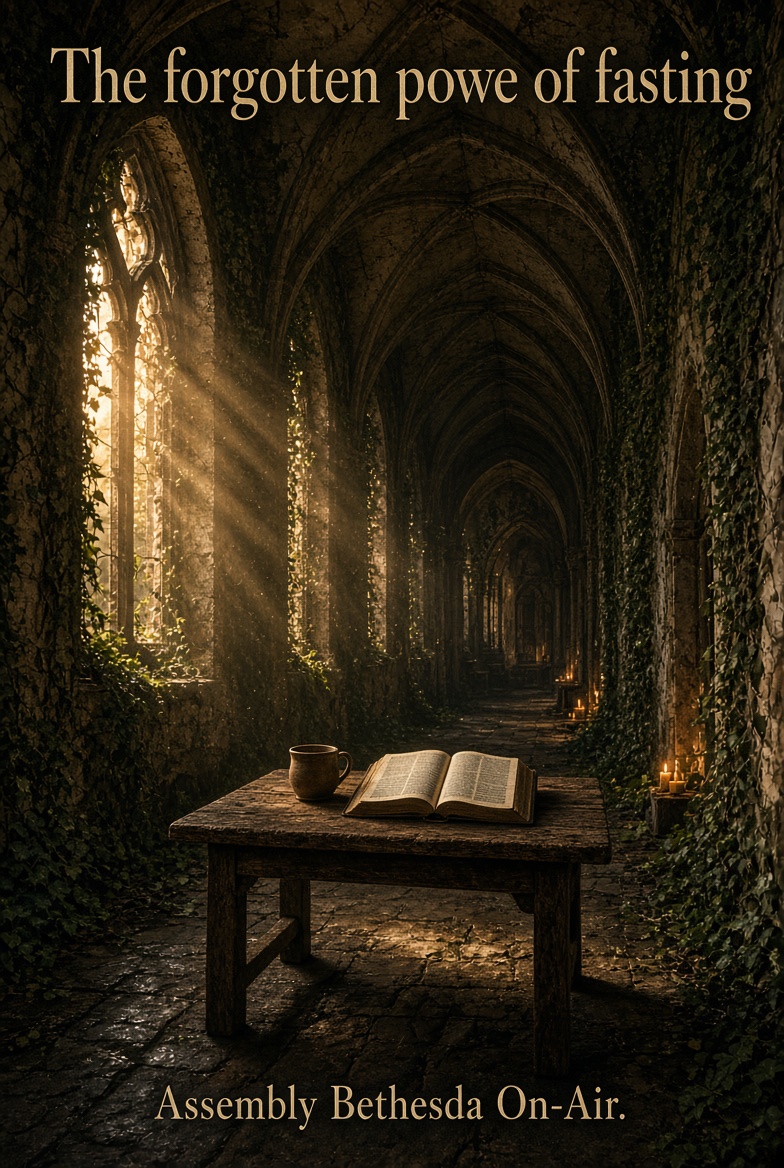
There’s still a practice many have put aside in the quiet corners of old stone chapels, where ivy climbs the walls and candlelight flickers against the dark. Fasting. The deep, deliberate turning away from the table so that you can lean closer to God. Not the modern version of skipping a meal. It’s a forgotten power, one that once shaped saints, prophets, and ordinary believers who knew hunger of the body could open doors full stomachs close.
We live in a time of constant feeding. Screens, schedules, and snacks fill every gap. It feels strange to go without. But Scripture is full of people who chose emptiness so they could be filled with something bigger. In the wilderness, Elijah walked on just a single meal. In the days before his public ministry, Jesus fasted. These weren’t isolated willpower acts. In the shadow of self-denial, they were invitations to a different kind of strength.
Fasting isn’t about earning favor or proving devotion. It’s about creating space. When the body is quieted, the heart grows louder. Distractions that usually clamor for attention start to fade. In that quieter place, prayer takes on a different weight. The mind is less scattered. The spirit is more open to listen. Gothic imagery fits this perfectly. Just picture a long and narrow monastery corridor lit only by thin light through high windows. The air is cold. There’s a thick silence inside us when we fast. We walk those inner halls and discover rooms we didn’t know existed.
Many people approach fasting with fear. They worry about weakness, irritability, daily life’s demands. Those worries are valid, but the power of fasting isn’t in perfect performance. It’s in turning toward God with an empty hand. The body notices the absence. The spirit notices the presence that steps into that absence. Even a partial fast, a single day without a meal, or a season of simpler eating, can change the atmosphere of the soul.
In modern life, hunger isn’t just a sign of lack. In the spiritual life, it can be a teacher. Hunger reminds us that we’re not self-sufficient. It makes us realize we can’t sustain ourselves on our own. The heart can learn to say, “I need You more than I need this.” That confession carries a lot of weight. It’s the start of dependence, and dependence is the soil where faith grows.
There was a reason early Christians fasted before decisions, before missions, before moments of crisis. They understood some battles weren’t won by words alone. Some battles had to be won by denying the flesh so the spirit could rise. As a Gothic concept, fasting refers to stepping into a shadowy valley with a deliberate emptiness and trusting that the Light will meet us there. It’s not dramatic for drama’s sake. It’s practical. It’s ancient. You can still get it.
When you fast, your everyday days change. Meals become less automatic. You have more time for prayer or silence. The mind, no longer distracted with the next snack, can focus on Scripture or God’s quiet presence. Over time, this practice trains the will. What begins as an effort becomes a rhythm. The body learns that it can wait. The soul learns that waiting isn’t wasted.
Those forgotten powers also have a communal side. When a group of believers fasts together, something shifts in the air. Shared hunger leads to shared focus. Prayers have a different intensity. In an age of isolation, that shared emptiness can become a surprising source of connection when it’s leaning in the same direction, away from self and toward the One who sustains.
The point isn’t rigid rules. The point is that the heart is willing to make room for the good things. Fasting isn’t for every season or every person the same. Wisdom is important. Age, health, and circumstance all play a part. The principle remains the same. We set something good aside so we can reach for something better. For some, it’s a day without food. For others, it may be a media fast, a social media fast, or a season of simpler meals.
The gothic beauty of this practice lies in its contrast. Light shines more clearly against darkness. Fullness feels deeper after emptiness. The power of fasting isn’t in the hunger itself, but in what it allows. The Spirit gets to speak in places that are usually noisy. The inner rooms get clear. The competing voices get quiet.
We’ve all felt the dullness of constant consumption. We eat, we scroll, we fill every quiet moment, and then wonder why we don’t pray enough. Fasting offers a different path. It’s not a punishment, it’s a return. We can choose to walk through the shadowy corridor of self-denial, knowing that on the other side there’s a table prepared by the One who knows how hungry we are.
In the quiet that follows, God is often already waiting. It doesn’t take special credentials or dramatic settings. It only takes a willing heart and courage to let go of something for a while. It doesn’t take special credentials or dramatic settings to use this power. In the empty places where His presence settles most deeply, old habits can become the foundation for new strength.
Step into the practice. Let your body get quiet. Let your spirit lean forward. Discover again the power that so many have ignored. The ancient truth still comes out in the silence of fasting. God meets the hungry. He fills the empty. The forgotten path still leads home.