In the places we don’t want to go, there’s a strange, holy beauty. Inside every believer, there’s a chamber of the heart that prefers the dark. Pride still whispers, old wounds still hurt, secret doubts still live there. While we decorate the outer rooms with Scripture verses and worship songs, the inner chamber stays dark and locked.
Christian Gothic doesn’t pretend that chamber doesn’t exist. It walks directly toward it. It doesn’t flinch at the cracked stone, the dust, or the lingering smell of fear. It believes that the God who created the heart won’t be frightened by what’s inside it. He’s the one who lets it out.
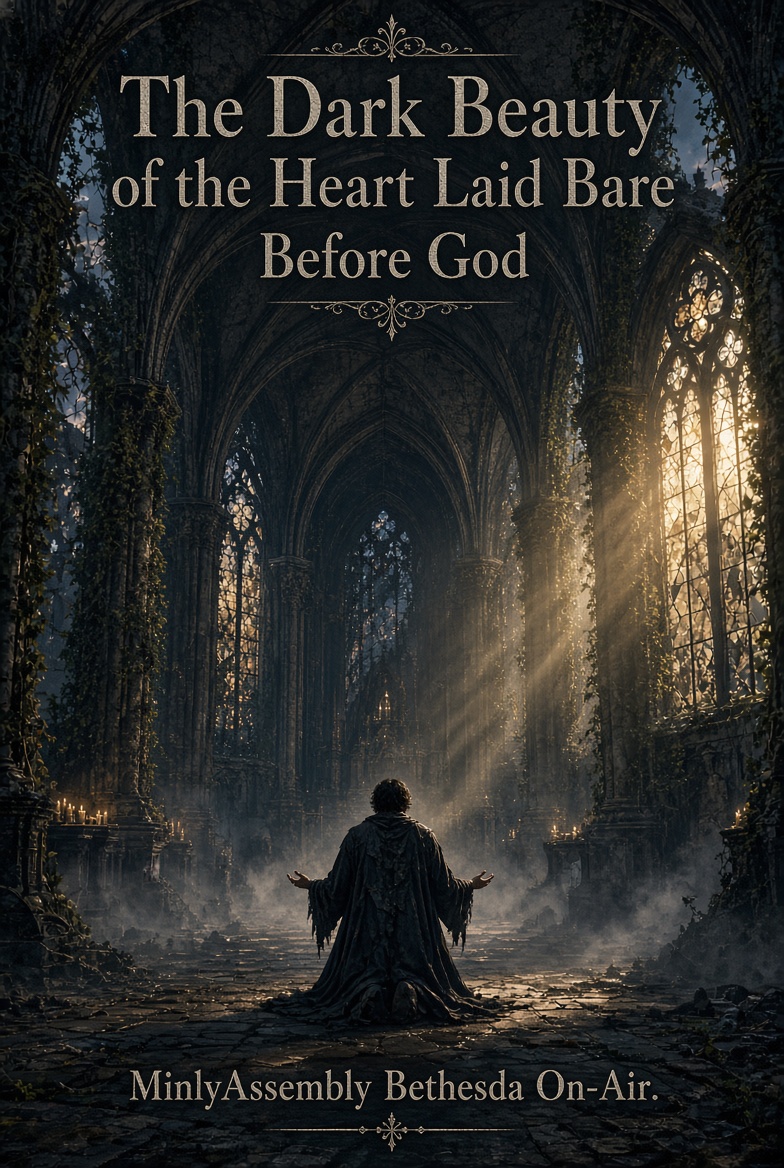
At twilight, picture a cathedral with broken windows, ivy climbing the pillars, candles so long gone they’re just stubs. In the nave, a single figure kneels. That figure’s heart isn’t hidden behind silence anymore. It beats slowly, its scars visible in the fading light. That’s what the Spirit keeps painting for us. The heart laid bare isn’t a tragedy. It’s the beginning of real communion.
This truth never gets softened by scripture. The psalmist asks, “Search me, O God, and know my heart.” He doesn’t just ask for a polite glance. He asks for a thorough search that leaves nothing untouched. The prophet Jeremiah reminds us that the heart is deceitful above all things, but the same God who diagnoses the disease also promises a new heart of flesh. The moment of exposure happens between diagnosis and promise.
The Gothic vision slows down the process. It lets the silence stretch until the real condition of the heart becomes clear. We confess in general terms, get forgiveness in general terms, and hurry back to safer ground. The light only feels like mercy then, not judgment. It lingers in the ruins. It lets the silence stretch until the real heart condition becomes clear.
Ruins are beautiful because they prove God has already been there. There’s still scent of old sacrifices on the broken altar. Shattered stained glass still filters light. Empty choir stalls still echoe with once-sung songs. When you lay your heart bare, you discover you weren’t alone in your darkness. The same God who walked among the tombs of the gospel still walks among our private failure tombs.
This exposure isn’t mainly about shame. Shame is the voice that says, “Hide again.” The Spirit says, “Come further into the light.” The difference is everything. Shame isolates. Revelation invites. Shame builds thicker walls. Revelation starts tearing them down stone by stone.
Consider the woman who touched the hem of Jesus’ garment. She spent years hiding her condition. One act of desperate faith brought her out. Jesus didn’t just heal the body; he called her daughter up front. The heart that had been hidden was suddenly known, and knowing became the doorway to belonging.
Peter’s threefold denials are followed by a threefold restoration beside a charcoal fire. David’s adultery and murder are met with a prophet’s pointed story, and then a psalm of brokenness that comforts us still. The prodigal’s rehearsal is interrupted by a father’s embrace. In each case, the heart is exposed, and not rejection but deeper relationships result.
Faith in modern times tends to be clean, polished, immediate triumphant. Christian Gothic faith is honest. It knows that the night of the soul isn’t a failure of faith, but a passage through it. When we stop trying to rush the dawn and let the night do its slow, refining work, we see the dark beauty.
What does that work look like in ordinary life? It looks like sitting with the prayer that feels unanswered instead of filling the silence with noise. It looks like naming the sin instead of hiding behind it all together. It looks like admitting the fear that God might not be as kind as we have claimed. It looks like bringing the contents of the heart, not the curated version, into the presence of the One who already sees.
Beauty is dark because it grows where light is resisted. Beauty is beauty because the light that finally enters is stronger than the resistance. When the heart has been laid bare, you find that it wasn’t as abandoned as you thought. It’s the scars that once marked isolation that become the places where grace shines through.
It’s because of this that old cathedrals still talk. They’re broken, not hidden. Cracks in the stone, missing statues, weathered walls are all in plain sight. Yet people still go into them to pray. It’s not despite the damage that makes them beautiful. It’s because of the damage.
This is how it is with the heart. When it is laid bare before God, the damage is no longer a secret to be managed. It becomes part of the testimony.
The invitation remains open. Not to a life of perpetual gloom, but to a life of honest light. Darkness is real, but it isn’t final. The heart that dares to stand exposed discovers that the same God who sees everything loves everything He sees. That is the dark beauty. It’s the strange and holy gift of a naked heart.
Into the ruined nave. Kneel. Unlock the chamber you’ve kept locked. Let the light find the things that’ve been hidden. The beauty that follows won’t look like the glossy pictures of easy faith. In the morning sun, it looks like scarred stone. It looks like a heart that has stopped beating. It’s like home.