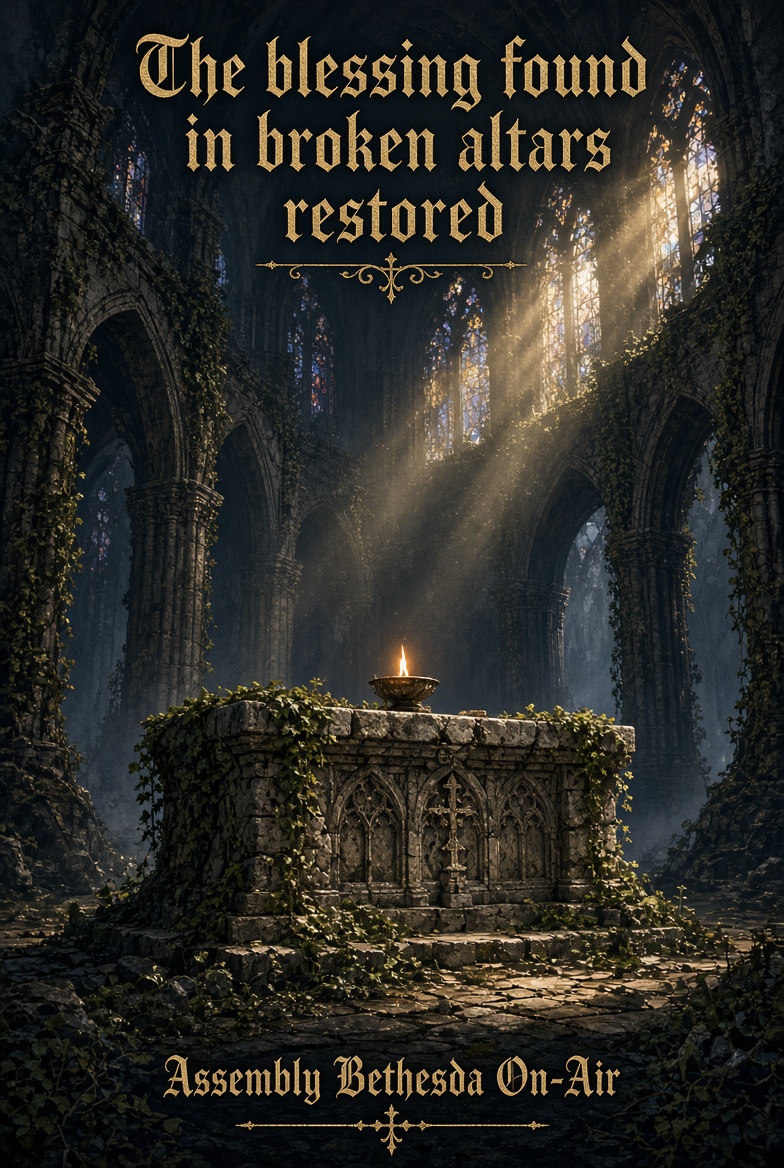
You can find them in old gothic churches in forgotten corners of the country. Cracked stone, scattered ashes, moss creeping into places where fire once burned. Light slips through broken windows in thin, pale beams. Dust floats. Cold floors, high arches that look like they lean toward heaven even when the roof gives way, and those silent slabs of rock where people once laid down what matters most. Yet, if you look closely, something stirs. A sense that the brokenness isn’t the end.
The Bible is full of altars. Abraham built them. Jacob poured oil on rocks. Elijah stacked 12 stones on Mount Carmel and called down fire. Israel repaired the altar of the Lord after years of neglect. This wasn’t just a decorative piece, it was a place to meet. A place where heaven and earth met. A place of surrender, of blood, of praise, of covenant. When an altar breaks, it’s more than just stone that falls. Turning toward God is the habit that grows quiet. It’s the daily choice to bring the ordinary and the costly to God.
Broken altars hurt in the soul. The place we used to pray without distraction gets cluttered. The quiet corner where we once met with the Lord becomes a storage place for half-hearted promises and unfinished plans. Worship that once rose easily now feels forced or absent. The fire has gone out. The stones have shifted. Life is like that. Seasons of loss, busyness, quiet disappointment, choices that seemed small. Sometimes the altar doesn’t shatter in one dramatic moment. It just erodes, grain by grain, till one day you stand in front of what used to be sacred space and realize it’s silenced.
But the gospel doesn’t leave us there. A blessing awaits in the midst of restoration. It’s not a shiny, effortless blessing that shows up fully formed, but a deep, quiet kind that grows as they gather the stones again. It’s all about noticing. Looking at the broken pieces without turning away. Naming what’s gone. Admitting that the place of meeting has fallen apart. This honesty is worship in itself. God isn’t surprised by cracks. He’s always worked with imperfect stuff.
It takes time and intention to restore an altar. You find the stones that still hold shape, clear off the debris, and set the foundation again, one piece at a time, carefully. When you’re a Christian, this looks like getting back to the simple things that used to hold God’s presence. Opening the Word, kneeling even when the knees protest. Speaking truth, even when your voice shakes. Setting down the ordinary offerings of the day, the worries, the gratitude, the unanswered questions. The fire may not go out right away. The sense of presence may return gradually. But the act of rebuilding is already faith.
We can learn a lot about this process from Gothic spaces. There’s no tidy part of this space. Light and shadow are there at the same time. Beauty and decay live together. Restoring the altar in such a place doesn’t erase the cracks’ history. The scars remain visible in the stone. New mortar shows. There’s still a trace of the empty fire pit in the rebuilt fire pit. But once the stones are set again, the light falls differently. It’s now usable. We can hold a meeting again. No, the blessing isn’t that the past never happened. It’s that it doesn’t matter anymore.
Having to rebuild takes courage. It’s easier to walk away from the ruins and find a new place. It’s easier to pretend the old altar never mattered. But the Spirit often calls us back to the spot where it broke. It’s not nostalgia. This is resurrection work. It’s stacking stones with your hands still remembering how they felt when they fell. It’s not nostalgia, it’s resurrection. God can raise a place of worship from the dust just like he raised Christ from the dead.
Think about the people of God in the days of Ezra and Nehemiah. There was a mess in the temple. The walls were broken. The altar needed to be repaired before anything else could be done. They didn’t wait for perfect conditions. They didn’t expect every stone to look brand new. They just started. Even though the work wasn’t finished, they offered sacrifices on the restored altar. The blessing didn’t wait until the work was done. It arrived midway through. The same thing happened to us. The blessing of a restored altar often appears while the work is still underway. A sudden clarity in prayer. A quiet peace that settles in the middle of an ordinary day. An increased appetite. They’re not rewards for perfection. They’re signs the meeting place’s back open.
Darkness is real, but light is stronger. Broken arches still frame the sky. Cracked floors still hold the weight of those who come to kneel. The night doesn’t disappear from a restored altar. A heart that returns to a place of surrender doesn’t erase every scar, it just refuses to let the night define the space forever. But it chooses to let the scars be part of the story of return. In the choice. In the slow, steady work of stacking stones again. In the decision to light the fire again.
At its best, the church is a community of people who know what broken altars look like and don’t leave one another alone in the ruins. We get the stones together. We remind each other of the promises that still stand. We sing the old hymns in rooms that still echoes the silence of the past. We make space for the slow return. Through that shared labor, the blessing multiplies. What started as personal restoration becomes a community force.
There’s no promise that every broken thing will get fixed in our lifetime. It’s quiet confidence that the God who once met His people at stone altars still meets them in the places they rebuild. When the fire is lit again, the blessing isn’t always dramatic. It’s the steady warmth that comes back. It’s a sense of a renewed conversation with heaven. It’s the knowledge that we can meet once more on the ground beneath our feet.
So gather the stones. Clear the space. Set the foundation. Light the fire. The altar might still show its history. The light might still fall through broken places. But the meeting can start over again. In that meeting, the blessing waits. Not as a distant prize, but as a quiet presence from the One who never left the ruins, and who loves seeing the stones rise again.