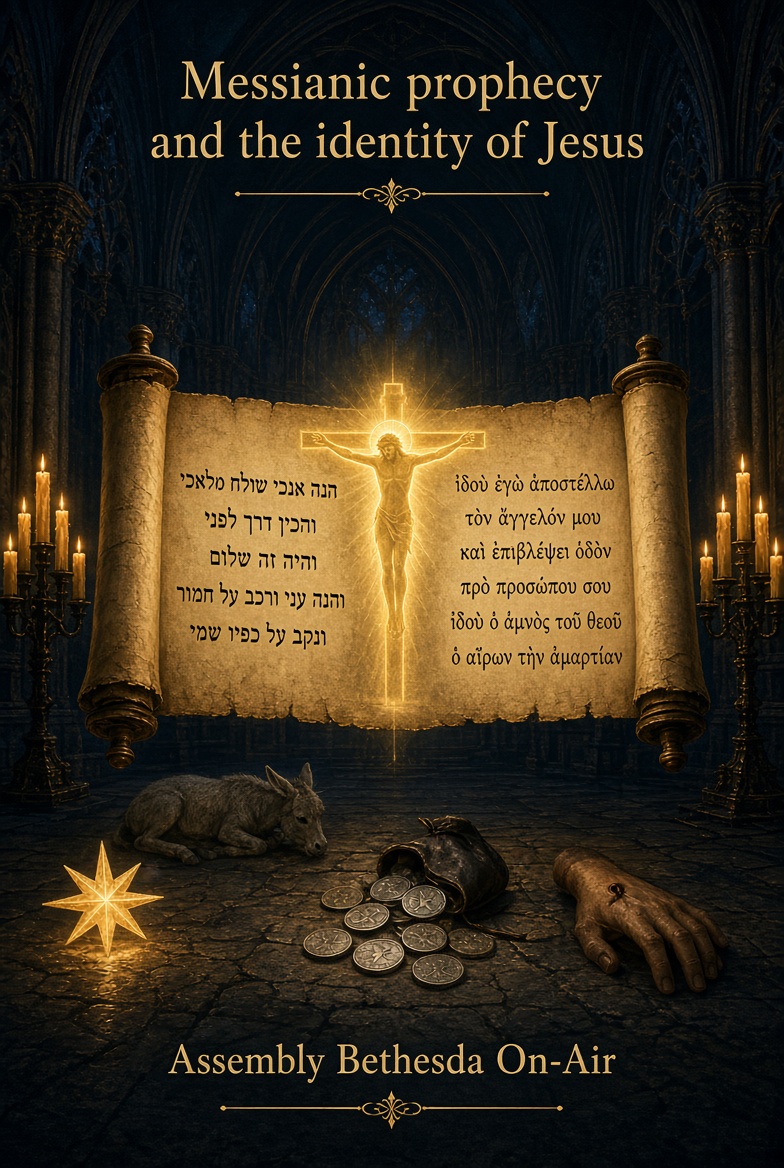
Nights have always drew those who walk by faith. Candlelight against stone walls, quiet weight of old words, a sense that something greater moves just beyond what we can see. The ancient promises of the Messiah take on a deeper hue in that atmosphere. They’re not dry lists of predictions. They’re living threads that lead to Jesus through the darkness.
It starts out with a world in a state of shadow. God talks about the One who will crush the serpent’s head from the very beginning, and that promise sits there like a single flame in the darkness. It goes on and on. The prophets talk about a ruler from the line of David, a servant who suffers, a king riding on a donkey, and a pierced figure whose wounds heal. Each word is spoken into real history, real suffering, real waiting.
In the gloom of national failure, Isaiah says a child will be born, a son will be born, and the government will rest on his shoulders. He’s the Wonderful Counselor, Mighty God, Everlasting Father, Prince of Peace. Later in the same prophetic passage, he paints a portrait of a suffering servant. He’s wounded for our transgressions. By his stripes we’re healed. The two pictures, the exalted ruler and the broken servant, don’t cancel each other out. In one person, they meet.
In Micah’s passage, he says Bethlehem is the birthplace of the ruler whose origins are ancient. Zechariah sees him riding a donkey humble and humble. A cry of abandonment opens Psalm 22, which describes piercing hands and feet, clothing being divided, and lots being cast. These aren’t vague spiritual images. They’re precise strokes on a canvas that one life can fill.
As soon as Jesus steps into the story, the shadows change. He’s born in Bethlehem. He rides a donkey into Jerusalem. The words hang in the air for centuries and settle onto him like a cloak, but he’s still silent before his accusers. He’s pierced. The identity of Jesus wasn’t invented by the church later. Prophets had already drawn it in charcoal and blood.
Often, prophesy is treated like a puzzle. The Christian Gothic way of reading is quieter. We read the text like one sits with a stained-glass window at dusk. Light passes through the colored glass and the image becomes clear. The prophecies are the glass. Jesus is the light. Without him, the colors remain dark. With him, everything shines.
The servant songs tell us why the servant is chosen, upheld, and given as a covenant to the people and a light to the nations. He doesn’t cry out or raise his voice. He’s like a bruised reed who won’t break. Yet this same servant is crushed by the Lord’s will. Jesus walks that line. Strength and gentleness, glory and suffering, come together in the same person. He silences the storm and then lets himself be silenced by the cross. When he multiplies loaves, he becomes the broken bread.
When Daniel sees one like a son of man coming with the clouds of heaven, he gets dominion that won’t fade. Jesus takes that title and applies it to himself. When the high priest asks him if he’s the Christ, the Son of the Blessed, he points back to that vision. It’s staggering how the Son of Man will come on the clouds and sit at the right hand of Power. It’s the natural culmination of every promise before.
The Psalms keep the same tension alive. The king is set on Zion, yet he is surrounded by enemies who mock him. Jesus prays those psalms from the cross. He’s taken up, but he’s brought down to the dust of death. He doesn’t invent a new spirituality just for the moment of crisis. He steps into the old words and fills them with his own blood.
Jesus isn’t just a moral teacher or a political revolutionary. The prophecies demand more of him. Only Jesus fits the whole pattern, a person who is both fully human and more than human, who suffers as a servant and reigns as a king, who is rejected by men but chosen by God. The pieces don’t force themselves onto him. He finds them home.
When life seems heavy and the light seems far away in the quiet hours, these ancient words become companions. They remind us that God has never been silent. For a long time, He has spoken through the dark. The same voice that called Abraham out of Ur, that spoke to Moses from the bush, that thundered on Sinai, is the voice that finally took on flesh and walked among us. The Messiah isn’t an idea. There’s a name, a face, a history of wounds, and a throne that won’t be moved.
The Christian Gothic heart finds rest here. We don’t need to brighten the shadows to make the story work. Shadows are an integral part of it. The suffering servant walks through them. The pierced king wears them like a robe. On the other side of the grave, that same king stands in light that no darkness can overcome. The prophecies weren’t meant to remove the night. They’re meant to light up the darkness.
When we read the old texts with open hands we discover that Jesus is not an interruption of the story. He is the story reaching its full height. All the previous promises lean toward him like a cathedral leaning toward its highest window. The light comes through, and suddenly everything makes sense.
Those who walk by the light of Messianic prophecy don’t shout out the darkness. They just keep reading until they see the face of Jesus. It is written in ink that doesn’t fade, and in blood that doesn’t fail, and it is written for us, so even in the darkest night, we know who we are, and whose voice has been calling us all along.
The ancient words still speak. The shadows still wait. And the One who fulfills every promise still stands at the center, wounded and crowned, servant and king. That’s the identity the prophets saw. That’s the identity the cross confirmed. That’s the identity the empty tomb sealed forever.