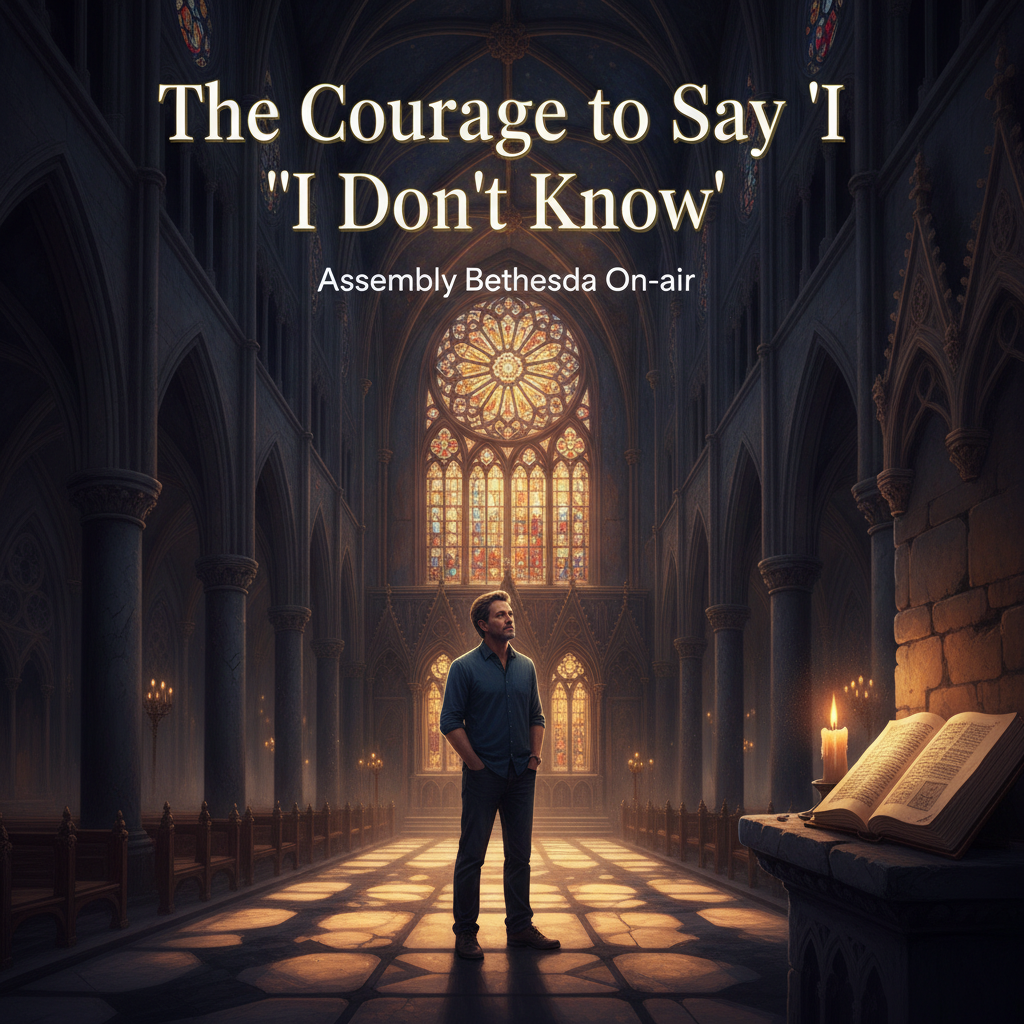
There are times when Christians stand in stone halls without words. The question comes sharp or soft, from a friend, a stranger, or from their own hearts. What should we say?
Faith doesn’t demand that every mystery yield at once. Scripture itself holds spaces where the full picture remains veiled. Job sat in ashes and asked questions that heaven answered with more questions. Although storms raged, the disciples still didn’t know who this man really was. Paul talks about seeing through a glass darkly. Knowing we don’t know isn’t failure. It’s the first step toward honesty with God.
It can feel hard to come up with a tidy answer when someone asks about suffering that has no neat explanation, about why prayers go unanswered, about what happened to those who never heard the gospel. Despite this, forced answers often ring hollow. Better to speak from the place where certainty ends and trust begins. A simple sentence can do the trick. “I don’t know, but I know the One who does.” That confession keeps the conversation rooted in relationship.
Those with a Christian Gothic sensibility love unfinished rooms. The full light is promised but still not fully present. Vaulted ceilings fade into shadow. Stained glass tells stories in fragments of color. It’s like how our knowledge of God remains partial until eternity. It’s the cross, the empty tomb, and the Spirit who dwells inside, and the rest is waiting for a clearer day.
Saying “I don’t know” can feel like surrender, but in truth, it mirrors the incarnation, the eternal Word becoming flesh and dwelt among us, accepting limitations of time and place. If the Son of God lived in human frailty, His followers don’t need to pretend omniscience. When questions about free will and divine sovereignty come up, when the problem of evil looms large, when personal loss leaves the mind blank, an honest reply honors both the seeker and the mystery.
You’ll get it if you use practical words. First, acknowledge the weight. “That’s hard to sit with.” Second, admit the limits of your understanding. “I don’t know the answer.” Third, emphasize what’s sure. “I do know God is good, that Christ has overcome, that nothing can separate us from His love.” Fourth, invite shared waiting. “Would you like to pray about it together, or just sit with the question for a while?” These steps keep the conversation warm and grounded.
Gothic faith embraces the night. Monasteries kept vigils through the darkness. Cathedrals were built so that light could only pierce stone at certain angles and at certain times of the year. Christians can live with unanswered questions without panicking in the same spirit. It’s not empty in the dark. It’s where the stars become visible. Silence before God doesn’t mean absence. It’s a posture that helps us hear better.
Often people weary of slogans lean closer to someone who speaks with quiet honesty. Some people worry that admitting ignorance will weaken their witness. A believer who says “I wrestle with this too” creates a space for real encounter. The gospel isn’t about cataloguing every answer. It’s about a Person who entered the brokenness and rose again.
You have to turn to practices that keep your soul steady when the mind reaches an edge. Read the Psalms aloud, those raw cries that never try to be certain. Light a candle and watch it hold steady against the dark. Walk under trees whose roots drink from unseen water. These simple acts remind the heart that knowledge isn’t the only way to know. Presence matters more.
It’s stronger to admit limits in community. A voice says, “I don’t know,” another answers, “Neither do I, but we can wait together.” At its best, the church isn’t a hall of experts, but a group of pilgrims moving toward the same light under the same shadowy arches. It’s gentle. Nobody has to fill every silence with doctrine. Sometimes the most faithful word is the one that leaves room for God to speak later.
There’s nothing more Gothic than a doorway half open. A corridor that turns into a deeper hall. Faith lives on such thresholds. We’re standing between what’s already been and what’s yet to come. Between redemption and not seeing it fully yet. When questions arrive that no commentary can settle, Christians can just step through the doorway without demanding a map of every room beyond.
The truth is what you hold. Let the rest fall into the hands of those who hold you. Tell me I don’t know with the same confidence I’d once said I believed. Both of these sentences are part of the same journey. They form a posture of trust that can walk through any night. One confesses the limit of the creature. The other confesses the greatness of the Creator.
Christian hearts don’t have to solve every riddle before they can rest, just like stone walls don’t need every answer written upon them. Candles don’t need to explain why they push back darkness. Let the quiet become an offering when you ask a question. The admission of not knowing becomes a doorway to greater dependence. Even when our words run out, the One who knows everything remains near.
The gift of not knowing grows roots in the shadows. Not having all the answers keeps us listening. And we offer our warm, steady answer to others and ourselves: I don’t know, but I trust the One who does. That’s enough for now. That’s enough until tomorrow morning.