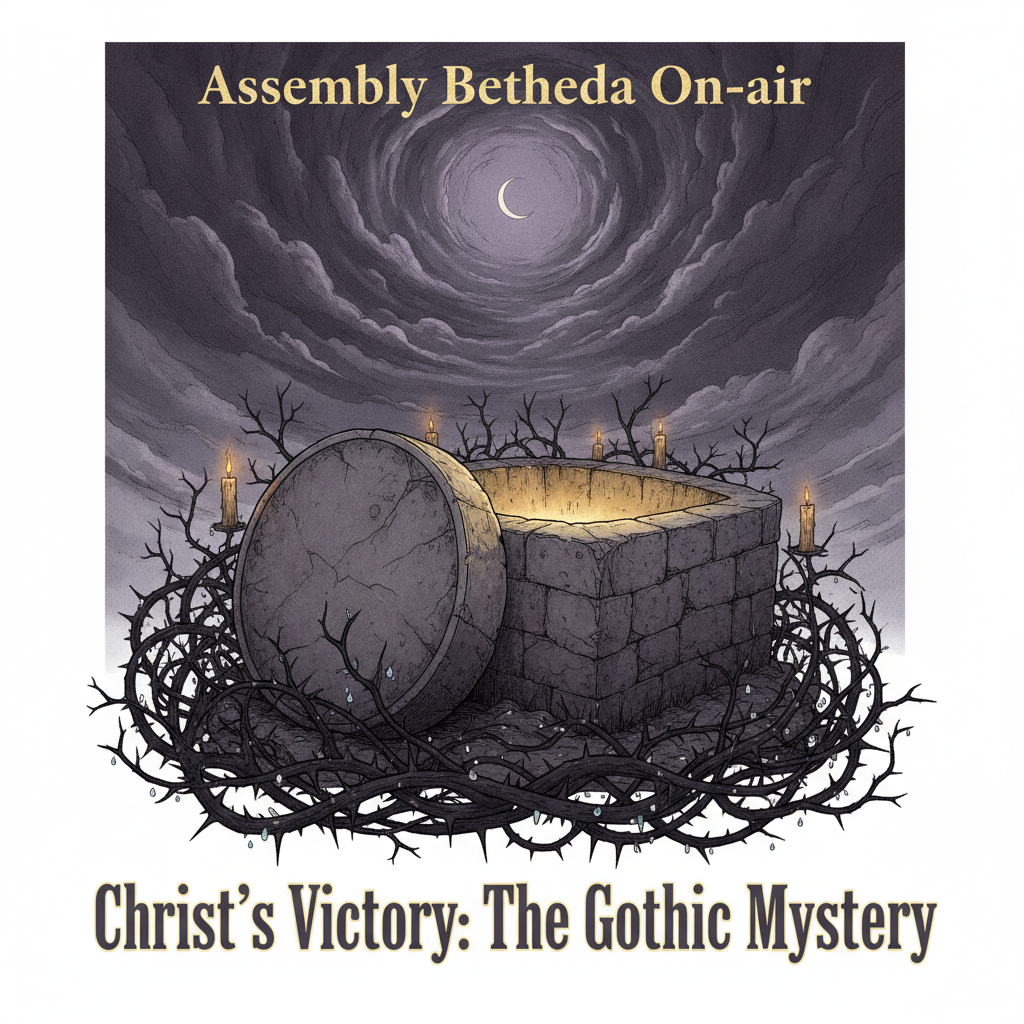
In the Christian Gothic sense, this victory isn’t bright and tidy. It’s built from stone tombs, bloodied wood, and the long silence of Saturday. The story of Christ’s victory over death sits at the center of everything we hold dear, but it carries a strange, quiet weight that almost can’t be described in words. It’s the moment when darkness meets light it couldn’t swallow, when the final enemy discovers it can’t claim anything anymore. There’s still a scent of myrrh and a cool dampness to the triumph.
It was a time when the world was heavy with the knowledge that death always won. Kings fell, prophets fell, ordinary people fell, and the ground took them without apology. Then came the One who walked among us, healing and speaking with authority that unsettled the powerful. They took Him, they judged Him, they lifted Him up on a cross that looked like pure defeat. It was dark in the sky. The earth trembled. A veil tore in the temple. The garden looked for all the world as if the darkness had won. The body was taken down, wrapped, and sealed inside a rock-cut tomb. Guards watched. The stone was rolled into place. Night settled over the garden.
The cross was not just an instrument of suffering. It was the place where the full weight of human brokenness and the power of death itself were gathered into one moment and answered. Christ didn’t dodge the grave. He went down into the silence, carrying every sorrow, every failure, every fear that ever made the human heart tremble. It won’t ever be the same for anyone else. Then, on the third day, the silence broke.
Human hands didn’t roll the stone away, the guards didn’t open the door, the grave itself couldn’t hold what was in there. Darkness filled the grave space where death had claimed dominion. The One who had been laid down stood again, not as a spirit drifting through walls, but as a living man whose wounds still showed and whose voice still carried the same warmth that had called friends by name. Death had tried its best, but it didn’t work.
The mystery we keep coming back to isn’t a puzzle to solve with clever reasoning, but something that settles into you. Christ’s victory means the grave is no longer the final word over any life that belongs to Him. Shadows once felt permanent have been pushed back. Even though we’re still human and still living in a world that’s not completely rebuilt, fear of the end still haunts us, but it’s no longer the last page. This last page belongs to the risen One who has already walked through the dark and come out the other side.
There’s something powerful about Gothic spaces. The arches reach toward heaven while the stone floors keep cool underfoot. Candlelight flickers on walls that have seen centuries of prayer. It’s like ordinary daylight turned into something richer, something that holds both sorrow and glory in the same beam. That’s the atmosphere of this victory. It doesn’t erase suffering, it just places it in a bigger frame where it’s already over. Every time we remember the empty tomb, we are reminded that the darkness is temporary and the light isn’t.
The victory reaches into ordinary days too. When grief settles heavy on the chest, when the future feels uncertain, when the body gets tired and the spirit gets thin, the risen Christ isn’t far away. In the past, he’s carried what we carry. His victory isn’t a distant historical event we admire from a distance. It’s a living foundation for everything we do. When everything shakes, the same power that opened the tomb can keep the heart steady.
This mystery also has a quiet invitation. We can love more openly. We can forgive more freely. We are free from the constant need to protect ourselves from every possible ending because Christ has broken the grip of death. Because we know the One who walked into the most difficult place of all and came out alive, we can walk into it without pretending it’s not hard. The Gothic sensibility understands that beauty and solemnity often share the same room. Sometimes joy comes as a steady confidence that the worst thing isn’t the last thing.
The early believers understood this. They gathered in the shadow of empires still wielding the power of the sword and the cross. They talked of a risen Lord while the stones of Jerusalem still remembered the darkness of that Friday. They knew the world wasn’t the final authority. Death had been defeated in the most public and irreversible way. Their courage didn’t come from pretending the world was safe. Every other empty place in the human heart changed because of the tomb’s emptiness.
In the tension between the already and the not yet, the full flowering of this victory still lays ahead of us. Bodies still grow weak. Loved ones still leave. Night still comes. Yet every sunrise echoes the first morning when the stone was rolled away. You’re participating in the victory that’s already won every time you show mercy, keep hope, or refuse bitterness the final say. Death wasn’t defeated once long ago, that’s the mystery. Despite believing in the One who walked out of the grave, defeat continues to unfold in every generation.
So we hold the story close to our hearts. We let its shadows and its light shape the way we see our own days. The cross wasn’t the end, the tomb wasn’t the end, and Saturday wasn’t the end. In light of the resurrection, the end is life. The shadows break, the grave gives way, and the light that filled the garden that morning never fades.