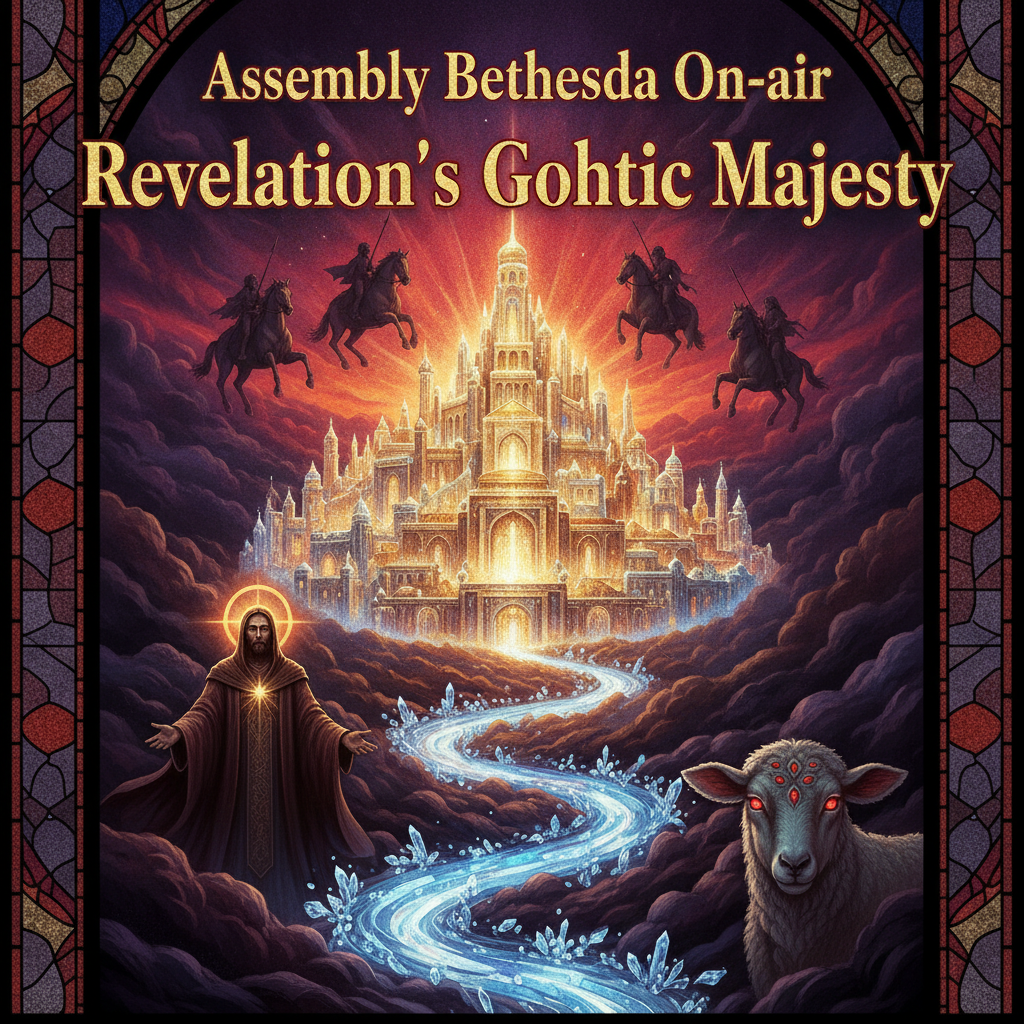
If you open the book of Revelation at midnight, you’ll feel like you’re walking into an ancient cathedral. Moonlight filters through stained glass windows revealing fiery eyes and rainbow thrones. It’s filled with Gothic beauty, these wild, dramatic images that mix dark and light, terror and triumph, all leading to God’s glory. This chat explores how Revelation feels like a grand Gothic tale, filled with haunting scenes that reveal Christ’s breathtaking beauty.
A visual feast, Revelation isn’t just a puzzle book. John describes Jesus with wooly hair, fire-burning eyes, bronze feet, and a voice like rushing water. He holds seven stars and a sharp sword from his mouth. It’s a Gothic icon, majestic and intimidating, yet full of power and care. It pulls you in with its intensity.
Chapter four has a stunning throne room. The throne is in heaven with a person sitting on it who looks like jasper and ruby. A rainbow surrounds it, shining like an emerald. There are 24 elders around it, dressed in white clothes with gold crowns. Thunder and lightning come from the throne. There’s something divine about every detail in a dimly lit sanctuary. The beauty is in the sense of awe it inspires, the sense that something eternal is happening.
He stands at the center of the throne despite looking as if he’s been slain. He’s the only one who can open the scroll. This Lamb, Jesus, takes it, and the creatures and elders fall down with harps and bowls of incense, which are the saints’ prayers. A new song comes out about the Lamb being worthy. It’s a scene of Gothic beauty. The slain Lamb is the hero, turning horror into hope.
As the seals open, the drama builds. The four horsemen ride out, bringing conquest, war, famine, and death. Death rides on a pale horse, and Hades follows him. There is an air of Gothic here, like riders emerging from fog-shrouded ruins. Yet God’s justice and control are beautiful even in judgment.
In response to the souls calling for justice, white robes are given to them. It’s a cosmic upheaval painted in vivid, dramatic colors, beautiful in its raw power and reminder that the world isn’t ultimate. The sun turns black, the moon like blood, stars fall, the sky recedes like a scroll. Mountains and islands move. People hide in caves.
In chapter seven, the servants of God are sealed. One hundred and forty four thousand Israelis, plus a big multitude from every nation, standing before the throne in white robes, holding palm branches. Day and night, they serve in the temple. The throne will shelter them. No more hunger, thirst, or scorching heat. The Lamb will lead them to springs of living water, and God will wipe away every tear. The white robes and palm branches evoke victory parades in shadowy halls, Gothic beauty at its best.
More striking imagery comes in the seven trumpets. A burning mountain in the sea, Wormwood poisoning water, dark skies. Then locusts with human faces, crowns, and scorpion tails from the Abyss. During the sixth trumpet, a massive army with fire-breathing horses is unleashed. This scene is intense and eerie, like nightmares carved into stone on a cathedral facade, but it highlights God’s sovereignty and repentance. They reveal spiritual truths in a beautiful way.
In the middle, a woman dressed in the sun, moon under her feet, crowned with twelve stars. A dragon with seven heads and ten horns tries to devour her child. Michael fights the dragon in heaven. The woman gets wings so she can fly to a prepared place. Gothic drama comes from these symbols, battles mirrored on earth in heavenly realms.
The beasts from the sea and the beasts from the earth are introduced in chapters twelve and thirteen. Even here, beauty shines through perseverance. The Lamb and the 144,000 on Mount Zion singing a song no one else can. In the midst of darkness, pure, redeemed voices.
The bowls of wrath pour out, but later we see Babylon’s fall, the great prostitute in purple and scarlet, adorned with gold and jewels. It’s a dramatic fall, mourned by kings and merchants, yet celebrated in heaven. Smoke rises forever. Her ruin is like a once glorious, now corrupt castle crumbling.
Toward the end, heaven opens, with a white horse whose rider is called Faithful and True. He judges with justice. He has eyes like blazing fire, many crowns on his head, robes dipped in blood. He is called the Word of God. Armies of heaven ride white horses. The beast and false prophet are defeated. Satan is bound. The thousand years. Final judgment. A new world.
The New Jerusalem descends, shining with the glory of God. The walls are jasper, the city like glass. Foundations are precious stone, gates are pearl, streets are gold. It doesn’t need a temple because the Lord God and the Lamb are its temple. There’s no moon or sun because God’s glory is its light. The Lamb is its lamp. Only those in the Lamb’s book of life are allowed in. No more curse. God will live with his people. He will wipe every tear. No more death, mourning, crying, or pain. The old order is over.
Gothic beauty in Revelation. It embraces shadows, monsters, and cosmic storms, but always leads to radiant light. The contrasts make it rich, like black velvet against shining gold in old church art. Casually speaking, it’s a story that feels terrifying and comforting because Jesus wins.
In Revelation, God shows us the beauty of his plan. The dramatic visions stir the soul, just like walking through a grand, dimly lit Gothic building with every arch and statue telling a redemption story. We’re called to live holy lives, worship the Lamb, and long for a city where night never falls.
In our everyday world, these images remind us that behind the ordinary is a spiritual reality full of wonder. The Gothic style helps us appreciate the mystery without losing the hope. Next time you read Revelation, let the beauty wash over you, the dark tones making the light shine brighter. It’s all about Jesus.