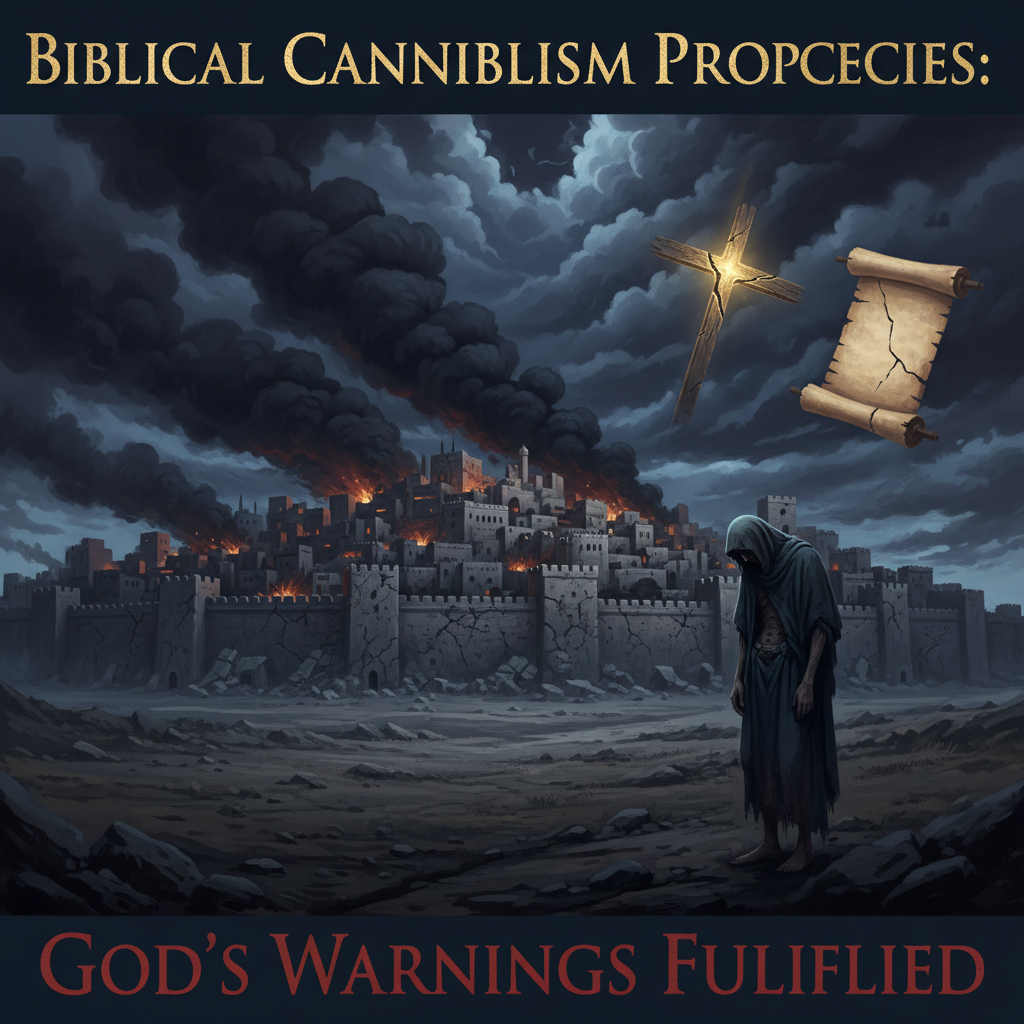
In the shadowed corners of the Bible, where warnings cut deep like ancient stone carvings, we find some of the most chilling words ever spoken by God. These are not tales meant to scare for fun. They are serious calls to faithfulness, painted in the grim colors of what happens when a people turn their backs on the Lord during times of siege. Today we step into that gothic atmosphere and look closely at the prophecies and one real account about cannibalism, specifically the horror of eating their own children as judgment. It is heavy stuff, but it shows how far things can go when covenant is broken.
Deuteronomy 28 lays out blessings for obedience and curses for turning away. In verses 53 through 57, the picture gets dark fast. It speaks of a time when enemies surround the cities, when food runs out completely. The text warns that people will eat the flesh of their own sons and daughters because of the desperate pressure from the siege. No one will share, not even a mother with her newborn or the husband with his family. It is a complete breakdown of everything human and decent, all because they refused to listen to God’s voice.
This is not random cruelty. It flows straight from the covenant. God had given clear ways to live, and when those are ignored, the consequences match the depth of the betrayal. Leviticus 26:29 echoes this same warning. In the list of curses for disobedience, it says God will make them eat the flesh of their sons and daughters. Again, the siege imagery is there, the walls closing in, the starvation driving people to the unthinkable.
Jeremiah 19:9 takes it further into prophetic territory. The Lord tells Jeremiah to speak against the city, saying that because of their idolatry and shedding innocent blood, He will cause them to eat the flesh of their sons and daughters during the siege. Friends will eat each other too, the desperation spreads like a plague. It is judgment on a nation that forgot who brought them out of Egypt and gave them the land.
Then we have the historical account that makes the prophecies real. In 2 Kings 6:28-29, during the siege of Samaria, two women make a pact to eat their sons. One woman shares her child, but the next day the other hides hers. The king hears their cries and tears his clothes in horror. This is not metaphor. This happened. The Bible records it plainly so we never forget how low a people can sink when they reject God’s ways.
These passages paint a gothic scene of crumbling walls, empty streets, and the kind of hunger that twists the soul. Imagine the once thriving cities now prisons of fear. The air thick with smoke from distant fires, the cries of the starving echoing off stone. This was the reality for Israel and Judah when they chased false gods and ignored the prophets.
The casual reader might wonder why such extreme language. It is because God takes covenant seriously. These warnings were meant to shock the people into repentance before it was too late. The gothic tone, the horror elements, serve to wake up sleepy hearts. Even today, these verses remind us that sin has teeth. It leads to destruction that feels like being consumed from within.
Let us walk through each verse more slowly, keeping it real and straightforward. Deuteronomy 28 is like a long contract with two columns. Blessings on one side, curses on the other. The cannibalism part comes deep in the curses. It describes the enemy pressing hard, no escape, food so scarce that the most tender parts of society break first. The compassionate woman who would not even let her foot touch the ground becomes someone who secretly eats her own children. The image is meant to horrify so that obedience looks beautiful by comparison.
Leviticus 26 sets similar stakes. It is part of the holiness code. Stay faithful, enjoy the land. Turn away, face escalating discipline. By the time you reach eating your own children, the discipline has become full judgment. The land itself would turn against them, producing nothing, leaving them to consume what they should have protected.
Jeremiah delivers these words while standing at the potter’s house or the valley of Hinnom. The prophecies are acted out with broken pottery to show how God will break the city. The cannibalism warning is tied directly to their worship of Baal and child sacrifice. They killed their children for idols, so in judgment they would be driven to eat them in desperation. Poetic justice wrapped in horror.
The 2 Kings account happens in real time. King Joram is ruling, the Arameans have Samaria locked down. Famine is so bad a donkey’s head sells for huge money, and people are trading dove droppings for food. Then these two women come forward with their story. It breaks the king. He knows this is the fulfillment of the prophets’ words, and yet he still struggles to turn fully to God.
What does all this mean for us in our modern world? The gothic lesson is that ignoring God leads to self destruction. Societies that reject truth eventually devour their own future. We may not see literal sieges in the same way, but the spiritual hunger is real. The call is still to repent, to return, to honor the covenant through Christ.
These passages also point forward to the need for a Savior. Jesus speaks of end times with similar warnings of tribulation and distress. The horrors of the past remind us how serious the stakes are and how beautiful the offer of grace remains. Even in the darkest prophecies, God’s mercy is present because He warned ahead of time.
The atmosphere of these texts feels like walking through an old cathedral at midnight, torches flickering on scenes of judgment carved into the walls. It is Christian gothic at its core, beauty and terror mixed together to draw the heart back to holiness.