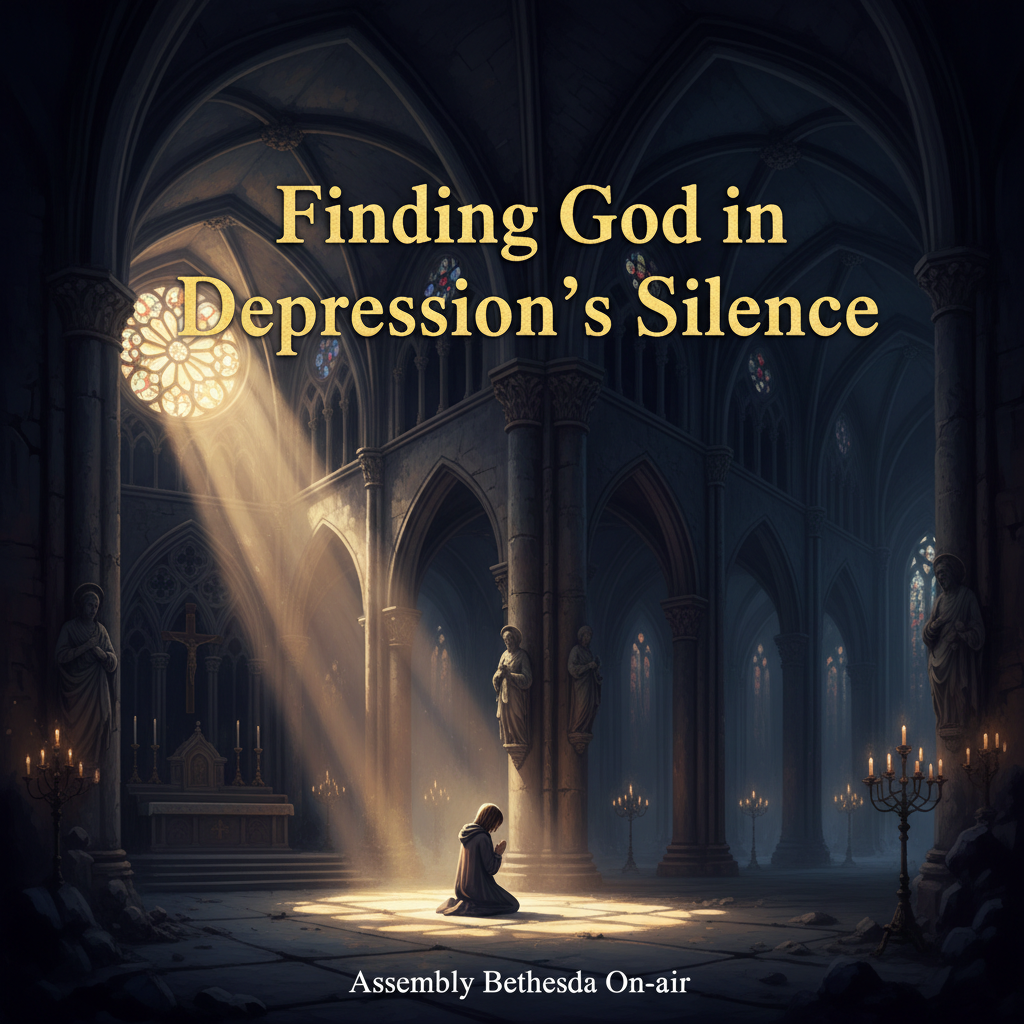
In the dim glow of flickering candlelight inside old stone churches, where shadows stretch long across ancient floors, many believers find themselves whispering the same painful question. Why have you forsaken me. This cry echoes from the lips of Jesus himself on the cross, and it hits hard when depression wraps its cold fingers around your heart. Today we walk through this Gothic Christian journey together, casual like friends sitting in the back pew after everyone else has gone home, exploring how God shows up even in the heaviest silence.
Depression often feels like a vast empty cathedral at midnight. The stained glass windows that once poured colorful light now look dark and lifeless. You pray, you read scripture, you sing the old hymns, yet the answers refuse to come. The silence presses in, thick and heavy. It makes you wonder if your words bounce off the vaulted ceilings and fall back down unheard. But here is the truth wrapped in mystery. That same silence held the son of God when he uttered those words, My God, my God, why have you forsaken me. He knew the ache. He carried it for us.
Think about the Gothic cathedrals of old Europe. They were built with pointed arches reaching toward heaven, yet their interiors could feel overwhelming and cold. The builders understood something about faith. Beauty and sorrow can live in the same space. Your depression does not cancel out your faith. It becomes the very place where faith gets forged in ways brighter days rarely allow. When the world goes quiet and God seems distant, that is the moment to lean into the cross, not run from it.
The psalm Jesus quoted did not end with abandonment. It moves from despair to declaration. The writers of scripture knew these valleys well. They wrote poems and songs in the minor keys, full of longing and honest questions. We can do the same. Instead of forcing cheerfulness that feels fake, we sit with the shadows and invite Jesus right into them. He is not afraid of the dark. He conquered it.
Casual truth here. Sometimes you wake up and the weight feels like stone blocks piled on your chest. Getting out of bed takes everything you have. Church friends might mean well with their quick verses, but the silence remains. In those moments remember the garden of Gethsemane. Jesus asked for the cup to pass, yet he submitted. His obedience did not remove the suffering immediately. It carried him through it. Your obedience in the silence does the same work.
God often speaks loudest in whispers. In the Gothic tradition, artists painted saints with sorrowful eyes and golden halos. The contrast was deliberate. Light shines brightest against deep darkness. Your depression, that heavy fog, creates the backdrop where God’s presence can eventually glow with real power. Not in a flashy way, but in quiet endurance, in the choice to keep believing when every feeling screams otherwise.
Let us talk practically, no fancy theology terms. When the silence hits, keep doing the next right thing. Light a candle. Read one verse slowly. Play music that matches your mood instead of pretending you feel joyful. Gothic Christian music often carries that haunting beauty, organs swelling like distant thunder while voices cry out for mercy. Let it wash over you. Feel it.
The cross was the ultimate silence before the greatest victory. Three days in the tomb must have felt eternal to those who loved Jesus. Yet resurrection came. Your silence will not last forever either. One day the stone will roll away in your own story. Until then, cling to the promise that nothing separates you from the love of God. Not depression, not doubt, not the darkest night your mind can create.
Keep showing up. Even if your prayers feel empty, say them anyway. The cathedral builders did not quit when the project felt impossible. They placed one stone at a time. Your faith grows the same way, one small act of trust at a time in the middle of the quiet.
Jesus understands your forsaken feeling because he lived it. He did not skip the pain. He went through it completely. That makes him the perfect companion when depression turns the volume down on everything good. Talk to him honestly. Yell if you need to. Cry. Sit in silence with him. He is there.
The Gothic style reminds us that faith can be both beautiful and broken at the same time. Crumbling ruins still stand as witnesses. Your life does too. Even when you feel like ruins, God is restoring the cathedral of your soul piece by piece.
So when the question rises again, Why have you forsaken me, remember it is not the end of the story. It is part of the story that leads to hope. Hold on, friend. The light is coming. The organ will play again. The candles will burn brighter. God has not left the building. He never does.
Expanding further on this idea, picture yourself walking through the nave of a massive Gothic cathedral during a storm. Rain lashes the windows, wind howls around the buttresses, and inside it feels like the whole structure might groan under the pressure. That is depression for many of us. The external chaos mirrors the internal storm. Yet those same cathedrals were engineered to withstand centuries of such storms. Their design embraced tension, using the weight of the stones to support the soaring heights. In the same way, the weight of your depression can actually press you into a deeper reliance on Christ. The very pressure becomes part of the support system for your soul.
Continuing casually, it helps to remember that seasons of silence have always been part of the Christian walk. From the early church fathers who retreated to deserts, to medieval monks who copied scriptures by candlelight in cold stone rooms, believers have learned to meet God in emptiness. You are continuing a long line of faithful hearts who chose to stay even when feelings faded. That choice matters. It is worship of the highest kind.
Let us linger a bit longer on the practical side. When motivation disappears, create simple anchors. Set a small wooden cross on your table and rest your hand on it while you breathe. Speak the words of Psalm 22 out loud, even if your voice cracks. Walk slowly through your day, noticing small beauties like the way light falls on a windowsill. These little things become threads of connection in the fabric of silence. They do not end the depression instantly, but they weave hope into the pattern.
Another layer to this Gothic faith is the idea of sacred waiting. In those grand old churches, people would sit for hours in prayer, watching candles burn down. Time moved differently there. Depression forces a similar slowness on us. Instead of fighting it, embrace the waiting as holy ground. God is rarely in a hurry. His best work often happens in the quiet hours when we have nothing left to offer but our presence.
As the hours stretch into days and weeks, doubts may multiply like shadows at dusk. You might question if God hears, if he cares, if this will ever lift. Bring those doubts straight to the cross. Jesus voiced the ultimate doubt in that forsaken cry, yet he still entrusted his spirit to the Father. Model that trust. Say with him, into your silence, Father, into your hands I commit my spirit. Release control. Rest in the middle of the unknown.
The beauty of this path is how it transforms the pain over time. What starts as a cry of abandonment becomes a testimony of endurance. The same cathedral that felt cold and empty at midnight fills with morning light, revealing colors and details you missed in the dark. Your life will do the same. The depression carves out space for greater joy later. It deepens your capacity to love, to empathize, and to worship with authenticity.
Keep going, one breath, one prayer, one step at a time. The architect of your soul sees the full design. What looks like chaos to you is careful construction to him. Trust the process. The silence is not punishment. It is preparation.