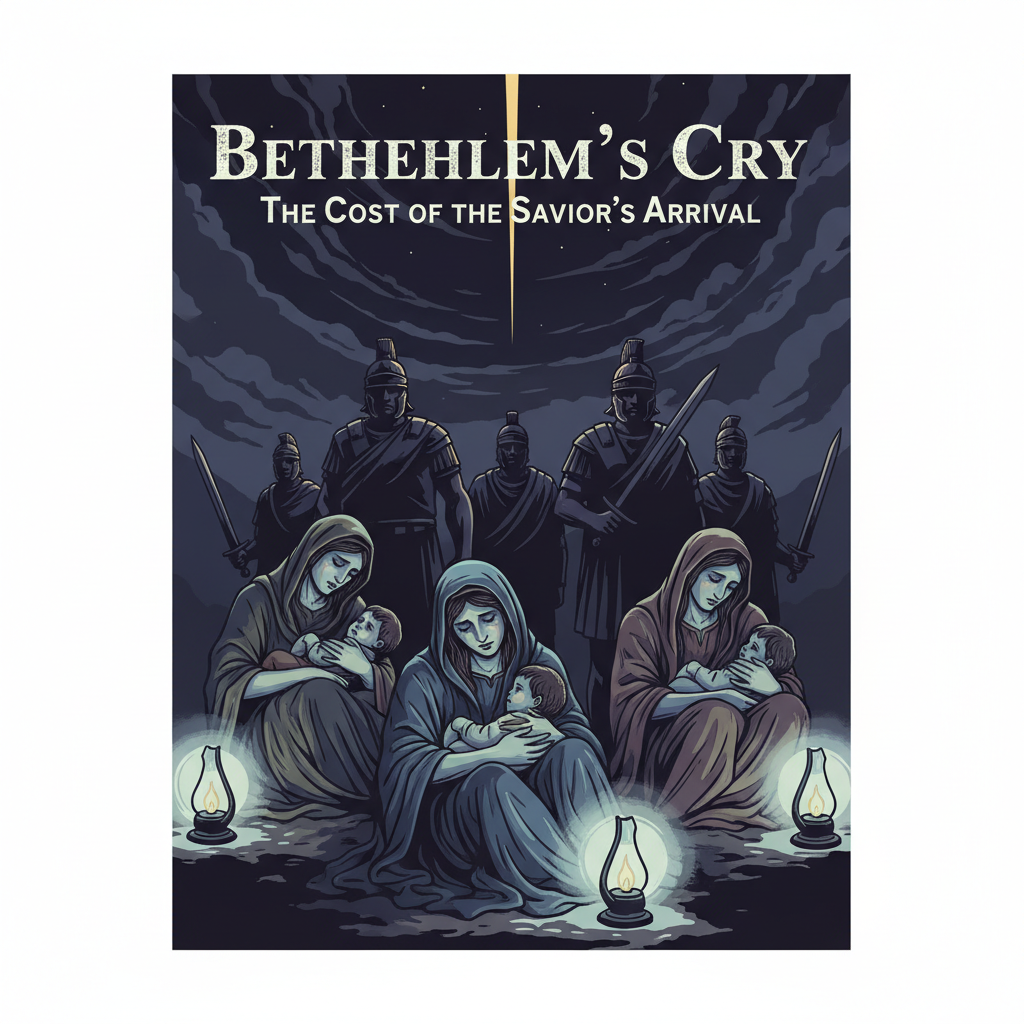
In the quiet hills around Bethlehem, something terrible unfolded long ago. King Herod, gripped by fear and rage, ordered soldiers to cut down little ones in a wave of darkness that still echoes through the pages of Matthew chapter two. This is not some distant tale from history books. It is raw, it is heartbreaking, and it carries the heavy weight of human evil crashing against the light of Christ. Rachel weeping for her children, just as the prophet said, her voice rising like wind through empty streets where joy once lived.
The Christmas story often gets told with soft lights and gentle songs, but right in the middle of it sits this brutal scene. Herod’s massacre of the innocents shows us that the arrival of Jesus did not come without a fight. The world pushed back hard against the hope He brought. Soldiers moved through the town with orders to kill every boy two years old and under. Homes were invaded, families shattered, and the streets ran with sorrow. This event reminds us that darkness does not just fade away when light shows up. Sometimes it strikes first, and it strikes the weakest among us.
Matthew 2:16-18 lays it out plainly. Herod realized the wise men had tricked him, so he flew into a furious rage. He sent his men to Bethlehem and the surrounding areas with one terrible command. The result was horror. Mothers and fathers lost their little boys in an instant. The Bible connects it to an old prophecy from Jeremiah: a voice heard in Rama, Rachel weeping for her children, and she refused to be comforted because they were no more. That image of a mother’s unending grief hangs over the whole story like a heavy curtain.
Think about the atmosphere in those days. Bethlehem was a small place, not some big city. Families knew each other. Children played in the streets. Then one night the peace broke. The sound of armor and marching feet filled the air. Doors were forced open. Cries cut through the darkness. It must have felt like the end of the world for those families. Herod did this because he feared losing power. A baby king threatened his throne, so he tried to wipe out the threat with violence. This is what fear does when it sits on a throne. It destroys instead of protects.
Yet in the middle of all this God moved to save His Son. An angel warned Joseph in a dream, and the family slipped away to Egypt just in time. The innocent Son of God escaped while other innocents fell. This contrast sits at the heart of the Gothic side of our Christian faith. We do not turn away from the blood and the tears. We face them and still declare that God is good. The massacre shows the real cost of evil in our broken world, but it also sets the stage for how Jesus would one day face evil Himself on the cross.
The Gothic feel comes from the shadows and the laments. Christianity has always carried this tone in its art and music and stories. Think of old cathedrals with their tall spires disappearing into darkness, stained glass showing both glory and suffering. This Bethlehem story fits that mood perfectly. It is not bright and shiny. It is heavy with mourning and yet pierced by divine light. Rachel’s weeping becomes the voice of every soul that has cried out in pain while waiting for God to act.
The children who died are remembered in church tradition as the Holy Innocents. Their blood was the first spilled because of Jesus’ coming. They did not choose to be part of this battle, but they became part of the story anyway. Their short lives point us to the value God places on every child. Jesus later said let the little children come to me. He has a special care for the small and the weak. Herod’s sword could not touch that truth.
As the years passed, this event echoed through history. Whenever tyrants rise and target the innocent, we see Herod’s spirit at work. The story calls us to stand against such evil today. We are to be people of courage who protect the vulnerable and speak truth even when it costs us. The Gospel does not promise a life without pain, but it does promise that pain will not have the final word.
Reading this passage should stir something deep inside. It should make us uncomfortable with easy faith. The light came into the world, and the darkness tried to overcome it. But the darkness failed. Jesus grew up, preached the kingdom, healed the sick, and gave His life for the very world that rejected Him. The weeping of Rachel finds its answer in the resurrection morning when death lost its sting.
In our own lives we may face seasons that feel like Bethlehem’s night. Times when grief feels overwhelming and comfort seems far away. The message of this story is to keep looking for the light even when shadows are long. God sees every tear. He hears every cry. One day He will wipe them all away and make everything new.
The full weight of the massacre reveals how seriously God takes sin and evil. He did not ignore what Herod did. He allowed the event to be recorded so we would never forget the battle we are in. Yet He also showed mercy by protecting the Christ child and by promising justice. The innocents are safe in His arms now, and their story continues to point people to the Savior.
This Gothic reflection on Bethlehem invites us to sit with the sorrow for a while. Do not rush past it. Let the image of those empty cradles and grieving mothers stay with you. Then let the hope rise higher. Christ has come. Christ has conquered. The silent screams of the innocents are heard in heaven, and they will be answered with eternal joy.