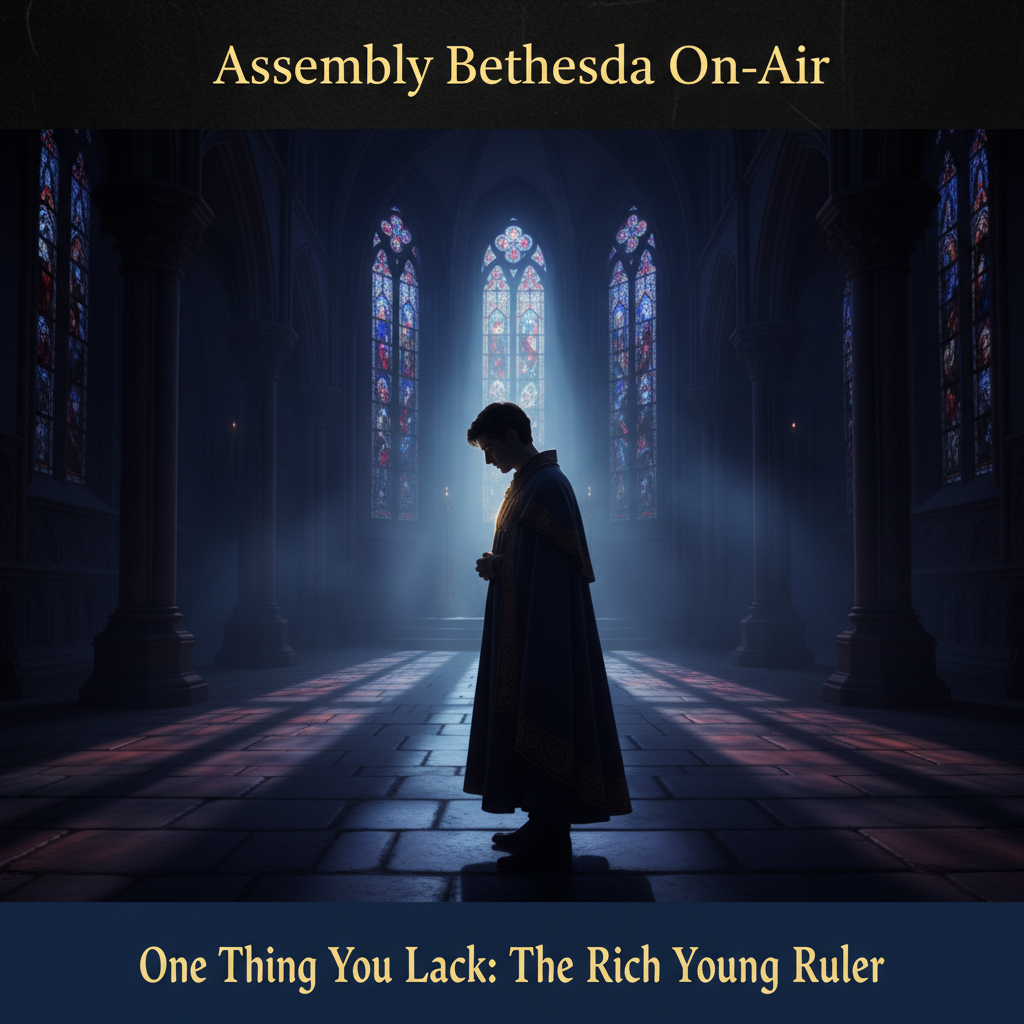
We find a story still echoes through the vaults of time when ancient candlelight flickers against stone walls. A young ruler approaches Jesus with honest eyes and a seeking soul, but walks away sad. He can’t let go of his wealth. Matthew 19:16-22 takes us deep into the Gothic heart of the Gospel, where grand cathedrals of ambition meet quiet crypts of surrender.
The scene is like a stained-glass window with storm clouds. He kneels before the Master in a dusty world filled with divine presence and asks what he needs to do to get eternal life. His voice carries sincerity, not trickery. Despite keeping the commandments since childhood, Jesus looks at him with love and tells him the hard truth. Sell your stuff, give to the poor, and follow me. He hears the words, feels their weight, and turns back into the gathering shadows, sorrowful.
It reminds us that the cross is lined with chains that are beautiful but heavy. In our modern age of glowing screens and endless accumulation, the rich young ruler feels uncomfortably close. Wealth here isn’t just coins. The sad man stands at the threshold of a cathedral door but doesn’t get inside. He wants eternal life on his terms, with all his treasures intact. His sadness is genuine. A radical vision of freedom and haunting beauty can only be found in total surrender, says Jesus.
The story opens with the young man running up and kneeling. There’s an eagerness in his step. He calls Jesus Good Teacher, recognizing something holy in him. He gently redirects him to God, the Father, who’s the only one who’s truly good. In that moment, the air grows thick with possibility. A soul stands on the edge of transformation. The ruler says he’s kept all the commandments.
In spite of this, Jesus, looking at him lovingly, gives him an invitation that reveals the idol. You lack one thing, he says. Sell your stuff to the poor, and you’ll have treasure in heaven. Then come, follow me. The command isn’t random cruelty, it’s loving surgery on a divided heart. It’s a Gothic tragedy. It’s not screams, it’s quiet footsteps retreating from the light that do the work.
It mirrors so many journeys, so we linger in the shadows of this story. When a call touches their deepest attachments, the cost feels too high. They admire Jesus, respect his teaching, and live upright lives according to society’s standards. The wealthy young ruler didn’t argue or mock. He just left sorrowful. Wealth had become his identity, his security, and his comfort in the darkest times. As if walking through a fog-shrouded graveyard toward an unknown dawn, releasing it meant stepping into uncertainty.
The cross casts long shadows over every treasure we hoard in Christian Gothic reflection. Cathedrals of old were built with immense wealth, but they were built to point to the One who owned it all. The young ruler’s story whispers that sincerity alone isn’t enough. Zeal without surrender leads back into the darkness. Our hearts can become private cathedrals filled with golden relics we refuse to lay down.
It’s hard for the rich to get into the kingdom, Jesus tells his disciples later. Listeners are stunned, wondering who can then be saved. God makes everything possible, says the gentle reply. It’s not human strength that makes the impossible possible, but divine grace that can rip even the strongest chains loose.
During the candlelit silence, this passage invites us to examine our own hands. What prevents us from following fully? It might be money, status, comfort, or control. Gothic lenses make these things look like life, but they lead to spiritual decay. The rich young ruler left behind the pearl of great price, but he was sad because he knew what was offered and what it would cost.
As we meditate on this in the quiet hours, the story calls us not to despair but to hope. Many have heard the same words and found the courage to let go of their grip. They stepped into freedom by following Christ and discovered treasures no one else can. For every seeker, the young ruler’s departure isn’t the end of the story. As a solemn warning, it’s also an invitation to do something different.
There’s a haunting beauty to the story. The narrative shows Jesus’ tenderness toward a sincere man. He didn’t shame him. He told the truth in love. Even in turning away, grace lingers. Even so, the door remained open, even though the young man returned to his estate in the familiar way. Gothic Christian thought imagines him walking through torchlit halls later that night, echoing Jesus’ words and creaking ancient timbers, wondering what could have happened.
As the rich young ruler wanted eternal life as a supplement to his success, this encounter challenges comfortable faith. It asks whether we want Jesus as the center of our lives or as an add-on. Christ offered to replace his foundation completely. That’s the eternal tension in every soul’s cathedral, the pull between the temporary and the eternal, the seen and the unseen.
We close this reflection with the image of the crossroads. One path leads back to possessions and the quiet sadness of what could have been. The other leads into the mystery of following the One who had no place to lay his head but offered rest to every weary soul. In the flickering light, we have a choice. I hope we have the courage that the rich young ruler lacked, and may we find the joy he missed after surrendering.