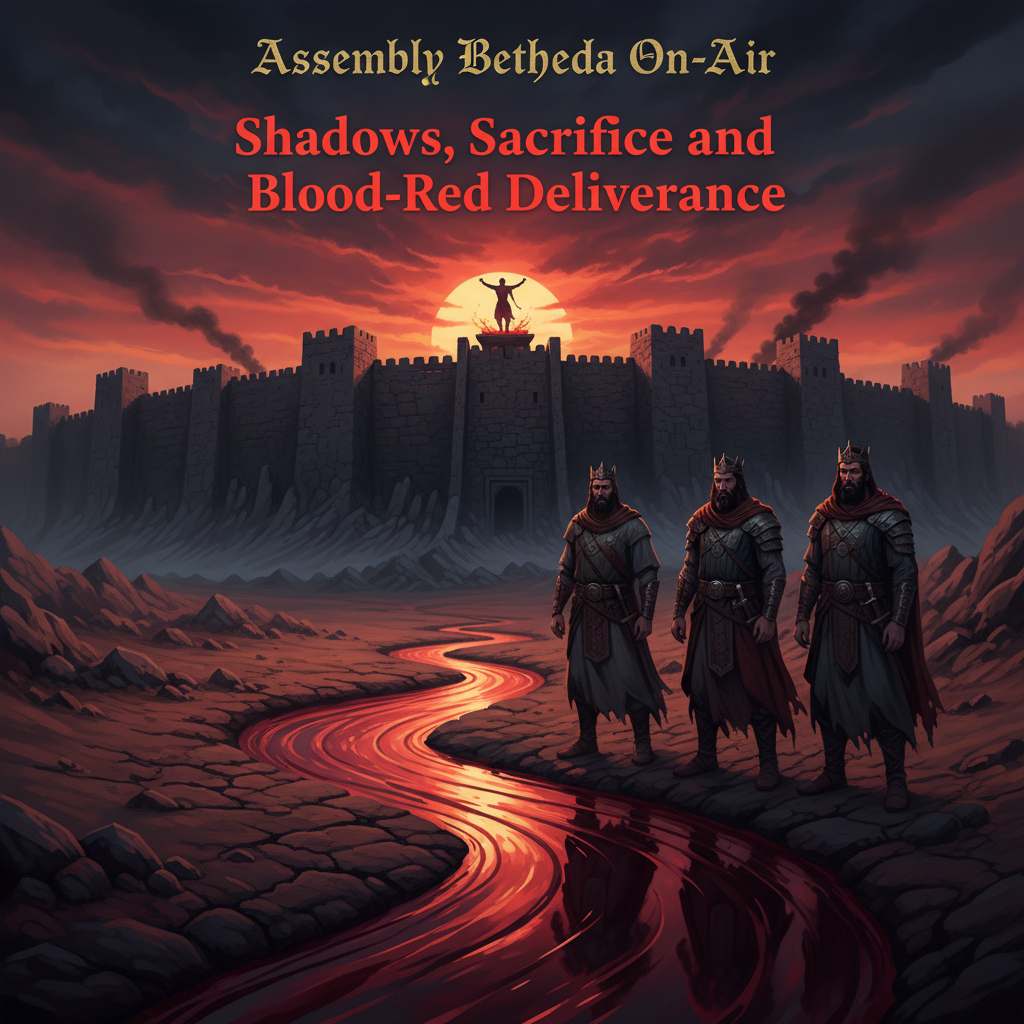
In the pages of scripture we stumble across moments that feel pulled from the pages of a gothic tale, full of shadow and mystery, where the line between defeat and deliverance blurs like mist over a graveyard. That’s exactly the kind of story in Second Kings chapter three, where water turns into blood, and a Moabite sacrifice influences the result in unexpected ways. It’s not polished theology with clean edges, it’s raw, it’s haunting. Gothic Christians know that light shines brightest when the darkness feels heaviest.
It’s like this: Moab rebels after King Ahab dies. Jehoram the new king of Israel calls on Jehoshaphat of Judah and the king of Edom to crush the rebellion. Three kings, three armies, marching seven days through the wilderness of Edom until every throat is parched and every animal stumbles. There’s no water anywhere. Jehoram panics and says Moab must have taken them. Elias asks if there’s a prophet around and finds one.
He doesn’t really like helping Jehoshaphat, but he respects him enough to call for a musician. The hand of the Lord falls on him and he hears the word. Make this dry streambed full of pools. No wind or rain, but you’ll be able to drink from the valley. God says this isn’t a big deal, so he’ll give Moab to them. Attack every fortified city, fell every good tree, stop every spring, ruin every good piece of land.
Then it comes morning and water floods the whole country from Edom. The gothic twist hits hard now. When the Moabites hear the kings are coming, they line up at the border with every fighter, youngest to oldest. When the sun rises and shines on the water, they see it red like blood. The kings have battled each other and killed each other, now moab to the spoiler.
They rush the camp, but Israel is ready. The Israelites strike down the Moabites, chase them down, overthrow the cities, cover every good field with stones, stop every spring, cut down every good tree. Only Kir Hareseth is left, and slingers surround it.
In a desperate act, the Moabite king takes seven hundred swordsmen to break through to the king of Edom. They can’t. As a burnt offering, he offered his oldest son, who was supposed to reign after him, on the wall right there in plain sight. And there was great wrath against Israel. They retreated and went home.
That’s the story, plain and strange. Water looks blood, so the enemy charges into the trap. Victory seems complete until one sacrifice on the wall brings wrath and forces retreat. Gothic Christianity doesn’t run from darkness in this chapter, it leans into it because God is the master of unexpected things. The dry streambed becomes a canvas for pools no rain ever touched. The blood red illusion is what turns Moab around. Seeing the sacrifice on the wall stops the victors cold. Everything feels veiled in shadow, but every shadow serves a purpose.
The Moabites see bloody water when the sun hits the pools and assume slaughter has already occurred among the kings, so they drop their guard and run straight into defeat. Gothic faith loves this because we know how often the world misreads what God’s doing. What looks like death and ruin is actually set up for deliverance. It’s an illusion born of light itself, the same sun that also reveals disappointments. Just like the cross itself, beauty and terror side by side, blood poured out that looks like loss but turns out to be total victory for the allied armies.
Afterward, there’s the sacrifice on the wall. It’s a pagan act, it’s desperate, it’s the kind of image that belongs in a Gothic cathedral carving meant to warn and haunt, but scripture records it without flinching and says great wrath came against Israel. Scholars debate whether that was god’s wrath, the fury of the Moabites, or a spiritual force unleashed by the offering. Gothic believers don’t care.
A dark human effort can’t override fate. A final blood price was thought to turn the tide, but instead it was the end of the campaign. The story doesn’t end with a triumphant conquest. It ends with withdrawal, with questions hanging in the air. That’s pure gothic. It leaves us wondering, aching, but trusting that the one who fills valleys without rain can also handle retreat and wrath.
As the chapter goes on, god keeps popping up in the margins. Elisha only helps because Jehoshaphat. The musician plays and the spirit moves. The water comes right when the morning sacrifice is offered, so provision is tied to worship. It feels harsh to command trees and springs and land to be destroyed, but it’s a picture of victory over rebellion. Moab refused to pay tribute, refused to honor the relationship. Judgment matches the scale of the crime.
The final sacrifice, in Gothic terms, is the veil torn between human effort and divine sovereignty. We see the beauty of decay , the power of a single act on a wall, and we remember that another son was offered on another hill centuries later , not in desperation, but in perfect love, and that offering didn’t stop wrath , it absorbed it.
It’s a tale that invites us to embrace the strange. Gothic Christianity has always been about how God works through the broken and the bleak. Black veils, skulls, crosses wrapped in thorns, all of it makes sense because resurrection only makes sense after real death. In Second Kings 3, we see a battlefield filled with real blood and illusions, a king sacrificing his future on a stone, and an army marching home with a taste of victory mixed with mystery. Faith isn’t about tidy endings. It’s about walking the desert, trusting the prophet, drinking blood-red water anyway, and believing that even when wrath rises, light still wins.
In times of crisis, the three kings show unity. They could have gone separate ways, but they linked arms and found the Lord together. We need the same fellowship in our Gothic walk, voices calling for the prophet when the water runs out. Elisha stands out as the voice in the wilderness, not perfect, not eager, but faithful. Even in wartime, worship opens heaven. Detail layers the gothic atmosphere, dry bones of a streambed suddenly alive with pools, sun turning water to blood, a crown prince offering.
When we read this casually we see a god who is never limited by what we expect. There’s no rain, no wind, just water, just victory, just a weird retreat at the end. The Moabite sacrifice influences the outcome, but it doesn’t control the outcome. God’s word through Eliisha has the final word. Every melancholic heart, every gothic soul walking through valleys that feel cursed knows that the same god who filled the streambed can fill our empty places. Our darkest moments can be turned into deliverance by the same god who allowed wrath to rise.
You can talk about the history of Edom, the geography of Edom, ancient near eastern warfare for hours, but nothing matters more than the heart of the story. For those who like dark beauty in scripture, this is a story for you. For those who wear black lace and veils and yet bow at the cross. For those who feel the weight of melancholy but sing of resurrection. As Second Kings three whispers, God is in the strange, and he writes in blood red. It’s because he let’s sacrifice happen on walls that we learn to trust the greater sacrifice. It’s because he lets armies turn back that we remember he’s in control.
A few centuries later, we find ourselves drawn into the gothic glory of it all, reading centuries later. The land gets quiet again. The kings go home. Moab survives but changes. Israel learns that victory is not always total. Light shines in the darkness. Water appears where none should be. Blood looks like defeat but leads to triumph. A son offered ends the war, but points us to the son who ends every war. Gothic faith simply says yes, we see it, we love it, we live it. That’s the gospel wrapped in old testament shadows.