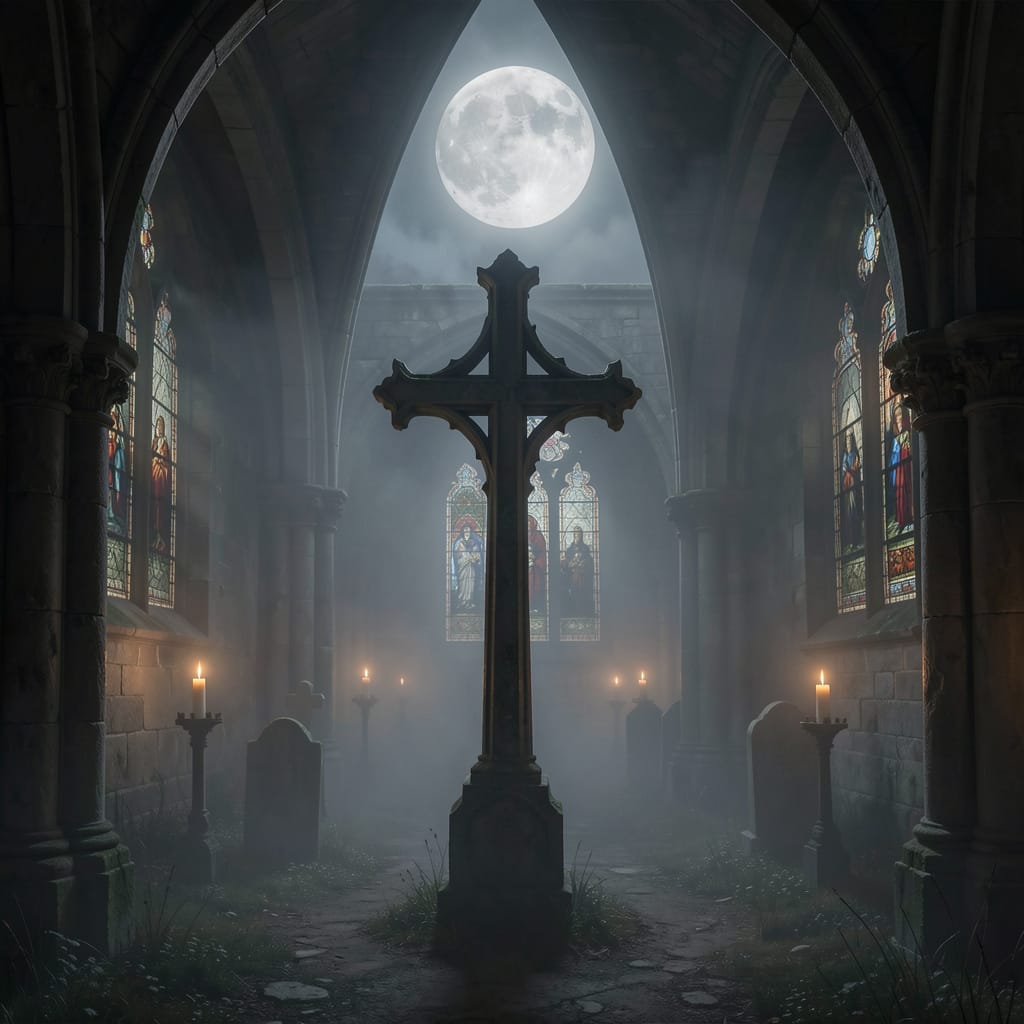
Let’s sit together in the quiet glow of a single candle and talk about something that shaped so much of how we express our faith. Many of us grew up in Christian culture, where there’s a quiet but powerful fear of darkness. When we feel heavy and shadowy, we dress, write, pray, even the aesthetics, the moods, the art, the music, and even the way we dress, write, and pray.
There are a lot of believers who pull back and whisper warnings about the devil sneaking in through the back door when something looks gothic or moody. Today we’re taking a gentle look at that fear, because I think it’s worth unpacking if we want a faith that feels alive and honest in every season.
Take a moment to think about it. There’s a lot of darkness in the Bible, but not in a bad way. Psalm 23 does not shy away from the valley of death. It walks right through it with the shepherd. God doesn’t see the night as an enemy. Genesis says God made the darkness as well, and he called everything good. In the deep hours before dawn, Jesus slipped away to pray.
The prophets spoke of thick darkness covering the earth while the glory of the Lord rose upon His people. Even the crucifixion happened under a darkened sky. So when we act like anything shadowy or mysterious must be off limits, we’re ignoring a lot of the very book that we love.
There’s an unspoken rule in many churches today. Black clothes equal rebellion. Candles and incense equal new age. Gothic architecture gets labeled “too Catholic” or “too medieval” for its soaring arches and dramatic shadows. Dark poetry and music that sounds like it was born in a graveyard gets side eyed as if the minor chords could lead people astray.
The only safe color in faith is light. But here’s the gentle pushback. Light doesn’t fear the dark. It steps into it. Jesus is the light of the world, and that light shines in the dark, and it hasn’t been beaten by the darkness. Whether we’re facing bright mornings or midnight watches, if our faith is strong, it should stand it up.
Part of this fear came from good intentions. Believers wanted to keep the church safe from anything that looked like the world or the occult. Fair enough. Culture has twisted plenty of pretty things into evil doorways. Eventually, caution turned into a blanket rejection of anything that wasn’t rainbow-colored.
As a result, we started acting like real Christians only thrive under fluorescent lights and upbeat choruses. Anything slow, deeper, or dressed in midnight hues must be suspect. Our faith sometimes feels one-dimensional, as if we’re only allowed to celebrate the resurrection, never sit in the tomb for a long time.
But look at history. The great gothic cathedrals in Europe were built by Christians who understood that darkness could enhance the glory of light. Those massive stone spaces with their rose windows and flickering votives were designed to make you feel mysterious and holy at the same time. During the night, monks kept vigils because they knew God would meet us when the world was quiet and the shadows were long.
Puritans, strict as they were, wrote about the dark night of the soul as part of their journey. They didn’t run from it. They let it refine them.
We live in a world that sells constant brightness, constant noise, constant cheer. Social media rewards highlight reels. Churches sometimes do the same, turning Sunday mornings into polished performances without any doubt or melancholy. Your walk risked being seen as “not quite there yet” if you wore black or listened to music that sounded like it came from the abyss.
This quiet judgment pushes people away, especially those who naturally gravitate to the gothic, the poetic, the beautifully broken. They feel they have to choose between their honest self and their faith.
It’s here that the gentle critique gets practical. Embracing the dark doesn’t mean loving evil. It means refusing to fear what God has already walked through. It means letting every human emotion have a seat at the table of worship. When we pray at night, when we write poems that bleed with longing, when we wear clothes that mirror the shadows we feel inside, we’re not being rebellious. We’re being real, and that’s where Jesus meets you. Rather than coming for the shiny and sorted, He came for the bruised, the weary, the ones who know what midnight feels like.
Christian goth isn’t a marketing gimmick. It’s a way to say that the cross still wins even in the darkest places. It’s a way of saying that beauty can wear black lace and still point to heaven. It’s like saying the same God who split the Red Sea also hung the stars in the velvet sky, and called them both good. Stopping fear of the dark opens doors for conversations with people who wouldn’t step into a bright, bouncy sanctuary, but might stay in a candlelit space where the music understands their pain.
So let’s loosen that grip on that fear, friends. Let’s remember that the light we carry isn’t fragile. It doesn’t have to dim the shadows to stay bright. It shines best when it has something real to illuminate. The dark isn’t the enemy, it’s just the fear that keeps us small. Whether you like black velvet and minor keys or sunshine and tambourines, there’s room for everyone. If you step into the night with open hands, you might just find the same God who spoke from the burning bush, quiet, steady, and full of love even far from the light.
The critique is gentle because the heart behind the fear is often love, love for purity, love for safety, love for the next generation. But love that builds walls instead of bridges can miss the very people Jesus spent the most time with, the outsiders, the mourners, the ones who live close to the edge. Let’s critique the fear without shaming the fearful. Let’s invite everyone deeper into a faith big enough for dawn and dusk.
The dark isn’t something you have to conquer or avoid. It’s part of God’s rhythm, so when we stop running from it, we find new ways to worship, new ways to create, new ways to connect. Christian culture doesn’t have to be afraid of it. It’s where seeds grow, where rest happens, where the still voice of the Spirit often speaks loudest. We can walk there together, unafraid, because the light we carry knows how to shine when things get dark.