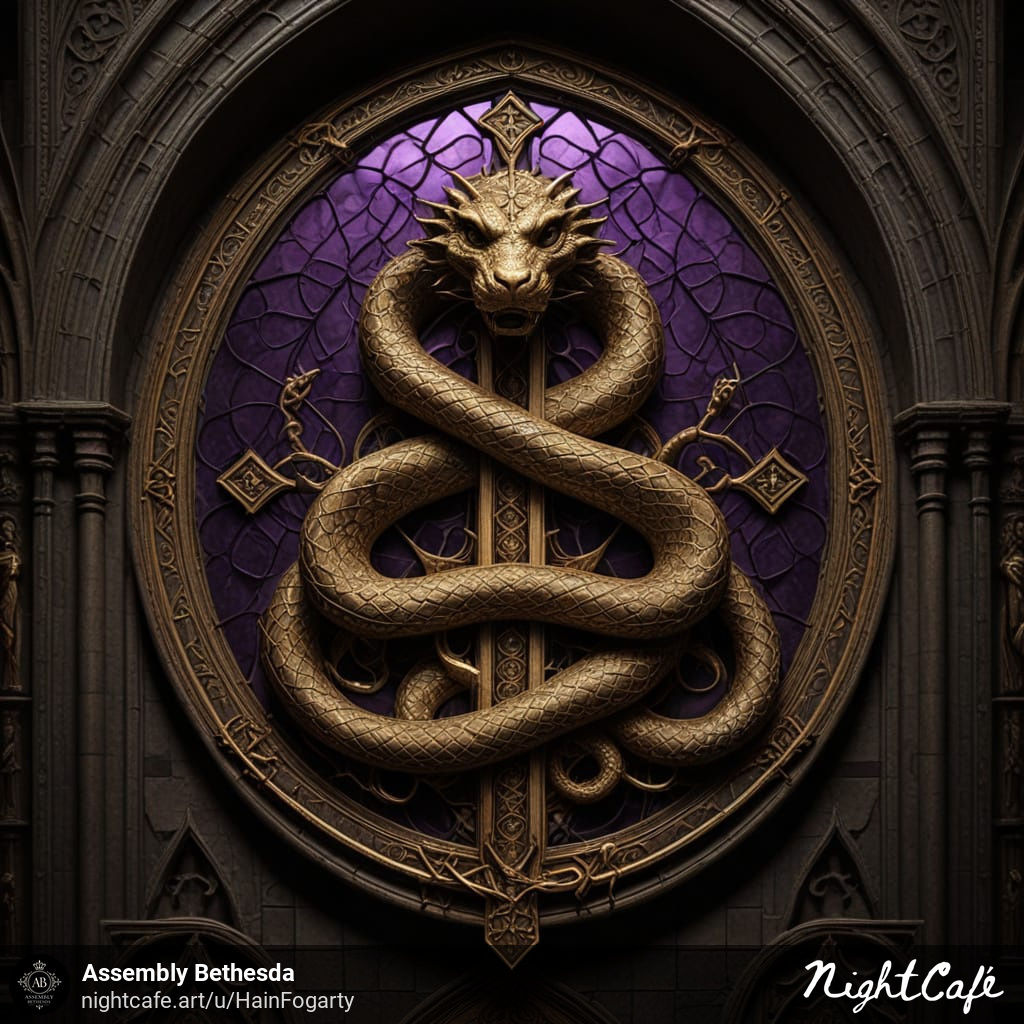
Hey everyone, let’s dive into this intriguing topic: the serpent and the cross, and how they tie into the idea of deception. You know, symbols like these pop up all over history, religion, and culture, carrying layers of meaning that can twist your perspective if you’re not careful. The serpent often slithers in as a figure of cunning and trickery, while the cross stands tall as a beacon of truth and sacrifice. But when you mash them together, you get this fascinating blend that speaks volumes about how deception can hide in plain sight, even in the most sacred places.
Start with the serpent. In many traditions, this creature isn’t just a sneaky animal, it’s a powerhouse symbol. Think about the Bible, where the serpent in the Garden of Eden tricks Eve into eating the forbidden fruit. That moment kicks off humanity’s fall from grace, all because of a smooth-talking reptile promising knowledge and power. The serpent whispers lies wrapped in half-truths, making deception look appealing. It’s not outright evil at first glance, it’s seductive, pulling you in with promises that sound too good to be true. Fast forward through history, and you see serpents in Greek myths as guardians of wisdom, or in ancient Egyptian lore as protectors, but there’s always that undercurrent of duality, good and bad mixed up.
Now, flip to the cross. This one’s straightforward in Christianity: it represents Jesus’ crucifixion, redemption, and ultimate victory over sin. It’s a symbol of unwavering truth, love, and sacrifice. People wear it as jewelry, tattoo it on their skin, build churches around it. But here’s where things get interesting, deception can creep into even this pure symbol. History shows us how the cross has been twisted for ulterior motives, like during the Crusades when it was used to justify wars and conquests that had little to do with faith. Or think about modern scams where fake preachers wave the cross to swindle money from believers. The cross, meant for truth, becomes a tool for deceit when people manipulate it.
So, putting the serpent and the cross together? That’s like a visual metaphor for deception infiltrating faith. Imagine a serpent coiled around a cross, it’s a common image in art and occult symbols. In some interpretations, it echoes the brazen serpent Moses lifted in the wilderness, which healed the Israelites but later became an idol they worshiped, leading to deception. The serpent on the pole foreshadows the cross, but it also warns about how symbols can be perverted. Deception thrives when something holy gets tangled with something sly.
Let’s chat about how this plays out in everyday life. Deception isn’t always a big, dramatic lie, it’s often subtle, like a serpent’s whisper. In relationships, someone might use sweet words to hide their true intentions, much like the serpent in Eden. Or in politics, leaders flash symbols of integrity, like a cross, to mask corrupt agendas. The symbolism here reminds us to stay vigilant, to question what’s presented as truth. The cross calls for discernment, urging us to test spirits, as the Bible says, because not everything that looks holy is.
Digging deeper, consider alchemy and esoteric traditions. The serpent and the cross appear in the caduceus, two snakes around a staff, symbolizing balance, but sometimes twisted into commerce and trickery. Or the ouroboros, a serpent eating its tail, representing cycles, but also self-deception, where lies loop back on themselves. When you add the cross, it becomes a crucifix with a serpent, seen in some Christian art as a reminder of Christ’s triumph over the devil’s deceit. It’s like saying, yeah, deception is real, but truth wins in the end.
In pop culture, this symbolism is everywhere. Movies like The Da Vinci Code play with hidden meanings in religious symbols, showing how deception lurks in history’s shadows. Or in music, goth rock bands often use serpents and crosses to explore dark themes of betrayal and redemption. It’s casual, it’s relatable, because who hasn’t felt deceived at some point? The serpent tempts with quick fixes, the cross demands patience and honesty.
But let’s not forget the positive spin. The serpent can symbolize renewal, shedding skin for a fresh start, and the cross offers forgiveness. Together, they might represent overcoming deception through transformation. Like, if you’ve been lied to, you can rise above it, stronger and wiser. It’s a hopeful take, showing that even symbols of trickery can lead to truth if you look closely.
Expanding on biblical angles, the serpent isn’t always the bad guy. In Numbers, that bronze serpent on the pole saves lives, pointing to faith as the antidote to deception’s poison. Jesus even references it, saying he’s like that serpent lifted up for salvation. So, the symbolism flips: deception’s tool becomes a symbol of healing. It’s mind-bending, how the same image can mean opposite things depending on context.
In medieval art, you see serpents at the base of crosses, representing defeated evil. Artists used this to show Christ’s victory, the cross crushing the serpent’s head, as prophesied in Genesis. It’s a visual punch, deception underfoot, truth elevated. But in some heretical groups, the serpent was revered as a bringer of secret knowledge, twisting the cross into something occult. This duality keeps the symbolism alive, relevant.
Shifting to psychology, Carl Jung saw the serpent as the shadow self, the deceptive parts we hide. The cross could be the ego’s structure, holding it all together. Deception happens when the shadow sneaks in, disrupting balance. In therapy talk, it’s about integrating those parts to avoid self-deceit. Casual takeaway: don’t ignore your inner serpent, confront it with the cross’s clarity.
In literature, think Shakespeare. In Macbeth, deception is like a serpent under the flower, pretty but deadly. If you add a cross, it’s like Hamlet’s moral dilemmas, faith versus trickery. Or in modern books, like fantasy series where heroes battle deceptive gods using sacred symbols. It’s entertaining, but it mirrors real struggles.
Now, in world religions, serpents appear in Hinduism as kundalini energy, coiled at the spine, rising for enlightenment. But deception can block that rise, false gurus leading astray. The cross, in Christianity, cuts through that. Comparing them highlights universal themes: deception is human, symbols help navigate it.
In art history, Renaissance painters depicted the crucifixion with serpents, symbolizing sin’s defeat. But in surrealism, Dali twisted crosses and serpents into dreamlike deceptions. It’s fun to see how artists play with this, making us question reality.
Wrapping up the cultural bit, tattoos often combine serpents and crosses for personal meaning, like surviving betrayal through faith. It’s street-level symbolism, not stuffy academic stuff.
On a spiritual level, deception is the enemy’s main weapon, as per scripture. The serpent is Satan, the father of lies. The cross is the ultimate debunk, exposing those lies. Believers are called to armor up with truth, belt of truth, you know. It’s practical advice: spot the serpent’s coil before it tightens.
In conclusion, the serpent and the cross together paint a picture of deception’s sneaky ways, but also hope for exposure and victory. It’s a reminder to stay sharp, embrace truth, and not fall for the whispers. Symbols like these keep us thinking, questioning, growing. Thanks for reading, folks.