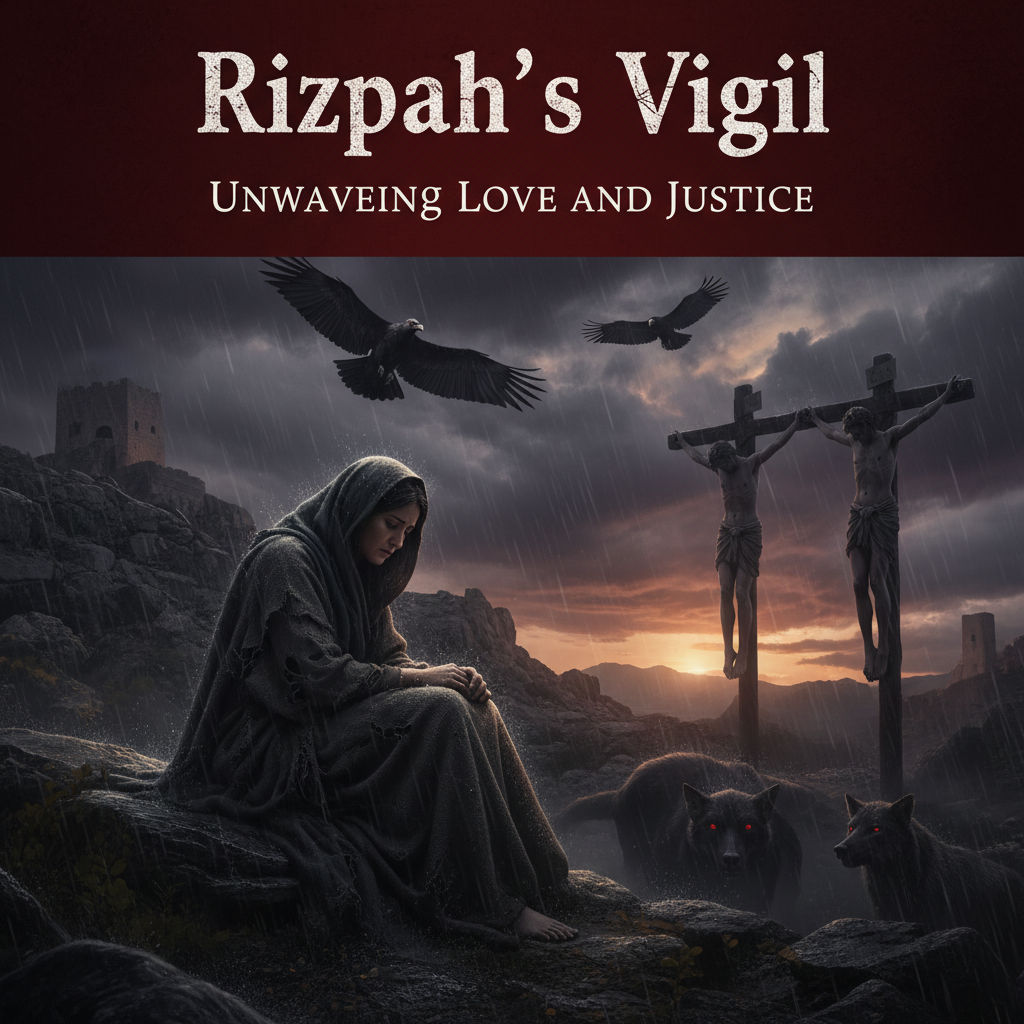
Among the most touching stories in the Bible is Rizpah’s in 2 Samuel 21 about maternal devotion and quiet resistance. Three long years of severe famine hits Israel, leaving the land parched and the people hungry. God reveals to King David that the hardship is a result of Saul’s earlier actions against the Gibeonites, so King David asks him why.
A covenant from Joshua’s time had promised protection to these non-Israelite inhabitants who tricked the Israelites into signing a treaty, and Saul had broken it. In his zeal, Saul tried to exterminate them, breaking the solemn oath and bringing bloodguilt upon his house.
David approaches the Gibeonites and asks them how he can make amends and restore blessing to the nation to address the injustice. Instead of monetary compensation, they want seven male descendants of Saul executed to satisfy the Lord’s justice. David agrees to their demand, but spares Mephibosheth, Jonathan’s son.
As well as two sons born to Rizpah, Saul’s concubine, Armoni and Mephibosheth, he gets five grandsons through his daughters associated with Saul. As a public display of atonement, Saul hangs these seven men in Gibeah, his hometown, at the beginning of the barley harvest.
In ancient Near Eastern culture, leaving bodies unburied after execution carried profound shame, denying the dead proper honor and inviting desecration by animals and birds. Rizpah, the mother of two of the victims, refuses to accept this fate for her sons or the others. Under the hanging bodies, she spreads sackcloth, the coarse material associated with mourning and humility.
From the start of harvest in spring until the late rains in autumn, she keeps watch. She drives birds of prey away from the flesh by driving them away. Night after night she wards off wild beasts prowling in the darkness, refusing to let them approach and mutilate the flesh.
This vigil lasts months, likely five to six, through scorching sun, chilling nights, wind, dust, and the relentless sight and smell of decay. On that rocky hill, Rizpah endures physical exhaustion, emotional torment, and isolation, but she keeps going because she’s determined to protect her sons’ dignity no matter what happens. It’s not loud declarations or pleas, it’s just embodied faithfulness, an act of silent resistance. By honoring the dead when the powerful have moved on, she takes care of not just her own children, but all seven executed men.
Rizpah’s unwavering presence reaches David. Moved by her devotion, and perhaps convicted by the contrast between her care and his oversight, he takes decisive action. After the battle at Mount Gilboa, the people of Jabesh Gilead rescued Saul and Jonathan from Philistine dishonor long ago, and he finds their bones. In the territory of Benjamin, David buryds all seven men together in Kish’s family tomb, Saul’s father. Having buried the dead properly and restored honor, God responds to the land. The famine ends, rain falls, and Israel gets relief.
It highlights the seriousness of covenants in biblical thought, where broken promises can have generational consequences until addressed. Rizpah’s story carries layers of meaning. Until justice is sought, Saul’s sin echoes through time. But the narrative also shows mercy intertwined with judgement, David spares one descendant out of loyalty, and Rizpah’s compassion prompts further mercy in burial.
Rizpah’s act illustrates the biblical emphasis on honoring the dead. Deuteronomy says to bury the dead the same day to avoid defiling the land, and Rizpah enforces this principle through her persistence.
It’s often said that Rizpah is a figure of unwavering maternal love, whose strength lies in quiet endurance rather than power or position. Despite being a concubine of a fallen king, she holds little status, but her faithfulness shifts events all over the world. She is forcing people to acknowledge neglected humanity through her vigil, not through confrontation.
It’s like a grieving mother standing near executed sons, like Mary at the cross, but here Rizpah’s watch lifts a curse instead of witnessing its end.
It’s a great example of how individual faithfulness influences national healing. Rizpah doesn’t just demand change verbally, she lives it out in sacrifice, shielding the dead and causing the royals to act. This book reminds readers that grief expressed in devotion has power, and God cares about dignity, even for the dead. It’s Rizpah’s stand that ensures the executed are respected in a culture where the vulnerable could be overlooked, so David extends that respect to Saul’s house.
This episode fits within the broader themes of 2 Samuel’s later chapters, reflecting on David’s reign, unresolved issues from Saul’s time, and justice pursuit. Her love for her sons extends to insisting on decency for everyone. In her story, we learn that true atonement means more than punishment, it’s also restoration. Burial completes what was started with execution. The rains signal God’s satisfaction, the land breathes again because mercy tempers justice.
The example of Rizpah endures as a testament to love despite tragedy. In silence and suffering, she guards what others leave, and her months on the rock prove her commitment moves kings and heaven. While the narrative ends with restoration, her vigil endures as a powerful reminder of what a woman’s steadfast heart can accomplish when faced with overwhelming odds.