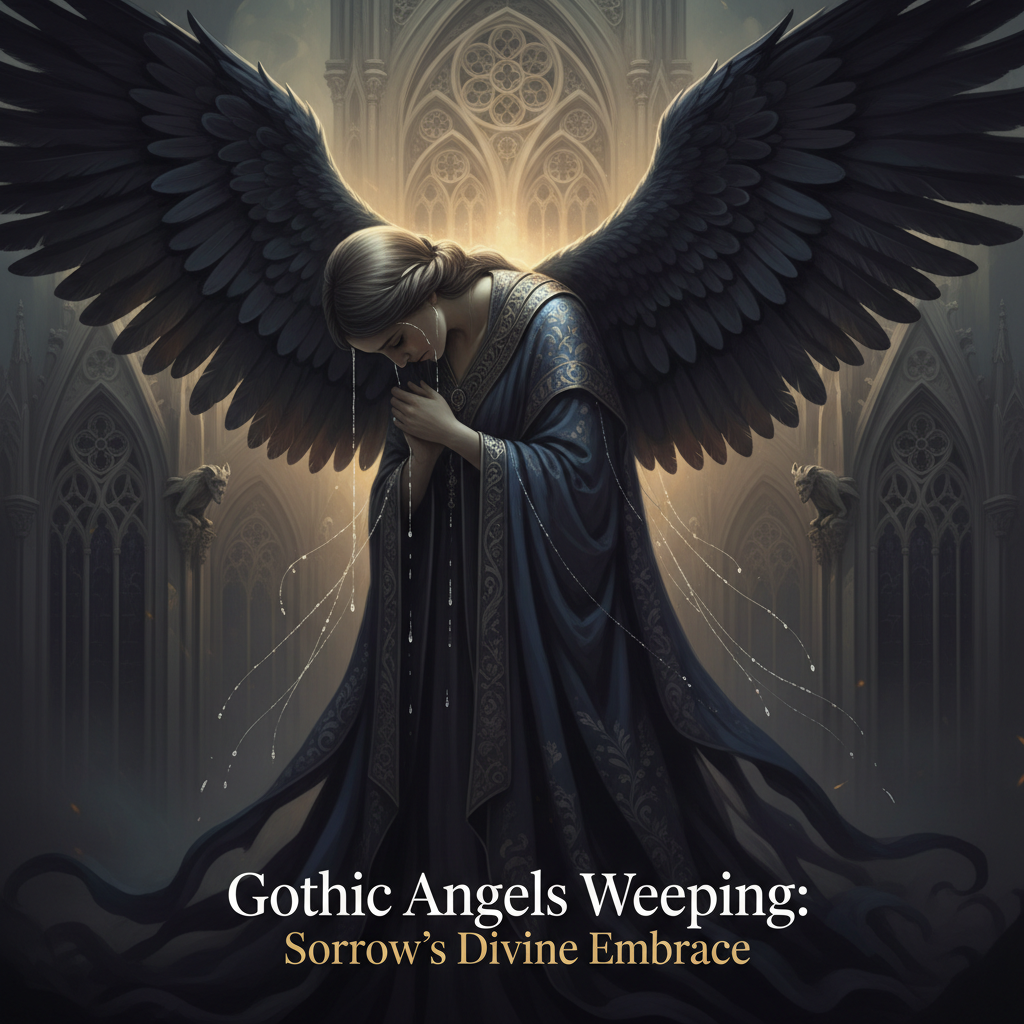
Gothic angels weeping, those stone figures with bowed heads and tears carved into their faces, make a real impact. They show up in old cathedrals, graveyards, and Victorian memorials, capturing a raw sadness that feels both heavenly and very human. The title “Gothic Angels Weeping: Tears in Heaven and on Earth” ties together this idea that pain isn’t just ours down here, it echoes up there, too, where even divine beings suffer.
In Gothic art and architecture, angels often appear as messengers of light and hope, but the weeping ones flip that script. You know those dramatic statues draped over tombs, wings folded, faces hidden in grief. The famous “Angel of Grief” by William Wetmore Story from the 1890s shows an angel collapsed over a funeral altar, utterly broken. Because they expressed deep mourning without being too graphic, these figures became popular in Victorian cemeteries. Weeping angels on graves often mean that the death came too quickly, tragically, or unexpectedly, like a young life cut short. The angel weeps because the guardian couldn’t prevent the loss, or because the grief is so overwhelming even celestials share it.
These images are really powerful because they blend heaven and earth. Angels are supposed to be perfect, untouched by pain, but here they cry. It suggests grief crosses borders and is universal. A weeping angel is tied to war memorials in cathedrals like Amiens, symbolizing human suffering while still holding out hope. Not just personal loss, but collective mourning, the weight of tragedy that makes the divine bow down.
On the earthly side, these weeping angels reflect how we deal with heartbreak. Cemeteries full of them become quiet places where people go to feel less alone in their pain. The stone tears remind us that mourning is okay, it’s part of being alive. They’re guardians of memory, watching over the dead and comforting the living. Weeping angels aren’t like joyful cherubs or triumphant seraphim, they just say it’s okay to feel broken.
I think of that famous song when I hear the phrase “tears in heaven,” but the concept also asks if paradise really has no room for sorrow. If angels weep, maybe heaven isn’t all endless joy, at least not when earth is so painful. Some interpretations see it as empathy from above, God and the heavenly host moving by human pain. Others see it as a reminder that redemption comes through shared grief, that tears purify and connect.
In Gothic style, with its pointed arches, shadowy corners, and intense emotion, these angels fit perfectly. The Gothic era loved duality, light piercing darkness, beauty in decay. The weeping angel symbolizes that tension, divine yet tormented, eternal yet touched by time’s cruelty. Literature and art both use them to illustrate lost innocence, failed protection, or love’s cost.
People still post pictures of these images online, get tattoos from them, because they capture something timeless about loss, even today. Even angels understand sorrow. Whether you’re in a graveyard or a cathedral, a weeping angel stops you, makes you think about your own tears, and maybe gives you a strange comfort in knowing sorrow isn’t isolating.
In the end, Gothic angels weeping bridge the gap between heaven’s mystery and earth’s raw hurt. Grief is sacred and shared, and somehow part of the bigger picture. The pain doesn’t go away, but they sit with it forever, in stone and spirit.