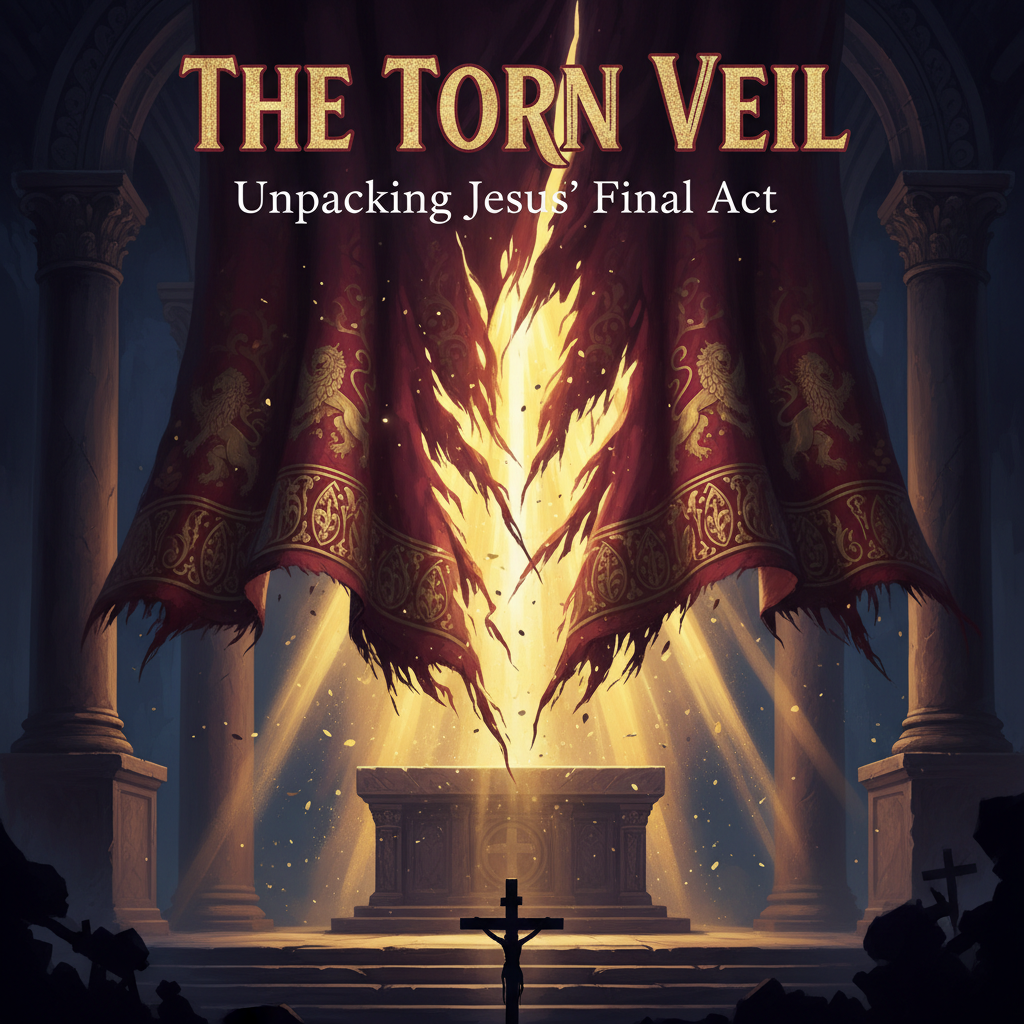
Greetings, let’s talk about one of the most haunting moments in the Bible, Jesus tearing the veil when he died. Imagine the scene: the sky darkens, the earth shakes, and that massive curtain rips from top to bottom in the temple. It’s not just some random event, it’s filled with deep, mysterious significance that echoes through the ages, blending the divine with the eerie unknown.
In the Gospel of Matthew, chapter 27, verse 51, it says, “And behold, the curtain of the temple was torn in two, from top to bottom.” Mark and Luke echo this too, painting a picture of cosmic disruption at the exact moment Jesus breathes his last. It wasn’t a thin, flimsy veil; it was a thick, embroidered curtain separating the Holy of Holies from the rest of the temple, a place so sacred that only the high priest could enter once a year, and then with blood sacrifices to atone for sins.
The Old Testament vibe of the temple setup screams separation, so to understand why this tearing matters. In the Holy of Holies, God dwelt, represented by the Ark of the Covenant, but sin caused a chasm, a veil between a holy God and flawed humans. It was like a Gothic barrier in a stone cathedral, shrouded in incense and whispers of ancient rituals.
Blood flowed to cover sin temporarily, but it wasn’t enough to bridge that gap permanently. The death of Jesus on the cross was more than just a tragic end; it was the turning point in the divine story. When he cries out, “It is finished,” that veil tears, signaling the end of the old system, no more barriers, no more yearly atonements. It’s God saying come as you are into my presence, access granted.
Here’s the symbolism, darkness envelops the land from noon to three, rocks split, tombs open, saints rise, it’s all gothic. The veil tearing from top to bottom? That’s divine intervention, not human hands pulling it apart. The reconciliation starts from heaven, when God pulls away the shroud of separation.
In a world of cathedrals with stained glass casting eerie lights, this moment feels like a thunderclap in a stormy night, revealing hidden truths. As early Christians huddled in catacombs, this would’ve been revolutionary because they weren’t outsiders peering through a veil, but insiders welcome into the holy mystery.
What does this mean in our dimly lit world today? The torn veil means direct access to God, no intermediaries need to be involved beyond Jesus. Prayer doesn’t bounce off a curtain anymore, it goes straight into the throne room. The Bible says that Jesus entered the holy places through his blood, through the curtain of his flesh. His body torn, the veil torn, it’s all intertwined, almost macabre.
You can confess sins directly to the Father, with the Spirit leading you. It’s liberating, yet awe-inspiring, like entering a forbidden chamber in an ancient castle.
Throughout Gothic Christianity, this tension between light and dark is embodied in the veil’s tearing. Though the cross is heavy, blood and nails, it’s the gateway to glory. Like in Eden, the temple veil tears open, echoing the reversal of the fall. It’s no longer the flaming swords blocking paradise, Jesus opens the way. You’d say it’s God’s dramatic flair, showing death’s not the end. Tearing sets the stage for the resurrection, a prelude to victory over death.
In 2 Corinthians 3:14-16, Paul talks about a veil over hearts when reading the old covenant that was removed in Christ. The veil wasn’t just physical separation, it was spiritual blindness too. Suddenly, there is clarity in a misty graveyard at dawn. For believers, that’s living unveiled, reflecting God’s glory, changing degrees. No masks or rituals, just real faith.
There used to be a massive temple veil, 60 feet tall, 30 feet wide, four inches thick, requiring hundreds of priests to move it. Tearing it top to bottom? Miraculous, underlining God’s power. Josephus describes the temple’s splendor, making the event even more striking. Gothic tales often hide secrets or horrors behind veils, but here, the tears reveal love, mercy.
In art and literature, this moment inspires, from medieval tapestries to modern novels with apocalyptic vibes. Think about cathedrals with torn veil motifs in carvings, reminding worshippers of access. In our casual faith walks, it’s a call to boldness, approaching God without fear, as in Ephesians 3:12, with confidence through faith in him.
A couple more layers, too. It’s the timing, when lambs are slaughtered, Jesus is the Passover lamb, marking the way. The veil tears as the ultimate sacrifice is made, no animal blood needed anymore. It’s poetic, almost symphony-like in its culmination. In a gothic sense, it’s the climax where the hero’s death shatters the curse, shadows retreating.
The torn veil symbolizes unity, Jews and Gentiles alike entering through one door, Christ. No divisions, one body, breaking down the wall of hostility.
As a spiritual practice, it invites intimacy, God dwelling in us as temples, according to 1 Corinthians 6:19. The Holy Spirit guides us through life’s labyrinths.
Gothic worship might involve candles flickering in dark chapels, echoing this mystery. Worship goes from formal to heartfelt, songs and prayers direct, no veil. The tears are the sign of hope beyond death, a new covenant sealed in blood, eternal access. In casual terms, it’s God’s open invitation, no RSVP needed, just come. Reflecting on judgment, the tears also warn, access isn’t forced, there’s still choice. Choices lead to redemption or ruin in gothic stories.
In quiet moments or stormy nights, know the barrier’s gone, presence awaits. Remember, the veil’s tearing isn’t ancient history, it’s living truth that transforms our daily lives.