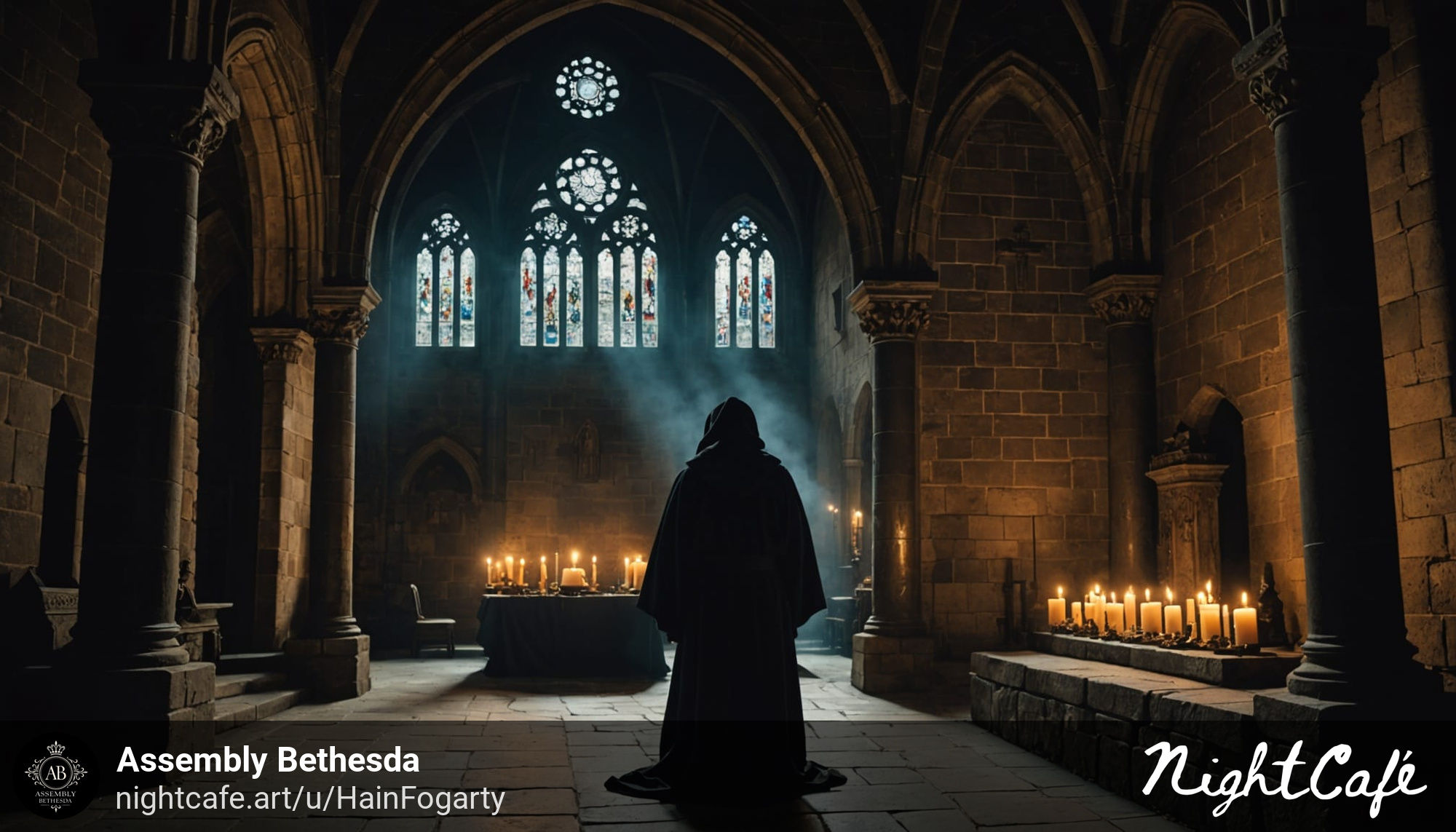
Imagining walking into an old abbey where the stone walls whisper secrets from centuries ago, and the air smells like damp earth and flickering candles. To dive deep into the shadowy corners of the soul, monks take vows of silence here.
Even though it’s a Christian practice, it can feel downright gothic, like wandering through a fog-shrouded cathedral at midnight.
You can’t just stop talking, you have to get your head out of your head. Think about the ancient monks in their cloistered halls, wrapped in rough wool robes, their days filled with prayer and labor, but their nights haunted by doubts and temptations. It’s in the Bible to be still and know that God is God, like in Psalm 46, but in the abbey, that stillness amplifies every inner storm.
It’s not all light and peace, sometimes it’s a battle in the dark, where faith meets the abyss. Fear creeps in like ghosts, regrets echo like distant bells, and the soul wrestles with questions that words can’t answer.
It’s a tool for getting closer to the Divine in the Christian tradition. Saints like Benedict, who started monastic orders, saw it as a way to listen to God without distractions. But it’s not easy to hold your tongue for days, weeks, even years. It forces you to face the turmoil bubbling under the surface, the sins you thought you’d buried, the longings you want to feel.
A monk paces the dim corridors, moonlight filtering through stained glass windows depicting martyrs and angels, his mind racing with thoughts he can’t voice. It’s like a gothic novel come to life, full of brooding intensity and spiritual drama.
Yet, in that silence, there’s transformation. The abbey becomes a crucible where turmoil is refined into something purer. As Elijah sees in 1 Kings 19, God isn’t speaking in wind or earthquake, but in whispers. When monks embrace the quiet, they let it strip away the superficial, revealing their raw hunger for God.
The lack of words makes every sensation stand out, the creak of wooden benches, the rustle of pages in a dusty Bible, the heartbeat pounding in your ears like a drum.
There’s a melancholic edge to abbey life. Think vaulted ceilings arching like skeletal ribs, shadows pooling in alcoves, statues of saints staring blankly. Silence isn’t a sunny stroll, it’s a descent into one’s self, like Christ was in the wilderness tempted and alone. The mind conjures up phantoms of past mistakes or future fears when you’re isolated.
In Christianity, weakness leads to strength, as Paul says in 2 Corinthians. So the monk endures, finding solace in rituals, the ringing of bells calling to vespers, the communal yet wordless worship that binds them.
There’s beauty in silent moments, a gothic romance with the sacred. The abbey gardens at dusk, mist rising like spirits, offer spaces for contemplation. As the soul converses with God in the language of the heart, turmoil gives way to insight. There’s no need for grand speeches, just being present in the hush. It’s good to turn off the phone for an hour, let the inner voices settle, and discover God’s peace transcends the noise.
But let’s not sugarcoat it, the vow can break people. There are stories from abbeys about monks who were driven insane by the unrelenting silence, their turmoil spilling over into despair. Faith, however, provides the anchor, the cross in the chapel a reminder of suffering redeemed. Gothic terms tell you that the hero faces a monster within, but emerges victorious. The Christian faith flips the script, turning inner darkness into a path to light, where silence isn’t emptiness, but fullness.
If you want to explore this in more detail, think about how silence challenges our chatty world. We’re flooded with social media, constant notifications pinging like restless spirits. Take a page from the abbey, embrace silence. It’s not about becoming a monk, but finding pockets of stillness to confront what’s eating at us, inviting God into the mess. The abbey stands as a symbol, its silent halls proving enduring faith amid shadows.
Ultimately, the silent abbey teaches that turmoil isn’t the enemy, it’s the opportunity to grow spiritually. Silence strips us bare, revealing our gothic underbelly, but God’s grace shines through that vulnerability. It’s a call to all believers, to seek the quiet, wrestle with the inner storms, and emerge stronger. So, next time life gets loud, remember the abbey, and let the silence speak.
If you dive deeper, the architecture of these abbeys is also gothic. The eaves are adorned with gargoyles, warding off evil, while reliquaries are filled with saints’ bones, reminding you of death. A monk’s daily rhythm structures chaos, turning chaos into disciplined devotion, reminding us of time’s passing. Silence heightens awareness of time’s passage, the slow decay of stone mirroring the soul’s struggles. There’s no frills, just raw encounters with the eternal.
Like threads in a tapestry, scripture weaves through it. James tells us to control our tongue, seeing it as a fire that can set forests on fire. Silence keeps that fire contained, letting us breathe freely. Faith steps in, with prayer as the silent weapon, battling the darkness. But inner turmoil flares up when unspoken words fester, doubts multiply like shadows at dusk.
Historically, abbeys like Cluny or Monte Cassino were havens of silence, but they were also buzzing with inner life. The monks wrote manuscripts by candlelight, scratching like claws on parchment, preserving God’s word amid personal battles. Silence births renewal, which shows how dedication fuels revivals.
If we want to achieve this in today’s noisy world, we must carve out quiet spaces. Perhaps during Lent, we should vow a day of quiet in order to confront the turmoil head on. It’s not theoretical, just practical Christianity in its outlook.
A silent abbey isn’t a relic, it’s a living challenge. Vows of silence invite us into the heart’s labyrinth, where turmoil meets grace.