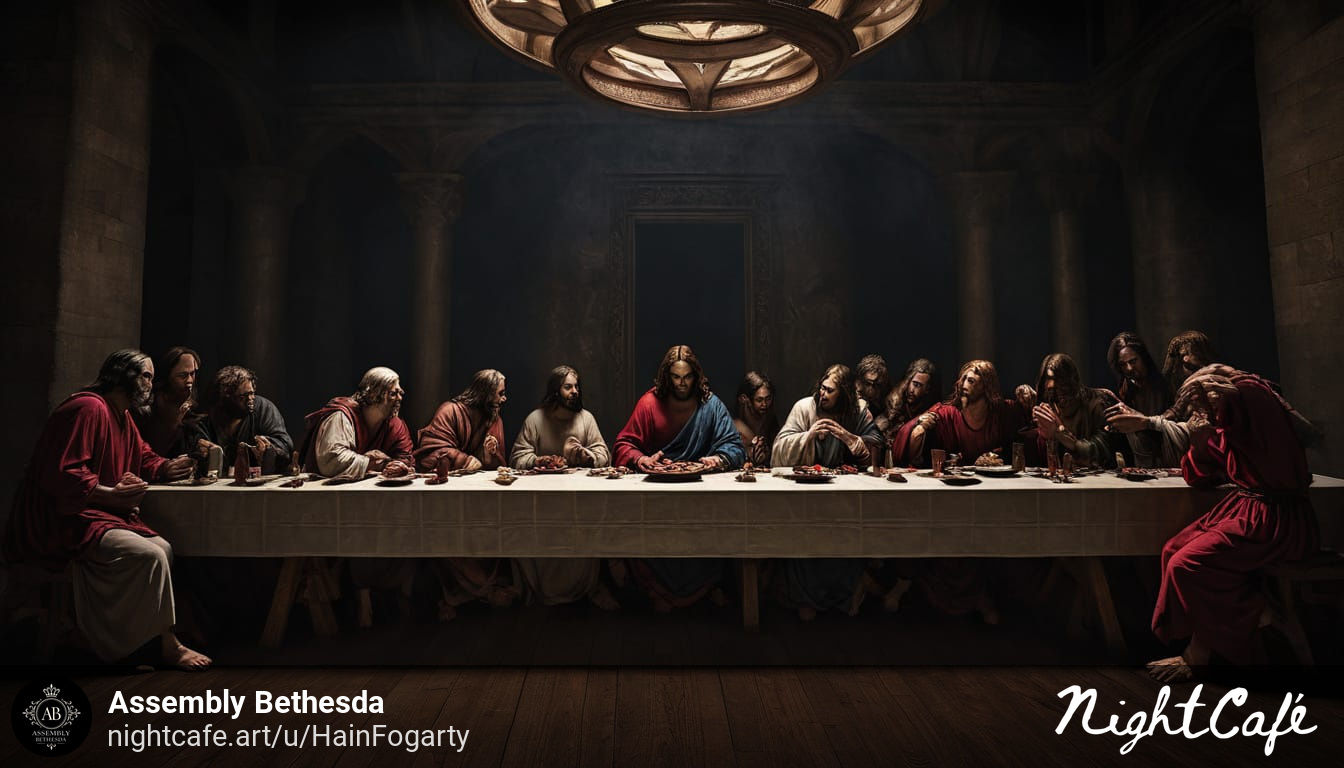
What would become known as the Last Supper was held in the shadowed upper room, where flickering lamplight cast long, wavering shadows across the walls. There was an unspoken weight of impending doom in the air, mixed with the smell of unleavened bread and wine. In the New International Version, Jesus takes bread, and after giving thanks, he breaks it and gives it to the disciples, telling them, “Take it; this is my body.” Then, after giving thanks, he gave them the cup, and they all drank from it. He said, “This is my blood of the covenant, which I’m pouring out for many.”” On that Passover night, these words instituted the Eucharist, a sacrament shrouded in deep mystery, where light penetrates darkness and life emerges from death.
The scene unfolds against a backdrop of betrayal and sorrow. Jesus declares, “Truly, I tell you, one of you will betray me, one who is eating with me” (Mark 14:18). The disciples, troubled, question among themselves, while Judas, the betrayer, dips his hand into the bowl with the Lord. (Luke 22:15-16) Jesus says, “I’ve always wanted to eat Passover with you before I suffer. I won’t eat Passover again until God’s kingdom.” Here, in the ebon hues of melancholy, the Eucharist appears as a dark meditation on sacrifice. The bread, broken asunder, celebrates the brutality of the cross.
As you contemplate this moment, you’re drawn into the depths of human frailty and divine love. Despite the gloom in the upper room, Jesus offers himself fully. “Drink from it, all of you. This is my blood of the covenant, which I pour out for many for forgiveness of sins” (Matthew 26:27-28). Deep red wine symbolizes the blood shed in agony, a libation poured into sin’s abyss. The Eucharist holds the bitter draught of atonement, through which grace flows into fractured lives. This isn’t a triumphal feast, but a somber vigil anticipating Gethsemane’s sweat like blood and Calvary’s eclipse of the sun.
As the Gothic spirit of awe embraces the transcendent, the Last Supper shows the paradox of glory veiled in obscurity. John emphasizes service amid the shadows: Jesus washes the disciples’ feet, saying, “Unless I wash you, you can’t be with me.” This act of humility, performed in the quiet intimacy of the room, underscores the Eucharist’s call to self-emptying. The body given, the blood poured out, confront the darkness of pride and selfishness. When the disciples argue about greatness, Jesus says, “The greatest among you should be like the youngest, and the one who rules should be like the one who serves” (Luke 22:26). Through broken bread and spilled wine, participants confront their shadows, and find purification.
Betrayal intensifies the darkness. The betrayer’s hand is next to mine at the table (Luke 22:21). Judas departs into the night, as John notes, “As soon as Judas took the bread, he went out. It was night.” (John 13:30). Eucharist illuminates treachery within the community of faith through this exodus into literal and metaphorical darkness. However, mercy prevails; the sacrament is offered to everyone, including the unworthy, mirroring God’s outreach into the void. The Ebon Eucharist therefore meditates on judgment and forgiveness.
There’s also eschatological hope in the institution. Until I drink from the fruit of the vine again in the kingdom of God, I can’t drink it again. In this dark reflection, believers partake not only of present grace, but also of promised resurrection. The meal anticipates a future banquet, where shadows flee before eternal dawn. A broken body heals the fractured cosmos; blood seals a new covenant, turning tombs into wombs.
The Eucharist is a symbol of kenosis, or God emptying himself. In the upper room, divinity stoops to humanity’s level, providing flesh and blood for wandering souls. This sacrament invites us to keep returning to the cross’ shadow, where suffering yields salvation. “For whenever you eat this bread and drink this cup, you proclaim the Lord’s death until he comes,” Paul echoes (1 Corinthians 11:26). Death’s defeat is represented by the ebon meditation.
One encounters the sublime terror of holy love when contemplating the Last Supper’s somber beauty. The flickering lamps cast elongated shadows, while the central figure radiates quiet authority. Disciples are confused and awed, their faces etched with foreboding. This tableau mirrors the soul’s journey through shadows and toward the light of Paschal. As pilgrims in exile, the Eucharist sustains them through life’s storms, a dark manna.
Ultimately, the ebon Eucharist calls for surrender to the mystery. Bread and wine, simple ingredients, become vehicles of divine, transcending rational grasp. In the words of institution, believers find communion with the crucified and risen Lord. Shadows deepen the appreciation of light; suffering deepens the joy of redemption. By partaking in this sacrament, you get a renewed sense of grace’s triumph while contemplating the profound darkness that engulfed our Savior.
The Last Supper, veiled in melancholy, reveals the heart of Christian faith: God enters human darkness to redeem it. Participants join the ancient vigil, waiting for the dawn of the kingdom. Death’s sting dissolves in this ebon rite, and eternal life begins.