The Book of Daniel contains many stories about faith, dreams, and God’s power, but Chapter 4 stands out as a tale of pride and punishment. In this chapter, Nebuchadnezzar of Babylon, a powerful ruler learns a hard lesson through divine intervention. It’s told from his own perspective, making it a unique Bible story.
After addressing people of all nations and languages and wishing them prosperity, Nebuchadnezzar tells them about the amazing signs and wonders that God has done for him. He praises God’s eternal kingdom and dominion.
He talks about how he’s happy and successful in his palace. But then he has a horrifying dream while lying in bed. The visions scare him so much that he calls all the wise men of Babylon, including magicians, enchanters, astrologers, and diviners, to interpret them. The dream is explained to them, but no one can figure out what it means. Finally, Daniel, who’s also called Belteshazzar, steps in.
Daniel has the spirit of the holy God in him, so Nebuchadnezzar tells him about the dream.
A huge tree grows in the middle of the land, reaching the top of the sky and visible from the ends of the earth in the dream. There are plenty of leaves and fruit on this tree, so it provides food for everyone. It shelters wild animals, and birds nest in its branches. Every creature benefits from it. Then a holy messenger comes down from heaven and orders you to cut down the tree, trim its branches, strip its leaves, and scatter its fruit.
The animals and birds flee. But the stump and roots stay in the grass of the field, bound with iron and bronze.
Until seven times pass, he’ll change his mind from a man’s to an animal’s mind. Let him be drenched with the dew of heaven and live among the animals. Daniel is asked to interpret this by Nebuchadnezzar since no one else knows how the Most High rules over all kingdoms and gives them to whomever he chooses, even the lowest people.
Daniel’s dream makes him freak out at first. The king tells him not to worry, but Daniel wishes it applied to the king’s enemies instead. He explains that the tree stands for Nebuchadnezzar himself. The king has grown great and strong, with his rule reaching far and wide, just like the tree. If the messenger cuts it down, the king will live with wild animals and eat grass like an ox drenched in dew and be driven from people.
All of this will last for seven times, which most believe means seven years, until he acknowledges that the Most High is sovereign.
It means the kingdom will be restored once Nebuchadnezzar recognizes Heaven’s rule. Daniel advises him to do right, to show kindness to the oppressed, so maybe his prosperity will continue.
The dream comes true a year later. As the king walks on the roof of his palace, he brags about how great Babylon was built for him by him. A voice from heaven announces that he’s no longer in charge. For seven times, he’ll live with animals and eat grass like an ox.
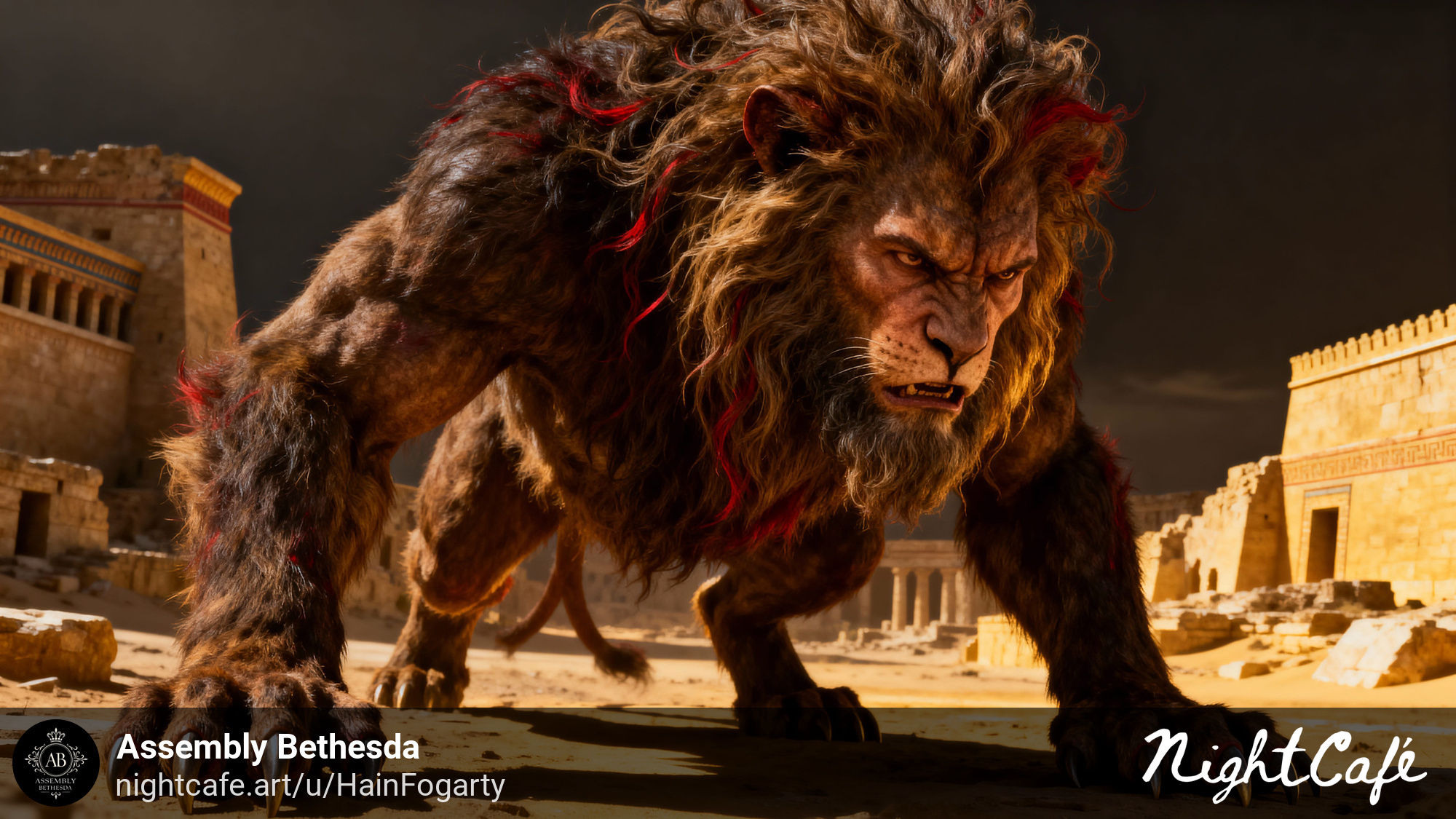
Immediately, Nebuchadnezzar is driven from people. He eats grass, gets wet with dew, grows feathery hair, and has bird claws on his nails for seven years. God punished him for his pride, showing no one, not even a mighty king, can challenge divine authority without consequences.
He looks up to heaven at the end of seven years, and his sanity returns. He praises the Most High, honoring the one who lives forever with eternal dominion. He realizes all people are nothing compared to God, who does whatever he likes with heaven and earth. It’s impossible to question him.
The king’s honor and splendor return after he restores his mind. Afterwards, his advisers and nobles seek him out, he returns to the throne, and he becomes even greater. Nebuchadnezzar ends by praising God, saying everything God does is right and just, and he can humble those who are proud.
Nebuchadnezzar, once full of arrogance from his achievements, learns through harsh experience that true power is from God in this chapter. The seven years as a beast symbolize complete humiliation, stripping away his humanity until he submits. It’s a reminder that pride leads to downfall, but repentance restores.
As a pagan ruler, the king worships a lot of gods, but then he ends up glorifying one God. The tree imagery symbolizes empires and leaders who seem invincible but can be taken down. Iron and bronze bind the stump, hinting at mercy, suggesting protection during punishment.
Daniel’s themes of God’s control of history fit here. It’s personal here. Nebuchadnezzar learns about God in the fiery furnace and through Shadrach, Meshach, and Abednego earlier chapters. Daniel’s role as interpreter shows faithfulness in exile.
It might have something to do with ancient ideas of completion, like seven days in a week. Others think it represents a real disease called boanthropy, where people act like animals, but the Bible shows it as divine judgment.
It shows hope as even a proud king can change. It encourages kindness to the poor, as Daniel advised, linking righteousness to prosperity.
Nebuchadnezzar’s beast-like life for seven years serves as a vivid example that God humbles the proud but lifts the repentant. Daniel Chapter 4 is a powerful tale of divine punishment and redemption. In a changing world, it reminds us of eternal truths through art, literature, and teachings for centuries.