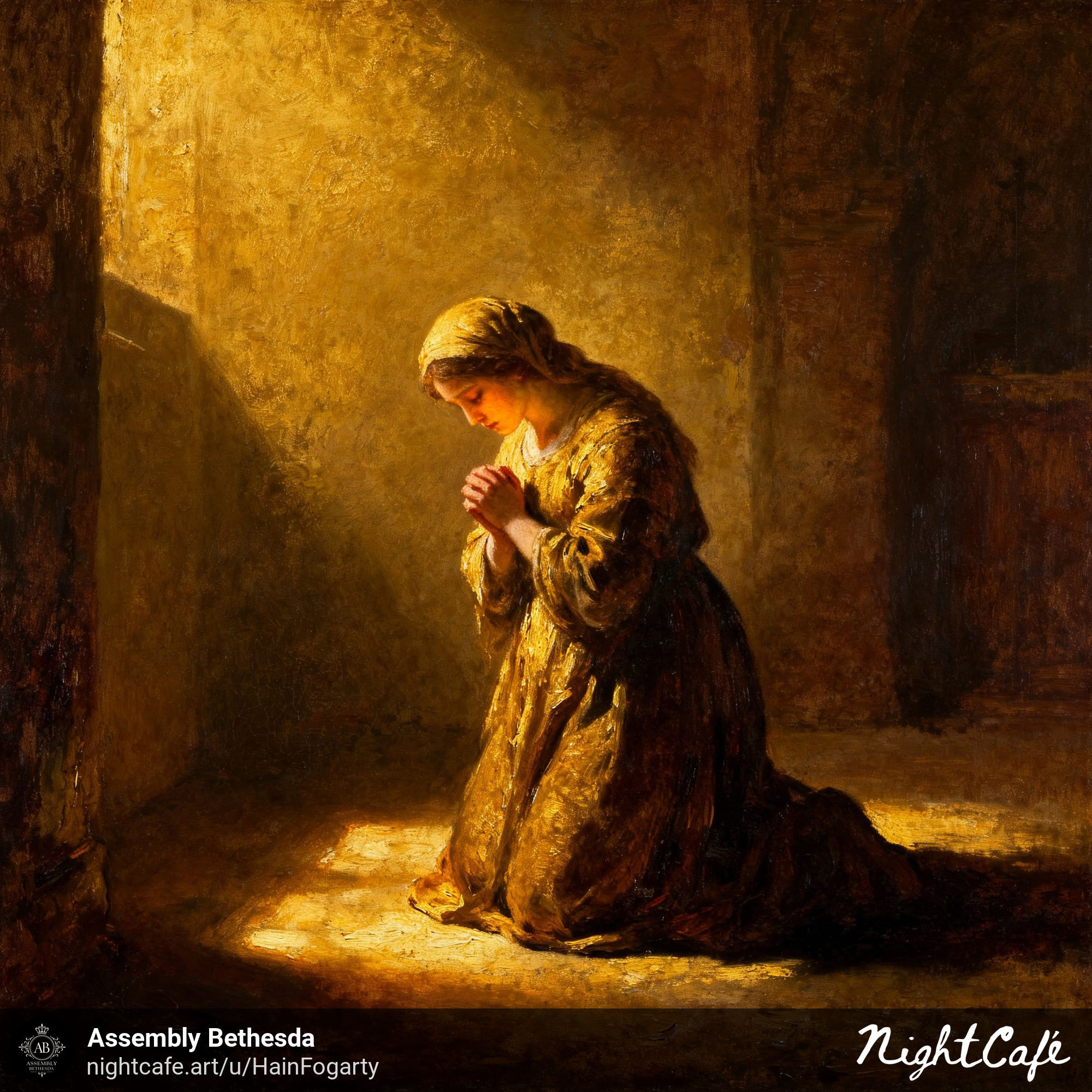
Located in chapter 2 of the First Book of Samuel, verses 1 through 10, Hannah’s Prayer is a profound expression of faith, gratitude, and theological insight. Hannah’s story inspires this prayer because she turned to God with fervent supplication despite her barrenness and societal scorn.
When she gets a son after years of anguish, she vows to dedicate him to divine service, and she presents Samuel to the temple in Shiloh to fulfill that promise. In addition to being a personal thanksgiving, the prayer itself is a theological declaration that echoes throughout biblical literature, influencing later texts like the Magnificat.
In Hannah’s Prayer, a reversal of fortunes is the theme, which plays a big role in Scripture. ‘My heart exults in the Lord, my strength is exalted in my God’ sets a tone of triumphant joy rooted in divine intervention. It’s clear Hannah recognizes God’s sovereignty over human conditions, stating that no human effort or status can compare to God’s.
This motif of divine reversal underscores a key biblical principle: God’s preference for the marginalized, which is echoed in Psalms and prophets.
In the prayer, God is described as holy and unique, saying, “There is no Holy One like the Lord, no one except you, and no Rock like the Rock of our God.” A polemic against polytheistic influences in ancient Israel, this affirmation of monotheism and divine incomparability. A reminder of divine justice that permeates the Torah, Hannah warns against arrogance.
She says God breaks the bows of the mighty, but girds the feeble with strength, illustrating how divine will subverts human hierarchies.
Further, Hannah’s Prayer emphasizes provision and abundance, claiming that the full are hired out for bread while the hungry don’t eat, and the barren woman bears seven kids while her mother languishes. The imagery draws on agricultural and familial metaphors from ancient Near Eastern literature, but it’s theologically deep.
A concept that foreshadowed later messianic hopes in Judaism and Christianity is God’s role as the ultimate provider, capable of turning scarcity into plenty. It asserts that God kills and brings to life, brings to Sheol and raises up, reinforcing the belief that God controls everything.
According to Hannah, God makes poor people rich people, brings low people up, raises needy people from ashes heaps so they can sit with princes and inherit thrones of glory. In her time, wealth and status determined worth, but this egalitarian vision challenges stratified society. It aligns with the prophetic tradition, like Isaiah and Amos, in which God’s kingdom inverts worldly values.
It implies a cosmic stability upheld by divine order rather than human constructs, since God laid the foundations of the earth.
In guarding the feet of the faithful while silencing the wicked in darkness, Hannah’s words affirm that strength lies not in human might but in divine favor. She ends with a prophetic note: “The Lord will judge the ends of the earth, he will give strength to his king, and he will exalt the power of his anointed.” This reference to a king and anointed one, or messiah, is intriguing in a pre-monarchical context, possibly reflecting later redaction or Hannah’s prophetic insight.
The book links her personal experience to broader national hopes, anticipating the Davidic line and ultimately Christian interpretations of messianic fulfillment.
Hannah’s Prayer is a hymn of praise like Moses’ Song or Deborah’s Song, blending personal devotion with communal implications. In addition to its rhythmic and memorable quality, it uses parallelism, a hallmark of Hebrew poetry. A lot of it looks like it’s adapted from Canaanite poetic forms, suggesting cultural influences adapted to Yahwistic worship. While there are slight differences in the Septuagint and other translations, the core message is the same.
The Samuel narrative contrasts the prayer with Eli’s sons’ corruption, highlighting themes of piety and apostasy. Hannah’s vow and subsequent prayer illustrate covenant faithfulness, where human commitment meets divine grace. This interplay emphasizes the Deuteronomistic history’s focus on obedience leading to blessings.
Hannah’s Prayer influenced Jewish and Christian worship. It’s in the Haftarah for Rosh Hashanah, symbolizing renewal and answering prayer. The parallels between Mary’s Magnificat and Luke’s Magnificat are striking, both celebrating divine reversal and mercy. Patriarchs like Ambrose and Augustine used it to show humility and divine election.
Exegetically, the prayer’s structure reveals a chiastic pattern, focusing on God’s justice and holiness. God’s uniqueness is praised in verses 1-3, human conditions are reversal in verses 4-5, life cycles in verses 6-7, social elevation in verse 8, and judgment in verses 9-10. This symmetry reinforces its theological coherence.
Modern scholarship analyzes Hannah’s Prayer based on source criticism, but some think it was a later addition because of its advanced theology. Form critics classify it as a thanksgiving psalm, while redaction critics see it as integrating Samuel’s birth narrative with monarchic themes. Faith transforms despair into doxology, so it’s enduring appeal.
The prayer’s language evokes imagery of warfare and victory, with broken bows and stumbling warriors, but redirects triumph to God. In counseling and devotional contexts, it encourages perseverance in prayer amid adversity, promising divine vindication. It avoids self-pity, focusing instead on divine attributes, modeling mature spirituality.
It’s a mini-review of biblical theology: God’s sovereignty, justice, and mercy intersecting with human frailty. Through faith, weakness becomes strength in a divine narrative. Its words continue to inspire, reminding us that true power isn’t in human achievement but in reliance on the Divine.