
Whenever you read the Bible in the beginning, have you ever noticed something odd? God creates the world in Genesis chapter 1, and humans survive until the end of time. It appears that a new story starts in chapter 2, with God forming a man out of dust before plants and animals appear. It has puzzled people for centuries. Is this the same event repeated twice, or something else? Many wonder whether the events match up or clash. Let’s take a look at what theologians and scholars have said throughout the centuries, explained in plain language.
In order to understand what the Bible actually says in these two sections, let us first examine Genesis 1. It begins with “In the beginning, God created the heavens and the earth.” Over six days, God speaks things into existence.
There are light and darkness on the first day, the sky on the second day, the land and plants on the third day, the sun, moon, and stars on the fourth day, sea creatures and birds on the fifth day, land animals and humans on the sixth day, both male and female. The whole account feels very orderly, almost like a beautiful poem with recurrent lines. God looks at everything and calls it very good, then rests on the seventh day.
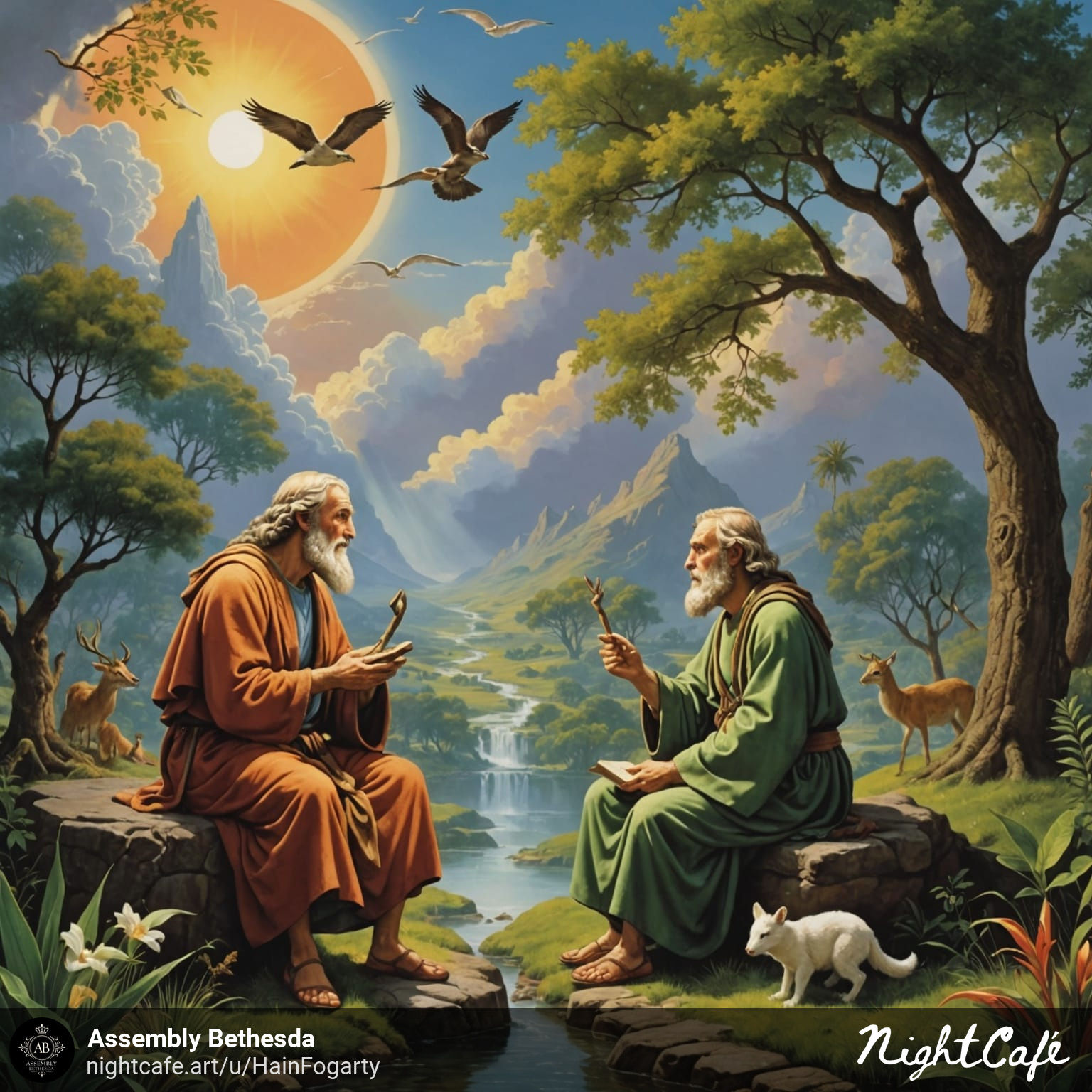
As the story moves into Genesis 2, God is referred to as the Lord God and the focus is on one person. God creates the man from dust, breathes life into him, and places him in a garden called Eden. No rain has fallen yet, and no shrubs or plants have developed outside the garden. It is God who plants the garden specifically for the man, places him in charge of it, and instructs him to refrain from eating from the tree of knowledge of good and evil.
God then brings the man animals to name them, but none of them are suitable partners. In order to build a woman, God puts the man to sleep, takes a rib, and builds her. The man recognizes her as being part of his bones and part of his flesh. This account is a much more intimate account of relationships and people.
There are some major differences in chapter 1. People come before plants in chapter 1, but animals come after humans in chapter 2. Humans come together in chapter 1, but the woman comes much later in chapter 2. God speaks everything into existence in the first story, but shapes things like a potter in the second. Many readers have wondered how this could be true.
Almost all Bible scholars agree that these are two separate ancient accounts that an editor later merged together. A priestly source is where the first story comes from, around 550–500 BC, shortly after the Babylonian exile. A second story comes from an older source called the Yahwist, written between 950 and 750 BC in Judah’s southern kingdom. It likes order, repeats phrases, and shows God in total control. In this story, God walks in the garden and talks to people directly, in a more earthy, storytelling style.
These two stories were joined on purpose. Genesis 2:4 was used as a hinge verse to connect them smoothly. Together, they give a fuller picture: one shows the grand design of the universe, the other shows the intimate beginning of human life and marriage. This isn’t a scientific timeline; it’s about God and us.
Many early church teachers, such as Augustine in the 400s AD, already said the days in Genesis 1 don’t have to be 24-hour days and that the two accounts teach different truths. The Jewish rabbis noticed the difference centuries ago too and said chapter 1 is about the creation of the world and chapter 2 is about human society and responsibility.
Some modern evangelical scholars still attempt to view both accounts as one single event, asserting that chapter 2 zooms in on the sixth day of chapter 1. Nevertheless, the majority of academic scholars, including many conservatives, accept that these are two traditions that are juxtaposed to enhance our understanding rather than to confuse.
The main message of both stories is the same: God created everything with purpose, humans are special because they reflect his image, and we are responsible for caring for the earth and for each other.
The two creation stories end up not competing with each other. They are two different perspectives on the same beautiful truth. One draws back to depict the universe as a temple, while the other zooms in to illustrate God’s care in creating the first family. It is their belief that the world is good, that people matter deeply to God, and that our first duty is to live in a grateful relationship with the Creator and one another.
Well that is all I have for you today. Until Next time: Courage
Sources Table
| Row | Source Type | Description | Approximate Date |
|---|---|---|---|
| 1 | Biblical Text | Genesis 1:1–2:3 (Priestly creation account) | Compiled ~500 BC |
| 2 | Biblical Text | Genesis 2:4–25 (Yahwist creation account) | Compiled ~500 BC |
| 3 | Scholarly Consensus | Documentary Hypothesis / Four-Source Theory (J, E, D, P) | Developed 1800s–present |
| 4 | Ancient Christian Writer | Augustine of Hippo, The Literal Meaning of Genesis | AD 401–415 |
| 5 | Modern Academic Scholarship | Majority view in universities: two separate traditions combined | 1900–present |
| 6 | Evangelical Scholarship | Views range from single-event harmonization to complementary literary accounts | 1900–present |
| 7 | Jewish Rabbinic Tradition | Midrash and Talmudic comments on the differences between the two accounts | 200 BC–500 AD |
RowSource TypeDescriptionApproximate Date1Biblical TextGenesis 1:1–2:3 (Priestly creation account)Compiled ~500 BC2Biblical TextGenesis 2:4–25 (Yahwist creation account)Compiled ~500 BC3Scholarly ConsensusDocumentary Hypothesis / Four-Source Theory (J, E, D, P)Developed 1800s–present4Ancient Christian WriterAugustine of Hippo, The Literal Meaning of GenesisAD 401–4155Modern Academic ScholarshipMajority view in universities: two separate traditions combined1900–present6Evangelical ScholarshipViews range from single-event harmonization to complementary literary accounts1900–present7Jewish Rabbinic TraditionMidrash and Talmudic comments on the differences between the two accounts200 BC–500 AD