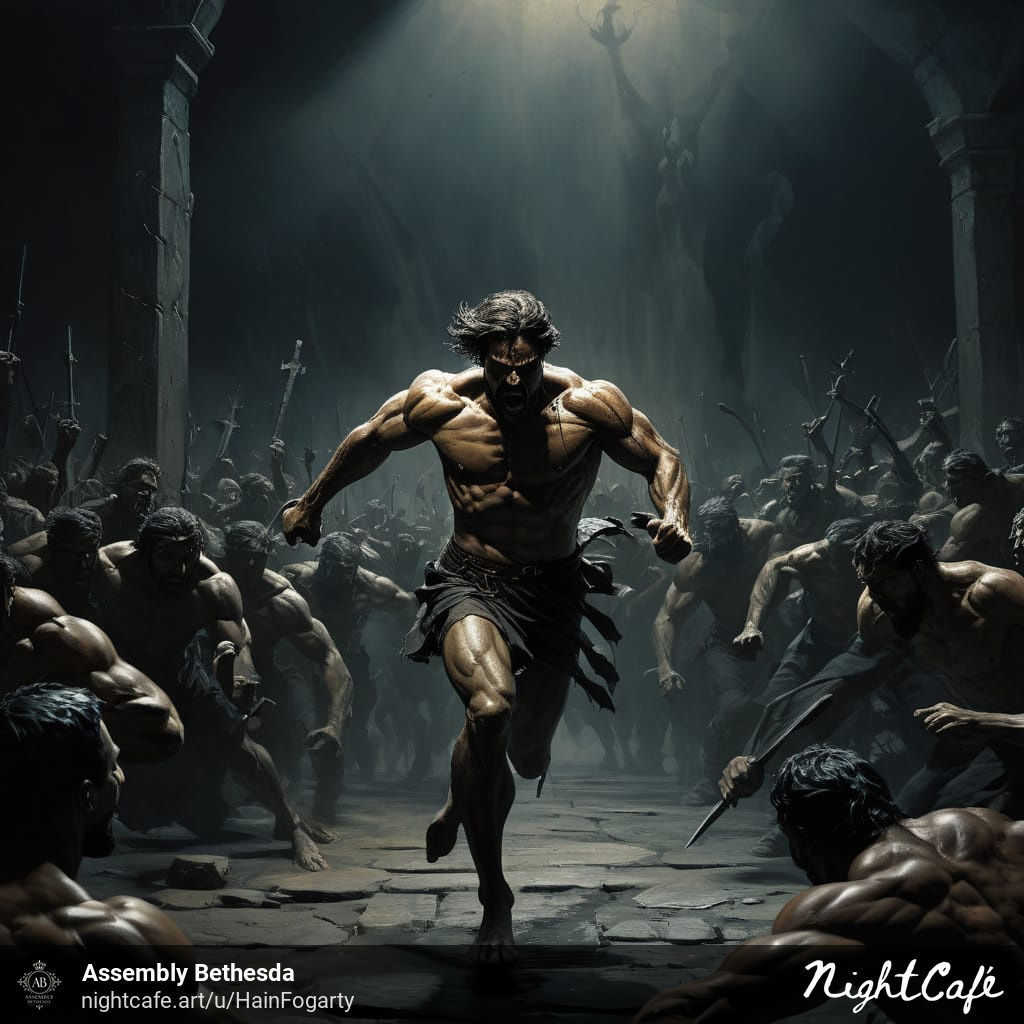
It’s common for millions to read about Jesus’ arrest in the Garden of Gethsemane every Easter season, but one detail appears only in Mark’s Gospel. After the chilling line “Then everyone deserted him and fled,” the narrative inserts two enigmatic verses: “One young man followed behind in only a long linen shirt.”
Despite the mob’s attempts to grab him, he ran away naked.” For centuries, scholars, pastors, and curious readers have asked the same question: who was this guy?
A fine linen cloth known as Sindon, often associated with wealth or used as a lightweight covering for sleep, provides the first clue. During the first century, people wore nothing more than a Sindon to bed, especially during warmer months. When Joseph of Arimathea wraps Jesus’ body in a Sindon for burial in Mark 15:46, the same word appears.
In Mark’s narrative, Mark clearly intends for readers to recognize the parallel: One young man abandons his sindon in shame, while Jesus, stripped and crucified, will later leave his sindon neatly folded in an empty tomb.
According to early Christian writers and modern scholars, the fleeing youth is John Mark himself, the traditional author of the Gospel. According to ancient tradition, the Last Supper took place in Mark’s family’s upper room in Jerusalem. Several believers gathered at the house of Mary, mother of John Mark, shortly after the resurrection, according to Acts 12:12. If it’s the same house as Mark’s, it makes sense.
A teenage Mark, perhaps awakened by the commotion of armed soldiers marching through Jerusalem at midnight, throws on only his linen sleeping garment and hurries to Gethsemane to see what’s happening to Jesus. When the torches close in and rough hands reach for anyone nearby, the scared boy wriggles free and sprints into the darkness, leaving his only covering behind.
This identification explains several puzzling features. First, only someone who was personally present would know such an obscure and embarrassing detail. All of Matthew, Luke, and John mention the arrest, but omit it entirely, suggesting none of them saw it. In ancient times, authors sometimes incorporated discreet autobiographical signatures into their works. In John’s Gospel, the beloved disciple subtly reveals his own presence at the cross. Mark doesn’t name himself anywhere in the text, but this fleeting appearance fits the pattern perfectly.
The episode goes way beyond biography. Old Testament prophecy says the bravest warriors will flee naked on the day of the Lord (Amos 2:16). Even an innocent bystander flees in fear and shame. As the disciples scatter, the shepherd gets struck, and one last follower escapes completely exposed, total abandonment reaches its absurd climax. While facing his accusers, Jesus is the only one dressed in dignity.
A young man loses his linen cloth in panic and disgrace at the arrest. Another young man, now robed in radiant white, calmly announces the resurrection at the empty tomb. The contrast is striking. The echo lets readers know Mark isn’t just sharing an odd memory; he’s illustrating the great reversal at the heart of the gospel message. Shame gives way to glory, naked flight turns into clothed victory.
Many scholars say the detail is just a vivid historical footnote meant to convey the chaos of the time. Others argue the sindon has symbolic overtones that link it to baptismal imagery, where candidates wear new white robes after taking off old ones. Yet the simplest explanation remains the most satisfying, that the author quietly inserted himself into his own story. This explains the uniqueness of Mark’s account, the embarrassment of the details, and the subtle literary craft.
There are two verses in the Gospels that have sparked a whole lot of commentary. They remind readers that the Gospels aren’t detached reports, but testimonies written by real people who were there. In the olive groves outside of Jerusalem, a teenage boy once ran for his life in nothing at all. Because he didn’t forget that night, the church would remember it too.
I guess the take away is that even naked shame can point unmistakably to the clothed and triumphant Christ in the strange economy of Scripture.
Until Next time: Be Blessed with Courage